Search blog

Sustain Nature

Subscribe RSS

Latest Posts

Latest Comments

Categories

Archives

Tag Cloud

Conservancy Links

Blogroll: Business & Government

Blogroll: Communities

Blogroll: Conservation and Science

Blogroll: Green Living News & Views

Conservancy Resources

Subscribe to our E-Newsletter

Get our monthly e-newsletter filled with eco-tips and info on places you care about most.

Subscribe to our E-Newsletter
  • Podcasting of nature stories for audio download - podcast on environment, outdoors, conservation - nature podcast
  • PODCASTS

    Listen online or download to iTunes or your MP3 player.

    Nature Photo of the Week: Spawning Coho Salmon

    4041050503_932eafa78c

    This amazing shot by Flickr user “Soggydan” Dan Bennett of a leaping coho salmon in Issaquah Creek, Washington state was taken with a 60mm lens — which basically means the photographer could have reached out and touched this fish. Like we said — amazing! Thanks for sharing it through The Nature Conservancy’s Flickr Group, Soggydan!

    Check out all The Nature Conservancy’s featured daily nature images, submitted to the Conservancy’s Flickr group by people like you — at my.nature.org. And why not give the gift of clean water this holiday season to keep salmon spawning?

    Cool Green Morning: Friday, November 20

    This really should have been last week’s (Friday the 13th’s) Cool Green Morning — filled with The Worst Nightmares of whales, wasteful companies, and people who like to paint their cars a lot. (Are they going to take car painting away from us, too?) Prepare yourself — real scary stuff in today’s best green news online:

    1. Call it Tom Friedman’s Worst Nightmare: Asia’s already outpacing the United States in clean technology investment by hundreds of billions of dollars — which will mean the U.S. will be importing trillions of dollars in green tech down the road, says a new report. (Hat tip: CleanTechnica.)
    2. Call it a Whale’s Worst Nightmare: Japan’s whaling fleet is off to the Southern Ocean for its annual hunt. Dot Earth quotes ocean explorer Sylvia Earle on why eating whale isn’t at all like eating a farm-raised cow, which is what Japanese whaling interests claim.
    3. Call it Todd Stern’s Worst Nightmare: Pledges by individual countries to limit their greenhouse gas emissions are multiplying like tribbles, reports The New York Times — and UN climate czar Yvo deBoer is now putting pressure on the Obama administration to release its own proposal.
    4. Call it a Gearhead’s Worst Nightmare: Star driver Jeff Gordon has joined with the EPA to warn the public that auto painting causes air pollution and degrades human health, reports Ecopolitology.
    5. Call it Ungreen Companies’ Worst Nightmare: GoodGuide releases an iPhone app that scans product barcodes and gives you ratings on the product’s healthy, environmental, and social impacts. (62,000 products in the database so far, says CNET’s Health Tech.)

    Do Global Conservation Initiatives Undermine Local Conservation Action?

    Qantas A380 taking off from LAX

    Here’s an all-too-frequent out-of-office autoreply from conservationists these days:

    I am currently away from the office attending a UNDP meeting. Following this I am participating in a CBD working group, an IUCN advisory committee, an NGO roundtable, then presenting at a Millennium Declaration follow-up, and attending a regional conservation forum convened by aid agencies as part of a global initiative. I expect to be back in the office towards the middle of next year.

    During this time I may be able to answer emails occasionally, but will definitely not be engaging in any local conservation action or helping implement recommendations arising from these meetings.

    Apologies for the delay.

    Kind regards,

    [Signed] Director of Conservation, Conservation Project Manager and Global Conservation Focal Point

    Republic of Forty Thousand Feet

    OK, so I’m being facetious, but it’s really not that far from the truth.

    There are simply so many global conservation initiatives and associated meetings that, for small developing nations with only a handful of government conservation staff, you can expect to get “out of office” replies from those staff for a substantial part of each year – which is all time these people are not in their countries, getting conservation done.

    So what does this “out of office” status mean for real, on-the-ground conservation?

    Read more »

    Cool Green Morning: Thursday, November 19

    Too bad that feeling guilty isn’t enough to reduce carbon emissions. But we’re excited that California passed efficiency standards to cut television electricity use in half by 2013. And how about the recovery of a rare giraffe species in Africa? Not bad news for a cool green morning.

    1. There’ll be no more energy-sucking televisions in the state where TV was born, now that California has passed the nation’s first law requiring TV energy efficiency standards.
    2. Sometimes, incentives just don’t work. The Responsible Travel company has canceled its carbon offsets program, saying it helps travelers appease their guilt over flying but doesn’t actually help reduce emissions — and may even encourage more traveling.
    3. Climate change plays favorites apparently. A new report from the U.N. Population Fund says women suffer disproportionately from the impacts of climate change – but they also might be in the best position to mitigate it as well.
    4. A rare giraffe species was on the brink of extinction in 1996, with just 50 animals left in Niger. But regulations against poaching and other conservation efforts have made a huge difference – 13 years later there are now 200 animals.
    5. Wondering which major companies are going green? Check out this list of 5 big corporate names that are trying out new, more sustainable practices, from The Daily Green

    Telecommuting: How to Save the World in Your Pajamas

    homeoffice2_Paladin27
    I’ve talked a lot about biking as a great alternative to driving to work, but there is another option that may be a little less daunting: telecommuting.

    If you regularly drive to work, telecommuting can save thousands of pounds of carbon dioxide from being released into the atmosphere and save you a bundle of money to boot.

    I only live 3.5 miles from my office. But I found that, with driving costs and a hefty parking fee, I’d have to pay more than $3,300 a year to drive to work. (Calculate your own commuting costs here.) On top of that, my little Toyota Corolla would release more than 1,350 pounds of carbon.

    If someone who lives just 10 miles from their office and has free parking were to work from home just one day a week, she could save approximately $265 and 0.3 tons of carbon a year.

    Think those are some pretty good reasons to give it a try? I do too, so I’ve asked for some advice from those who telecommute on a regular basis.

    Read more »

    Cool Green Morning: Wednesday, November 18

    Coke’s introducing the “PlantBottle.”  Houston’s taking a modest step toward a greener image.  Enviros are teaming up with the religious right to encourage climate action on the Hill.  Today’s news is exceptionally cool AND green.  Read on for more:

    1. What’s more important than reaching a global agreement in CopenhagenScientific American thinks a U.S.-China deal on energy and climate could be just as big.
    2. America’s oil capital is trying to green up its image, says Green Inc.  The city of Houston, home to densely packed highways and headquarters of a number of oil companies, plans to roll out an effort to convert 10 city Priuses (Prii?) into plug-in hybrids, and install vehicle charging stations around the metropolitan area.
    3. Coca-Cola, the most recognized consumer brand on the planet, will soon start distributing plastic bottles made with up to 30% plant-based material, reports Triple Pundit.  I’m feeling a little less terrible about my Diet Coke addiction today.
    4. At this point, the U.S. climate bill could probably use some divine intervention.  Maybe the Scientists and Evangelicals Initiative, a partnership between evangelical leaders and environmental scientists, can convince the Senate to get moving on climate legislation, says the Guardian’s Environment Blog.
    5. If that doesn’t work, maybe this new study will change a few minds– the findings indicate that a “robust” climate bill could boost the U.S. economy by about $111 billion by 2020 and could create nearly two million jobs, according to GreenBiz.

    Veracruz: River of Raptors Runs Through It

    3534883876_8d483e9871

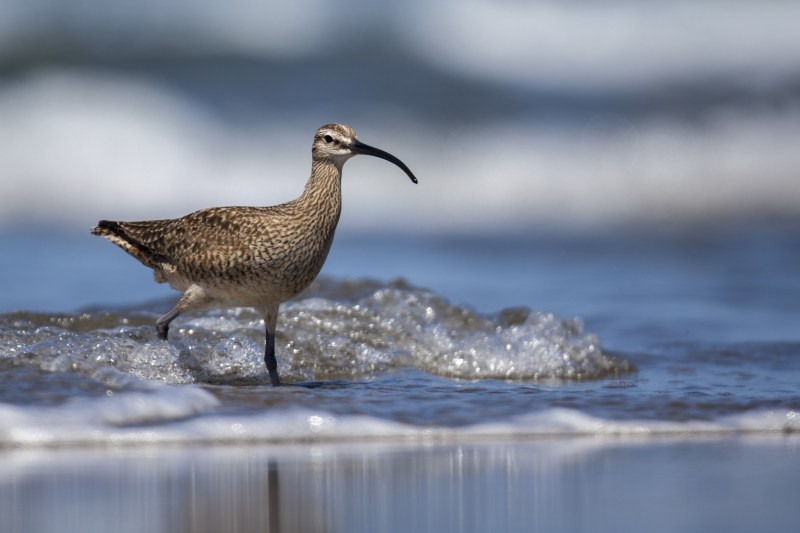
    I recently returned from my near annual pilgrimage to Veracruz, Mexico, to see the fall hawk migration at the biggest hawk migration site in the world.

    The area on the Gulf Coast of Mexico near Veracruz City has become well known in recent years for its astounding hawk migration, a phenomenon that has become known as the “Veracruz River of Raptors.”

    In a typical year, millions of raptors are counted at the two counting sites just outside of Veracruz City, with the top species being Turkey Vulture, Swainson’s Hawk, Broad-winged Hawk, and Mississippi Kite. In fact, if you are lucky, you can see hundreds of thousands of individual birds pass by in a single day–its hard to top that!

    Read more »

    Cool Green Morning: Tuesday, November 17

    Rish and shine! There’s a cool green morning out there, waiting to greet you with some oh-so-refreshing news: marine sponges are important, the Dutch want to tax drivers and there could be a rot-free apple in your future.

    1. The Daily Green asks, Is everything you know about being green wrong? Here’s the scoop: it’s not about what car you drive or whether you eat meat, but the stuff you buy.
    2. Marine sponges are getting a better image, no thanks to that Sponge Bob Square Pants guy. A new study shows that sponges gulp huge quantities of ocean carbon and transform it into food for corals, making them integral to the survival of reefs in these warming times.
    3. Is an apple that won’t rot for 4 months somehow better for the planet than traditional apples? The Australian scientists behind the new RS103-130 think so. Only in Oz.
    4. On the other side of the equator, the Dutch have cooked up their own crazy scheme: a driving tax designed to cut traffic and transportation emissions. The tax would be imposed on a per-mile basis, although steeper fees apply to driving during rush hour and driving a big car.
    5. Rising seas, warmer temperatures, increased rainfall… now here’s a new effect of climate change: more wind. Scientists have observed increased wind over Lake Superior as a result of changing water and air temperatures caused by less winter ice.

    How to Achieve a Global Climate Change Agreement

    3530409025_39ec64ef50

    What will a successful global climate change agreement look like? That question is only more important to ask in the wake of this weekend’s agreement by President Obama to a plan that will ask world leaders to reach a political agreement at this December’s UN climate talks in Copenhagen, ahead of a more binding agreement some time in 2010.

    From a purely scientific perspective, the solution to climate change is straightforward. Burning fossil fuels and clearing forests over the last century have sharply increased the concentration of greenhouse gases in the atmosphere, leading to climate change. So, burn less fossil fuel and protect more forests in order to cap and eventually reduce greenhouse gas concentrations to a safer level.

    The politics of that solution are much more complicated. Developed countries like the United States need to cut emissions dramatically, since their high emissions are responsible for getting us to this point. Developing countries like India and China need to take some responsibility for the future as their emissions rise and their forests continue to be cleared. For the former, that means breaking bad carbon-intensive habits. For the latter, it means establishing good low-carbon habits from the start.

    A successful climate treaty will hinge on agreeing to how much developed and developing countries will reduce their respective greenhouse gas emissions, and also on agreeing how rich countries will help poor countries finance it all. At the same time, those emissions reduction commitments need to add up to enough global reductions to actually keep temperature change under 2 degrees C, the level beyond which impacts are likely to be irreversible and potentially catastrophic.

    One reason countries are struggling to agree on emissions reductions going forward is that they have each had very different emission histories and so think they should have different responsibilities for containing future emissions. According to an interactive feature in the Washington Post, the United States has always been and remains a giant emitter of greenhouse gases. China’s surging coal-fired economy is now the single biggest emitter of all.

    But China also has a population more than three times that of the United States, meaning that its per capita emissions are still a fraction of those from gluttonous Americans. Meanwhile, some European countries like Germany have already begun a steady but shallow decline in their total and per capita emissions. Missing from these statistics, though, are emissions from deforestation that catapult Indonesia and Brazil into the third and fourth ranks globally.

    Read more »

    Cool Green Morning: Monday, November 16

    Good news about cow poop. Good news (?) about Copenhagen. Good news for those of you who’ve always dreamed of a dress made of LED lights. Happiness is the smell of a new Cool Green Morning, to paraphrase Don Draper…

    1. The rehabilitation of poop continues: The Netherlands has opened its second cow-dung power plant, reports CleanTechnica — to make biogas that will heat more than 1,000 homes.
    2. In case you missed it yesterday, President Obama has endorsed a plan to push an ultimate climate change agreement sometime beyond December’s UN meeting in Copenhagen, reports The New York Times. Grist’s Dave Roberts says that’s not necessarily a bad thing.
    3. Charlie the Tuna muzzled? Dot Earth says last week’s meeting among fishing countries to reach an agreement on restoring depleted numbers of tuna, shark, turtles and other marine life was missing one thing — a basis in science.
    4. Count on Inhabitat to render us speechless — with a dress made of 24,000 LED lights (plus “4,000 hand-applied Swarovski crystals and 40-layers of pleated silk organza crinoline.” When’s it going to hit the shelves at Target?!)
    5. Always like to end on good news — this time from the Brazilian Amazon, where deforestation dropped nearly 46 percent from August 2008 to July 2009, says AP. But the “why” is a chicken and egg problem — is it because of the Brazilian government’s promotion of sustainable livelihoods in the region (coupled with enforcement of laws against deforestation), or just a drop in ag commodity prices worldwide?
    Related Posts with Thumbnails