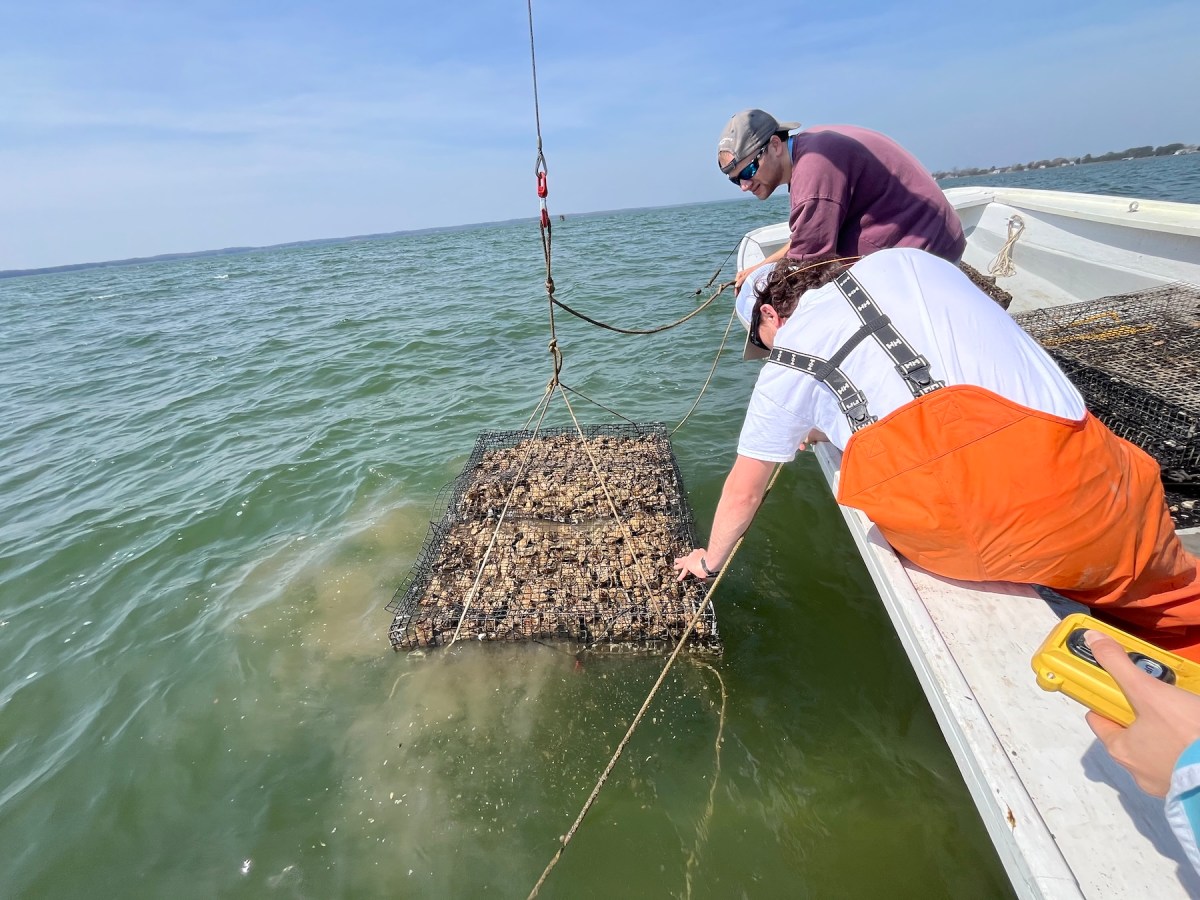
Oysters are generally considered a rare treat; the average American only eats three per year. But this hasn’t always been the case. In the 19th century, wild oyster reefs were abundant along U.S. coastlines—making them an affordable and ubiquitous ingredient for Americans of all socio-economic classes. They were enjoyed not just on the half-shell in upscale establishments, but in all situations, at all times of day, and prepared in all sorts of creative ways (pickled oysters, anyone?). At the peak, New Yorkers were eating 600 oysters annually.
The overwhelming demand for oysters ultimately couldn’t be sustained. After many years of overharvesting—compounded by pollution, disease, and development—America’s oyster reefs were severely depleted, and commercial harvesting slowed to a trickle. Even today, oyster reefs remain one of the most threatened marine habitats globally, standing at just 15% of their historic levels.
But the consequences extend far beyond our plates. Oysters are considered a foundation species, on which the health of the broader ecosystem depends. As filter feeders, they clean our waterways by removing excess nutrients and incorporating them into their shells and tissue. The complex reef structures oysters build are equally important, providing a habitat for hundreds of marine species and stabilizing shorelines.
SOAR
Read more about how TNC helps support oyster aquaculture and restoration.
Following the collapse of U.S. oyster reefs, cultivation has all but replaced wild harvest; these days, 95% of oysters eaten domestically are farm-raised, the overwhelming majority of which (around 90%) are sold to restaurants. This means that compared to many other food products, which may be sold to a variety of venues for a variety of purposes, the oyster market is relatively homogenous. It’s that homogeneity that leaves the industry particularly vulnerable to external shocks—a fact that became impossible to ignore in the spring of 2020. When restaurants across the U.S. were ordered to shut down to slow the spread of COVID-19, oyster farms’ customers all but vanished overnight, sending prices plummeting and saddling growers with piles of unsold inventory.
With too few oysters in our reefs and too many on our farms, aquaculture specialists at The Nature Conservancy (TNC) saw an opening to support coastal ecosystems and economies simultaneously. In partnership with Pew Charitable Trusts, the U.S. National Oceanic and Atmospheric Administration (NOAA), and the U.S. Department of Agriculture (USDA), TNC created the Supporting Oyster Aquaculture and Restoration (SOAR) Purchase Program, which redirects surplus or unsellable oysters from farms to reef restoration projects. Since 2020, the program has purchased more than 5.6 million farmed oysters, helping regenerate more than 60 acres of native shellfish reefs and sustaining more than 1,000 jobs across 8 U.S. states.
Despite SOAR’s immense economic and environmental success, challenges remain in the oyster industry and marine conservation. No one understands these challenges better than farmers, who experience them in real time every day on the water. To complement the Purchase Program and leverage growers’ knowledge and ingenuity, TNC and The Pew Charitable Trusts created the SOAR Resiliency Fund in 2021. In the subsequent 5 years, the Fund has supported 87 farmer-led projects to further collaborative marine conservation efforts and create economic opportunities in the shellfish industry.
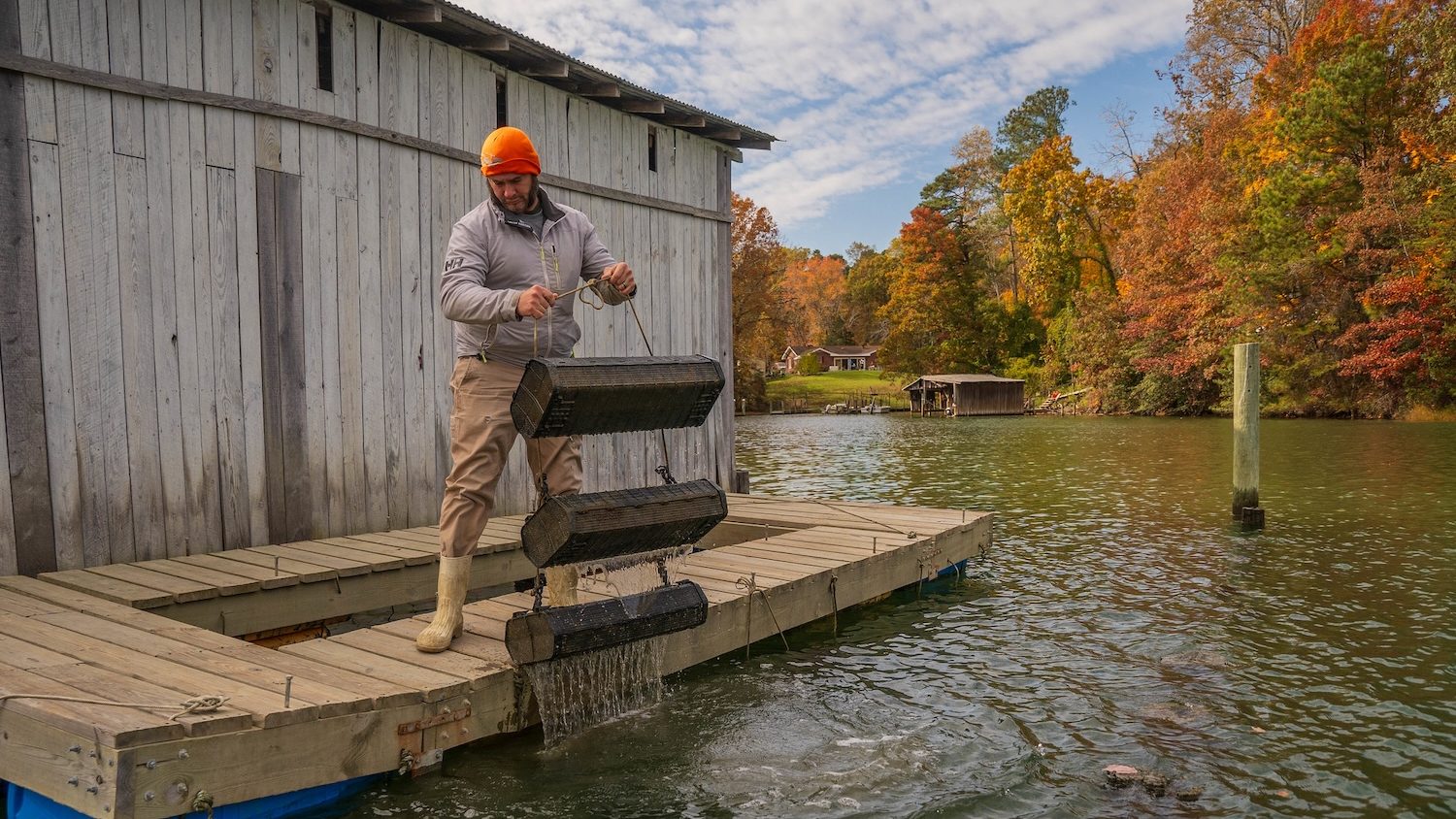
A Regionally-Specific Approach to Restoration
The difficulties associated with oyster reef restoration are not uniform across regions. Recognizing the potential for geographically-specific approaches, several Resiliency Fund projects have adapted the Purchase Program model to accommodate local conditions and communities.
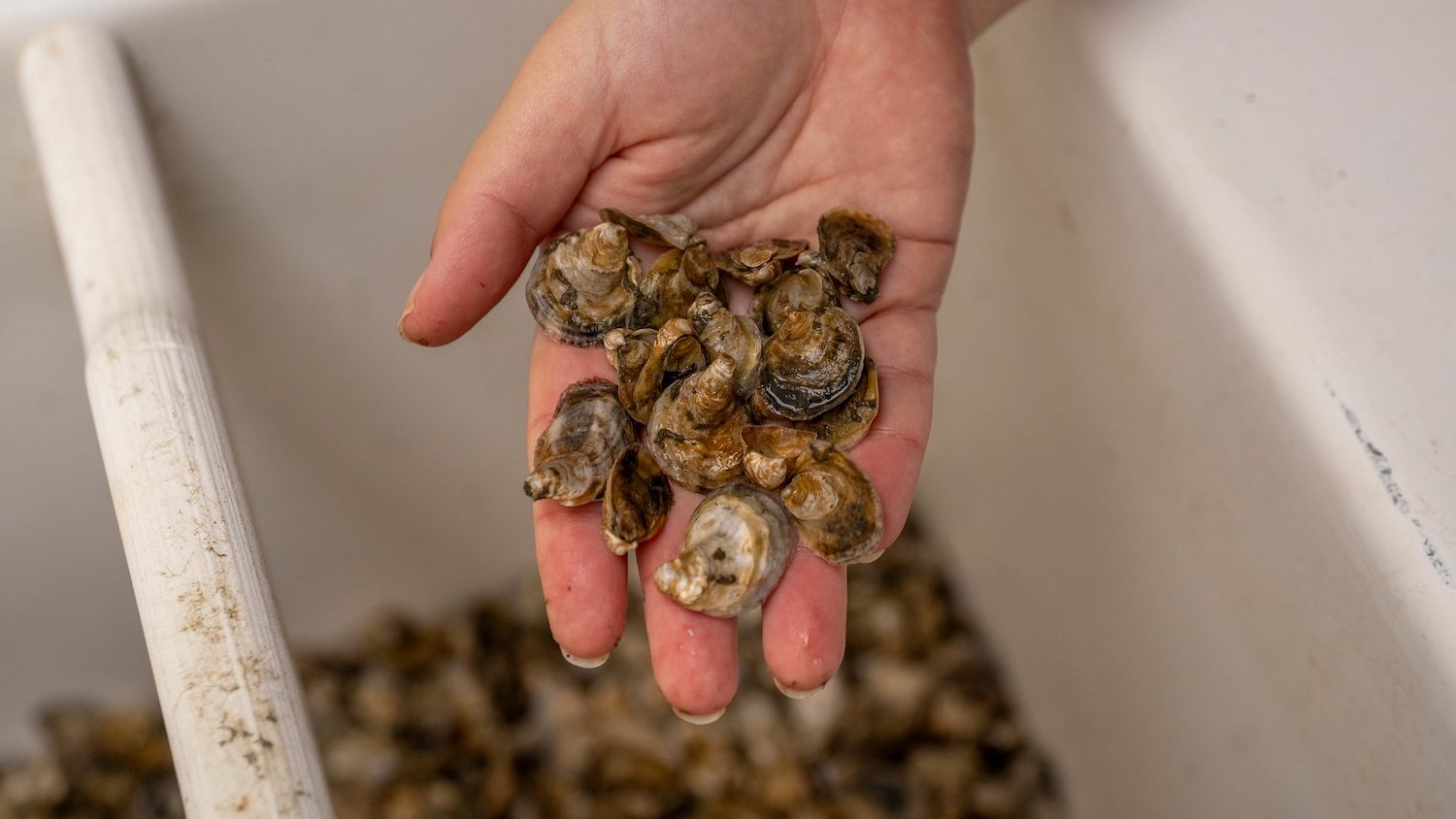
In the Mid-Atlantic, restoration sites are often recruitment limited, meaning there aren’t enough new oysters to support reef growth. Most oysters grown in Virginia are triploids, specifically bred to be sterile so they don’t expend energy on reproduction and can grow to market size more quickly. These traits make a great deal of sense of aquacultural settings, but less so in restoration. Diploid oysters, on the other hand, reproduce naturally every summer—so in addition to serving as substrate for other oysters to grow on, they also contribute to the ongoing growth of reefs.
With this in mind, Virgina-based nonprofit Friends of the Rappahannock (FOR) partnered with two local farms and the Rappahannock Tribe to pilot growing diploid oysters for restoration purposes. Though the project has only been running for a few years, the results are already apparent. “We have used the long oyster tongs, to kind of just, scoop up a couple clusters of oysters, and you can see the generational growth,” said Jennifer Sagan, Oyster Restoration Specialist for FOR. “We saw one with three generations of oysters growing off of what we planted, and that’s phenomenal.”
When presented with the opportunity, Rogue Oysters co-founders Taryn Brice-Rowland and Aaron Rowland “couldn’t imagine saying no.” The husband-and-wife team have always prioritized sustainability and community engagement, both of which the project offered. To support the Rappahannock Tribe’s participation, Rogue Oysters transferred a 71-acre lease to their care and worked with FOR to train Tribal staff on commercial aquaculture and restoration. “Little did I know the work that we were agreeing to!” Brice-Rowland noted, laughing. “But it’s been worth it, being a part of something culturally important, and doing something that’s important for the river.”
Historically, oysters were central to the Tribe’s culture and food sovereignty, but after being forcibly displaced from the river, they lost access to that resource for more than 350 years. According to Jack Ryan, who serves at the Tribe’s Director of Environmental and Natural Resource Programs, this initiative will create new livelihoods for Tribal members and “reconnect them with their cultural food source, which is really one of the main ways that most Rappahannock natives today interact with their heritage.” And because of their traditional environmental knowledge and personal investment in the river’s health, the Tribe’s involvement will also promote long-term restoration gains. “They have the most interest in the project succeeding, because they’re not going anywhere.”
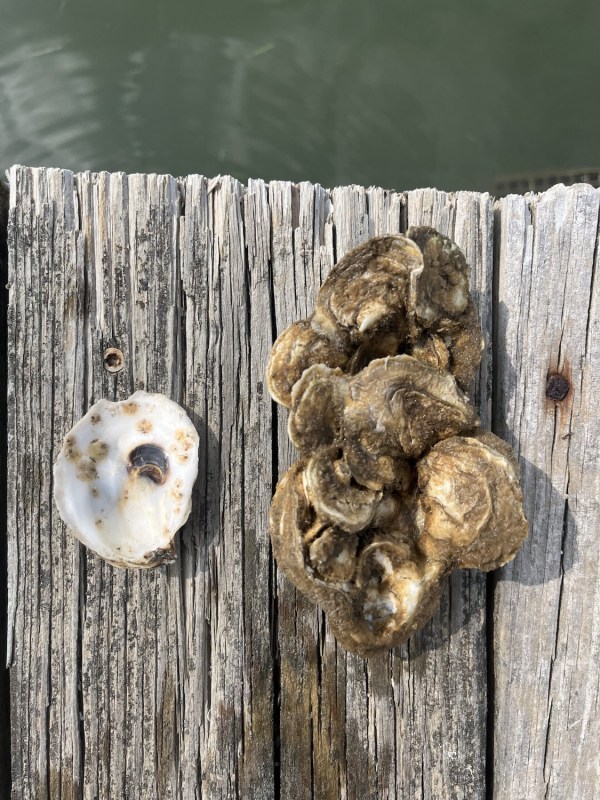
In contrast to the Mid-Atlantic, the northeastern Gulf Coast is not generally recruitment limited; instead, the area is restrained by the amount of available substrate—hard materials, like rocks and other oysters, on which juvenile oysters can settle, grow, and build reefs. One solution, as illustrated by the Purchase Program, is to plant live farmed oysters at restoration sites for oyster larvae to settle on. But Florida State University researchers and local growers wanted to take the model one step further, planting not just oysters unsuitable for the half-shell market, but also empty oyster shells (which often have wild juveniles attached) from routine crop loss and larger-scale mortality events. Though some U.S. states recycle oyster shells from restaurants and raw bars for restoration purposes, byproducts directly from farms are almost always discarded, representing a missed opportunity for farmers and ecosystems.
To test the combination of uglies and farm byproducts for reef restoration, Dr. Sandra Brooke and Dr. Emily Fuqua of FSU’s Coastal and Marine Lab developed a project to compensate farmers for bags of unsellable oysters and shells, which are then used to rebuild reefs. Compared to recycled oysters, which must be cured in the sun for several months to kill off pathogens and organic matter, this farmed material is covered with wild oyster spat and teeming with life—an ideal characteristic for reef projects, Dr. Brooke says. “From a restoration perspective, the biggest benefit is that it’s clumps of live material, so you’re basically kickstarting the system rather than putting out shells that are sterile and have no structural complexity whatsoever.”
It’s been beneficial for farmers, too, who now have an additional income stream from merchandise that otherwise would have been tossed out. “The half shell market requires pretty oysters. To be competitive, your oysters have to be within certain parameters of aesthetics and size,” Dr. Brooke added. “If you have oysters that fall outside of those parameters, or if you have a mortality event, then your options are to make an insurance claim or dump it.”
It’s important to note that this approach may not be viable everywhere. Because oyster die-offs in the Northeast are sometimes driven by diseases like Dermo and MSX, byproducts from mortality events are not safe to deploy in the wild. However, the main threats in Florida are noncontagious, including environmental pressures like extreme heat and hypoxia. “You have to tailor specific aspects of restoration to causes of declines,” said Dr. Fuqua. “The Eastern oyster has such a large geographical range, it goes from Canada all the way down into South America, so the leading stressors are different depending on where you are.”
Looking Beyond Oysters
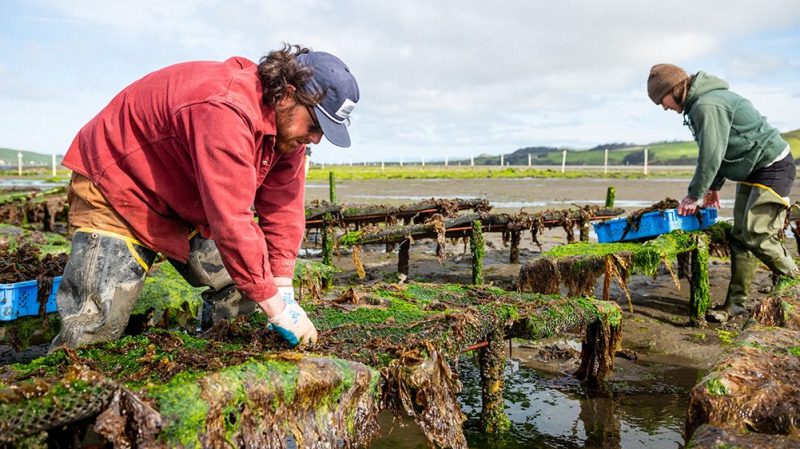
Shells and uglies aren’t the only byproduct of oyster farming that can diversify growers’ revenue streams. While there are a number of methods used to cultivate oysters, many farmers use mesh cages or bags that protect from predators and prevent losses due to storms or strong currents. When submerged in the water, this gear attracts marine species—such as algae, barnacles, mussels, and tunicates—in a process known as biofouling.
Biofouling is typically seen as a nuisance that weighs down oyster gear and can impede shellfish growth. But when Dr. Gary Fleener, the Research and Education Director for California-based Hog Island Oyster Company, noticed nori and ogo (commercially popular seaweed species) accumulating on their cages, he had the idea of turning biofouling into an asset. “We had observed for years and years, wow, there’s this nice-looking seaweed out there…the same stuff that people eat in seaweed salads or things like that.”
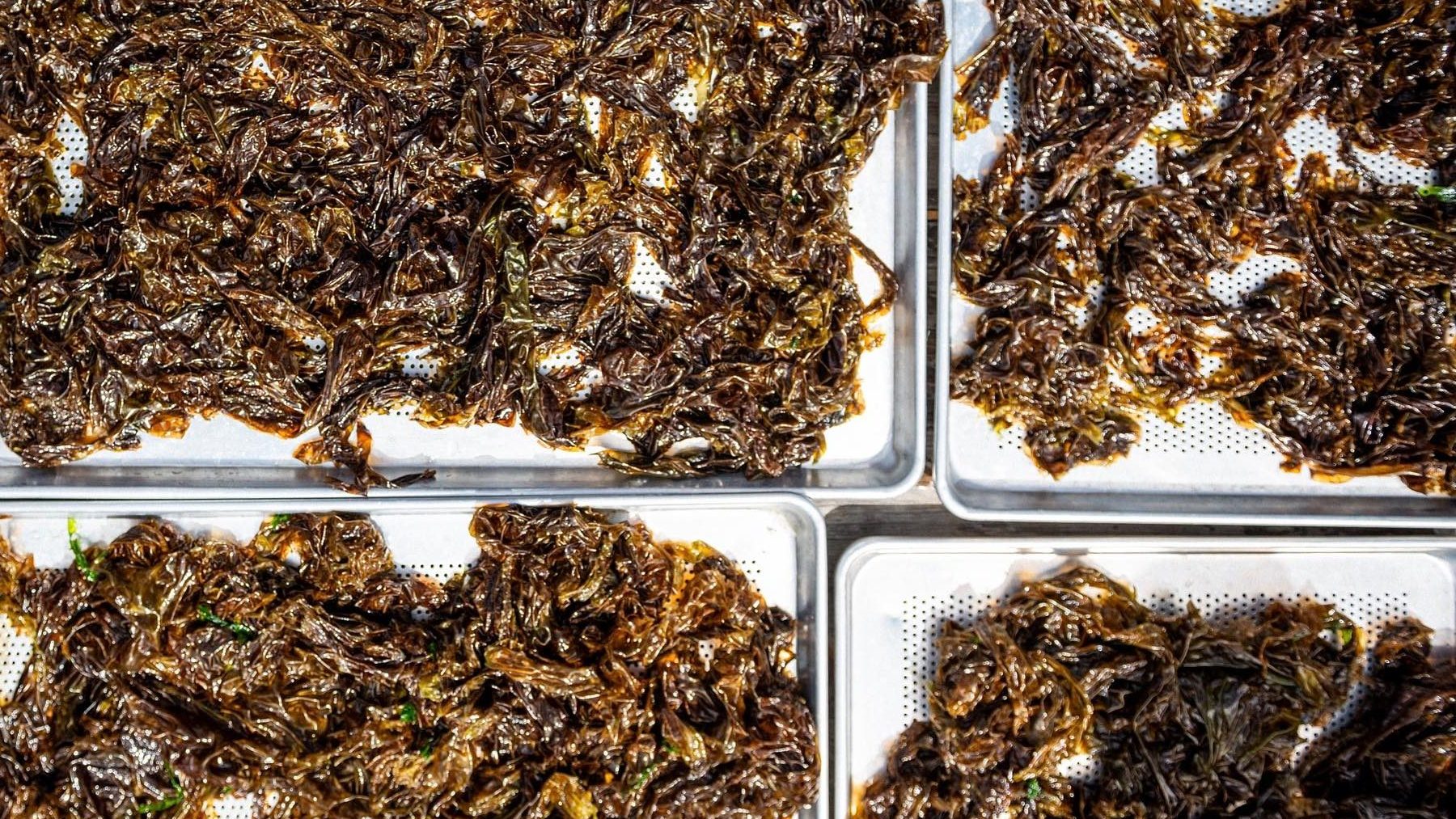
Rather than power-washing the seaweed off their cages, as they had previously done, Dr. Fleener wanted to try repurposing it for human consumption. With funding from SOAR, Hog Island Oyster Company built an on-site greenhouse to sun-dry and store seaweed, essential processing steps after hand-harvesting and rinsing. Once the seaweed is dried, they incorporate it into value-added products like miso nori butter, which are then sold at their oyster bars, restaurants, and retail locations.
Like the oyster restoration projects, there’s the obvious advantage of turning what was once a waste product into a new source of income. “We’re not farming seaweed. This is just stuff that’s volunteering from the wild onto our gear. It would still come in and get power washed and just, you know, go into the compost heap or whatever,” said Fleener. And in the face of market disruptions or environmental challenges, this kind of diversification is key to keeping farms afloat until things return to normal. “Diversification usually leads to resilience, right? It gives you more flexibility in the face of uncertainty. If you have a crop failure, or there’s a rainfall event, or a sewage spill that closes your oyster farm, what else do you have to fall back on?”
On top of that, there’s the potential to improve oyster growth. Since the start of the Industrial Revolution, the ocean has absorbed somewhere around a third of anthropogenic carbon emissions, which has increased the acidity of seawater and made it more difficult for oyster and other bivalves to grow their shells. Seaweed, whether naturally occurring or grown intentionally, could provide a solution. As it grows, via photosynthesis, seaweed absorbs carbon dioxide from the surrounding water, creating a buffer of lower acidity around it.
To leverage this anti-acidifying property, Bruce Vogt, owner of Big Island Aquaculture, partnered with marine scientist Dr. Julia Grenn to grow seaweed on his farm in a way that mimics biofouling. (When they began the project, Dr. Grenn was a student at the Virginia Institute of Marine Science. She now is a Fisheries and Aquaculture Extension Educator for Minnesota Sea Grant.) It is becoming increasingly common for U.S. shellfish farmers to co-culture seaweed with bivalves, primarily side-by-side on the same site. This can provide localized water quality benefits—but Vogt and Dr. Grenn sought to amplify the impact by bringing the crops even closer together, planting ulva (also known as sea lettuce) inside oyster bags.
The concept for the project came from Dr. Grenn’s previous study on the effect of biofouling on water parameters. Though she expected fouling to reduce water quality inside oyster cages, she actually observed lower acidity and higher dissolved oxygen compared to the ambient environment, without a growth penalty for the oysters. “We started asking ourselves if ulva can raise the water quality inside these bags and baskets, and make a better environment for oysters to live in?”
Before their collaboration, Vogt, like most farmers, had simply disposed of ulva and other biofouling species. “We always considered ulva a nuisance, from the point of view it was reducing the flow of the water into and through the bag.” It was an entirely novel idea to not only allow sea lettuce to grow on his gear but actively encourage it—but given the environmental challenges on the horizon, he was keen to test Dr. Grenn’s theory. “We’re always concerned about acidification, because of what we’ve seen happen elsewhere in the world.”
Outside the controlled setting of an oyster hatchery, incorporating seaweed is one of the only ways to mitigate acidification. As an added bonus, this particular method doesn’t require investing in additional gear, making it an affordable option. “The water’s getting more acidic and it’s getting warmer,” said Dr. Grenn. “This is a way that farmers can, in a really localized way, that doesn’t require a lot of infrastructure or a lot of changes, help mitigate some of these negative effects.”
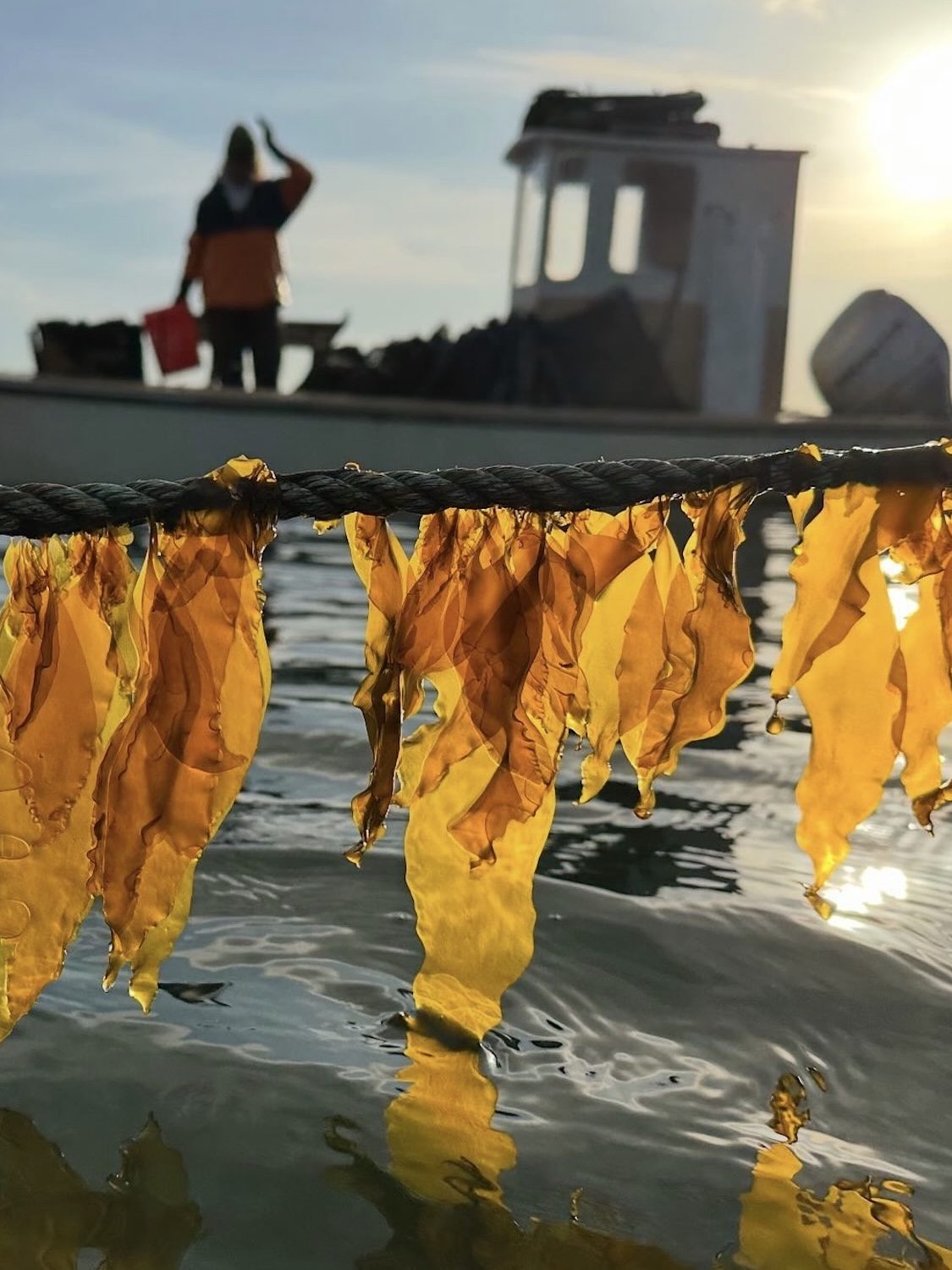
Carbon isn’t the only thing seaweed absorbs; it also sponges up nutrients like nitrogen and phosphorus. On land, these nutrients play an essential role in plant growth and health, but in the ocean, excess amounts can be detrimental, contributing to harmful algal blooms and eutrophication. Knowing this, Sue Wicks—former WNBA all-star and one of New York State’s first seaweed farmers—thought she could expand the environmental benefits of seaweed aquaculture past the boundaries of her Long Island farm, Violet Cove Oyster Co.
After harvesting and drying, Wicks sells her sugar kelp not for food but as a soil amendment to nearby farmers, vineyards, and gardeners. “There’s an overabundance of these nutrients in the Bay. So we extract it from the water and bring it over to the soil that might be very depleted of those same nutrients,” she said.
Because kelp is such a new crop in the state, there aren’t existing policies or markets to support the industry’s growth, barriers Wicks is working hard to overcome. In the brief gaps between tending to her farm, she spends her time speaking with farmers, communities, and lawmakers about the benefits of kelp across aquatic and terrestrial ecosystems. Her enthusiasm makes her the ideal advocate. “I love kelp—I just love it. If I have access to the spores, I will always plant it. It contributes to the health of my oysters, it’s bringing our soil back to life. It really is an environmental powerhouse.”

Very well written. Next: add discussion on whether oysters are a carbon sink or source. Search for: A Shellfish Manifesto for Sequestering Atmospheric Carbon in Quantity.
Ask TNC Louisiana to help me rebuild the oyster fishery near Montegut, LA. Thousands of acres of underutilized water bottoms.