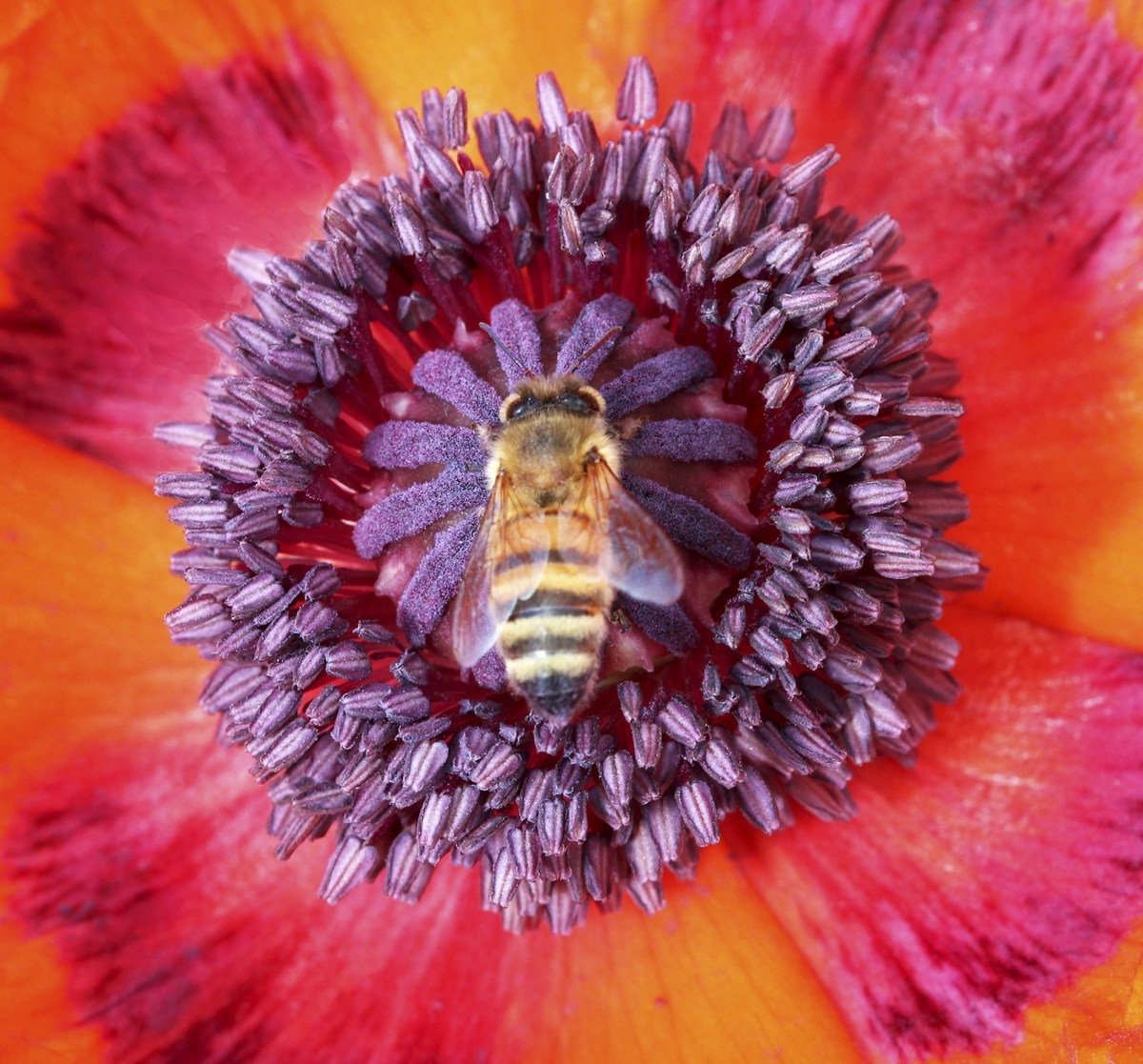
Hidden within even the world’s densest cities, connecting trees, window flowerboxes, parks and gardens, are a complex series of roads you won’t find on any map. No GPS service tracks them, and they’ll never be visible to any of us.
But for our planet’s insects, they’re critical lifeways.
New York ecologist Matthew Lundquist calls them bug roads. They’re the paths pollinating insects take to travel from meal to meal.
While some insects like monarch butterflies can fly hundreds or even thousands of miles, many important pollinators have home ranges no larger than 400 or 500 meters. Some are even smaller. So in order for them to survive, they must find something to eat within their home range, the distance they’re willing to stray from their nests.
In an effort to better understand how these invertebrates travel, eat and persist in the face of biodiversity loss and what some would call an “insect apocalypse,” Lundquist decided to try and actually map where they go.
The resulting paths show pollinators’ barriers to movement, but also the possibilities. Anyone with access to a garden, yard, or even windowsill can do just a little bit to help them survive.
“If we increase the amount of pollinator habitats, especially along the shortest corridors, we have a chance of improving the connectivity between parks and the movement of pollinators,” says Lundquist, a professor at Marymount Manhattan College. “And then we improve the movement of birds and other important animals.”
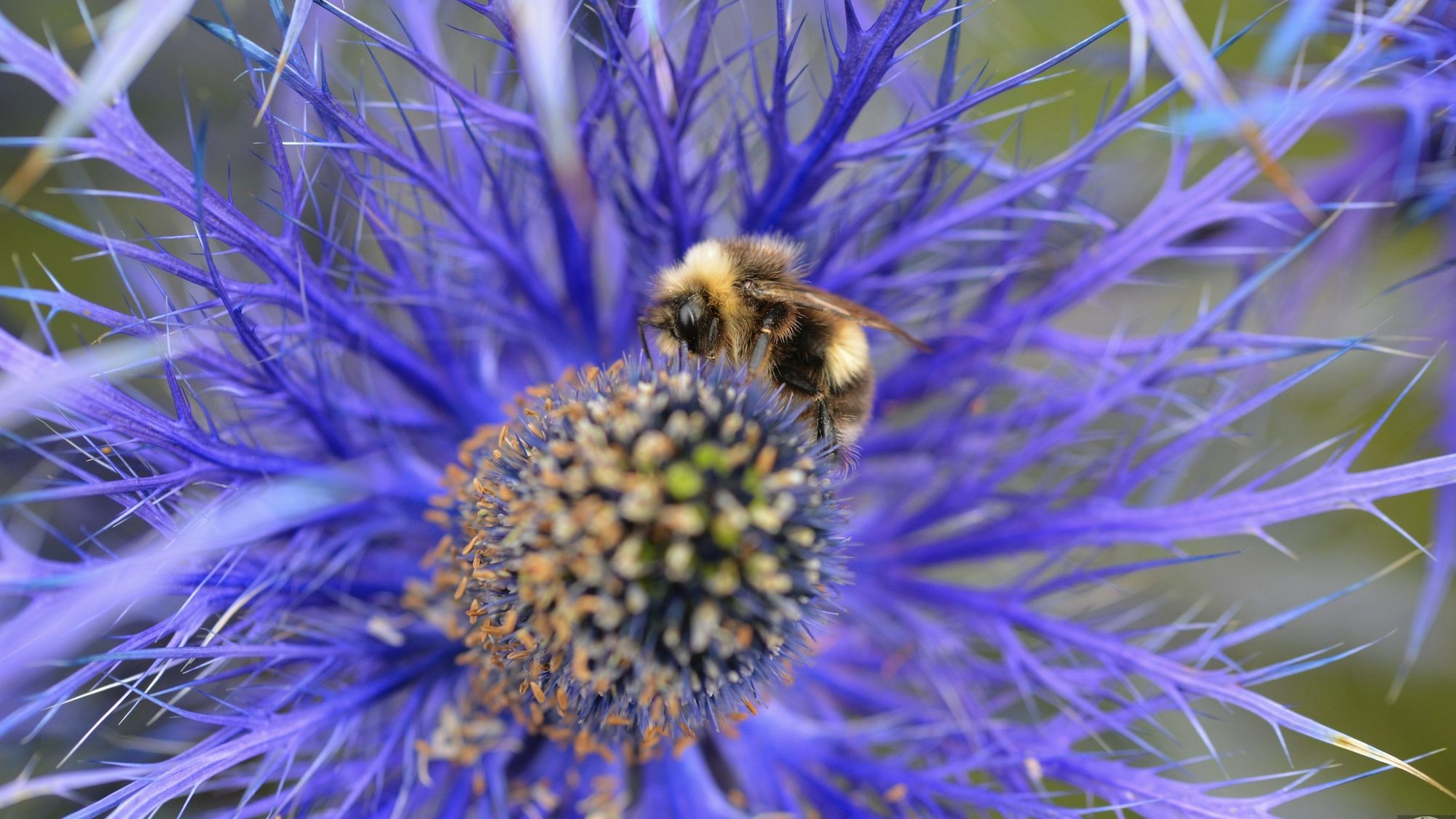
A Path for Pollinators in the Big City
It’s difficult to overestimate the importance of insect pollinators. Pollinators are responsible for about two-thirds of the world’s crop species and are necessary for the reproduction of 85% of the world’s flowering plants. They feed bats, birds, frogs and toads, along with so many of our fish species. Their purpose cannot, in many ways, be underestimated.
And neither can the threats to their future.
The Xerces Society estimates that at least 28% of North America’s bumblebees have declined significantly and 19% of its butterflies are at risk of blinking out.
Humans know and understand many reasons why insects are in such dire straits, but there’s also so much we don’t know, including how insects such as pollinators navigate busy, concrete, asphalt, and car-filled cities.
So after spending years studying how aquatic insects navigate stream systems within cities, Lundquist turned to insects like bees that aren’t tied to water.
Unfortunately for insect researchers, while tracking devices are now small enough to attach to monarch butterflies, they’re still too big for bees. So Lundquist started by first understanding how far various bee species are willing to travel.

“It’s based on their size and also if they’re social or not,” he says. “A honeybee, for example, can fly a lot farther than a leaf cutter bee.”
Why? Because honeybees live in colonies with thousands of other sister bees. Wherever they fly—within reason—at least one of them will be able to return to the hive and tell the others where they found the best food. If a much smaller, solitary leaf cutter bee, strays too far while looking for food, they risk becoming lost and never returning to their hungry offspring dependent on only them.
A honeybee, as a result, can travel more than five miles on a given day. Draw a line five miles out in any direction and the resulting circle covers half of Manhattan. A leaf-cutter bee, on the other hand, may only travel 200 to 250 meters, or about 1.5 city blocks.
Lundquist took that knowledge and compared it with Lidar data of the nation’s most populated city to map any green spaces including city parks, cemeteries and other open land.
From there, he tried determining the best possible path for pollinators to connect from one green space to another. Perhaps unsurprisingly in a city like New York, every possible path had a building in the way, which meant pollinators would need to travel, on average, about 20% farther to navigate human infrastructure.
The end result means many pollinators may never reach newly-built parks if they’re too far away. It could also mean if a park or natural area disappears or is destroyed, the pollinators who lived there won’t be able to find new homes.
Fortunately for city-dwelling pollinators, even those living in cities as dense as New York, there’s hope.

A Single Patch of Green
While so many of the world’s conservation dilemmas may feel weighty and nearly impossible to solve for the average person, the issue of insects and connectivity is one in which we can all do our part, says Katie Turo, a conservation ecologist at Fordham University in New York City.
“The scale of what you can do with what you have is so much smaller for insects,” Turo says. “They have minimal habitat requirements compared to species like elephants or pumas.”
And that means every window box, every garden, every bit of green space could be what some insects need to survive.
Those spaces could become homes to insects, or critical stopovers between larger parks and open areas. And they don’t need to be curated flowerbeds fit to be showcased in magazines. Weeds like clover, an often undesirable plant growing in lawns and garden beds, serves as a high source of protein for vegetarian insects.
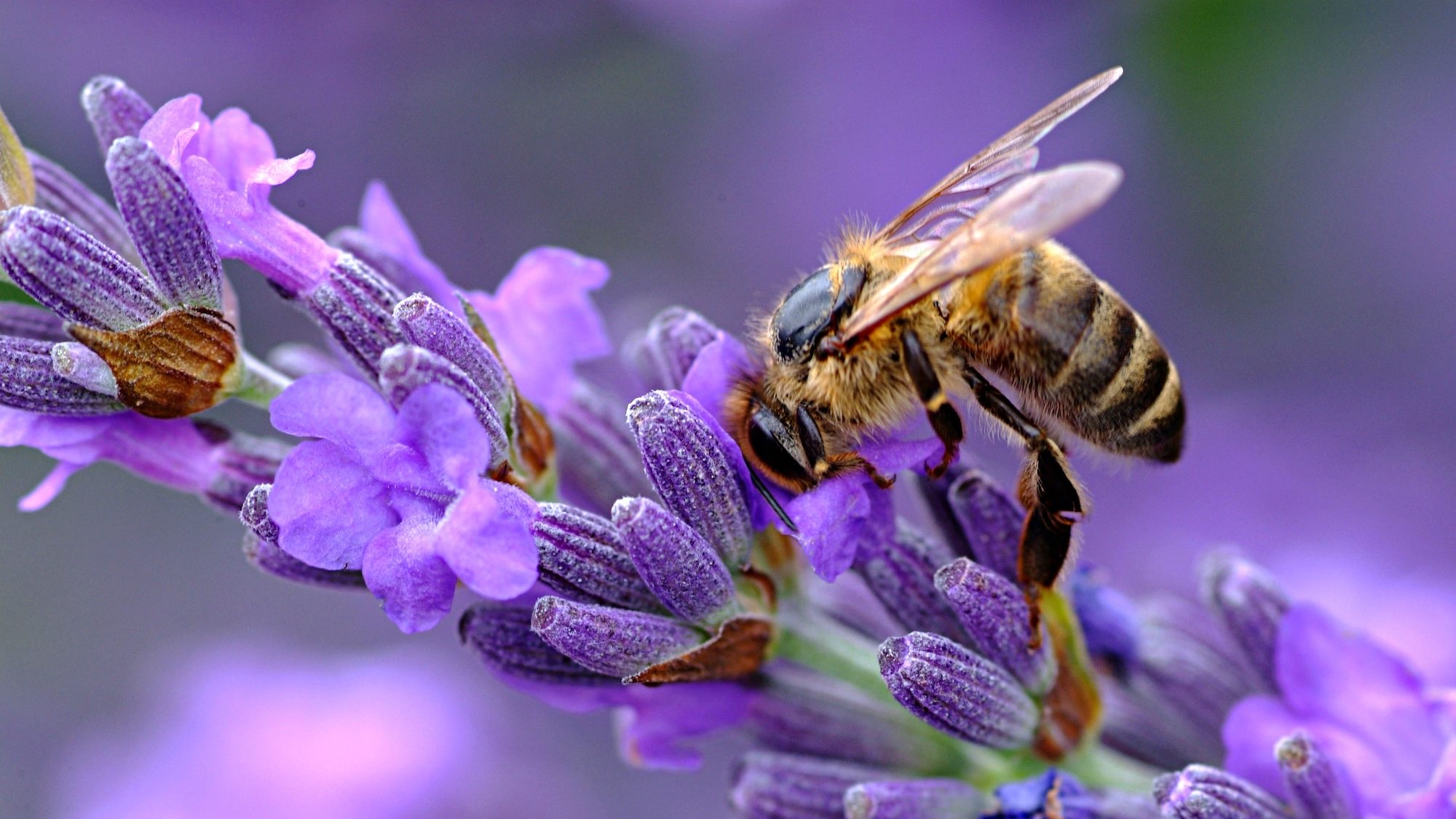
Turo understands the cultural push to mow lawns and keep weeds at bay, but she also emphasizes that every little bit counts.
“Maybe leave patches unmowed, like a small area in your backyard, or instead of mowing every week maybe do it every two weeks or three weeks,” she says. “Each additional delay in mowing helps clover grow and bees feed off it.”
And if you live in an apartment in a city, plant a window box with a variety of flowers, or cultivate that bit of bare ground around a tree lining your street.
One window box or lawn left feral won’t likely change the calculus for our planet’s insects, say both Turo and Lundquist, but collective action can help pollinators as they travel their own busy city streets.
I consider the life ar in general the insects are important because they sustain nature but they are experiencing problems due to the loss of gardens in the cities. It is a big problem because pollinators are boing displaced.