Biodiversity—the variability of living organisms across every ecosystem on Earth — can only be protected once it’s understood. And understanding it takes monitoring: careful, consistent, on-the-ground observation.
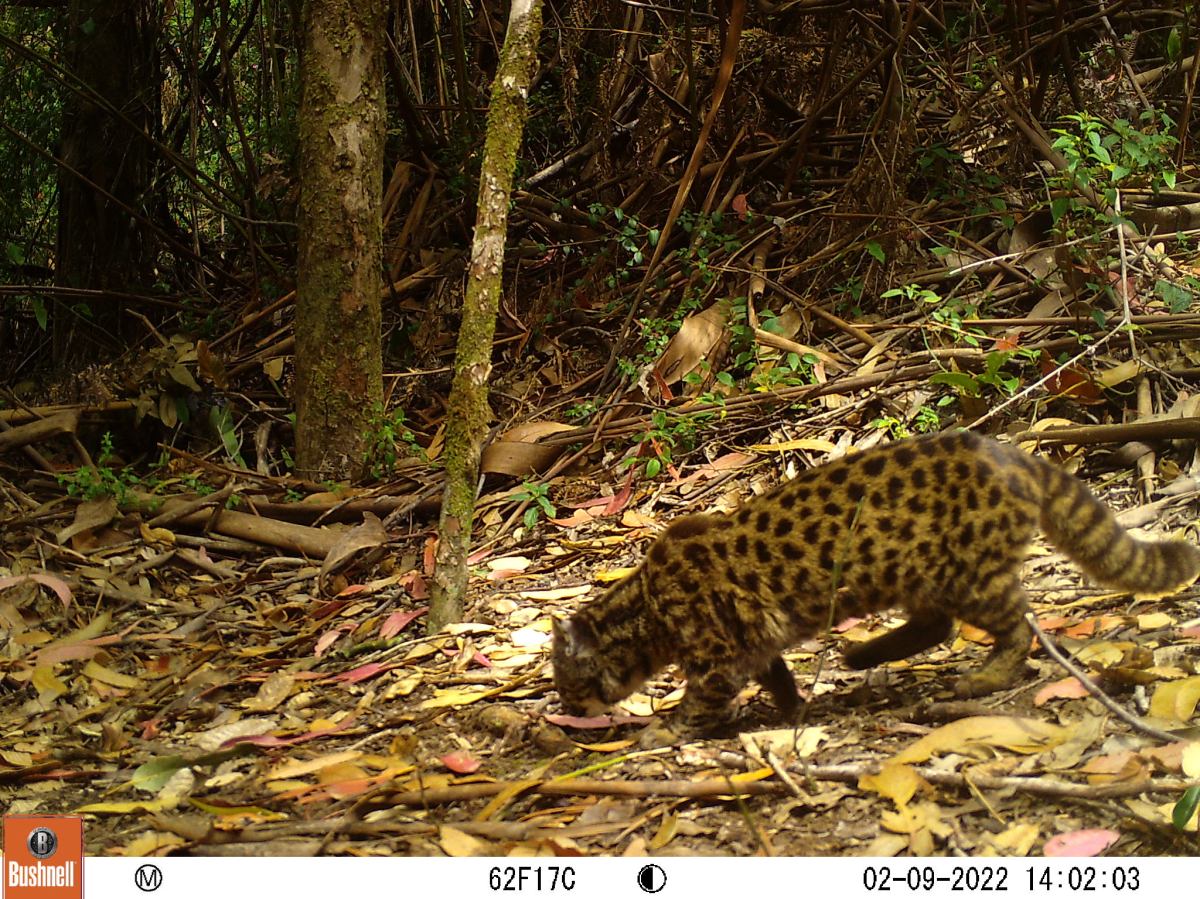
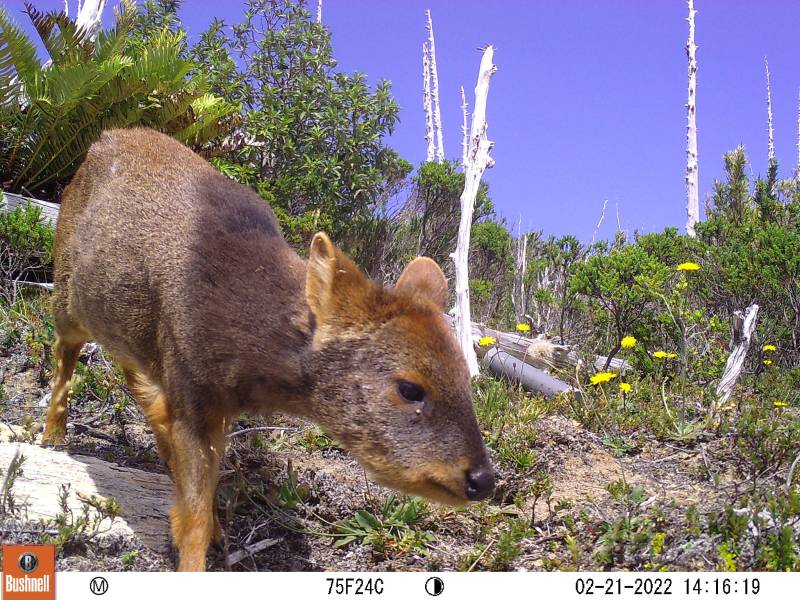
At the Valdivian Coastal Reserve (VCR)—managed by The Nature Conservancy in southern Chile —nine conservation targets guide that monitoring work, from ancient alerce forests and coastal dunes to three iconic animals: Darwin’s fox, the güiña wildcat and the pudú, the world’s smallest deer. Tracking the health of these species and habitats has become a model for conservation across the entire country.
Pioneers of Camera Trapping
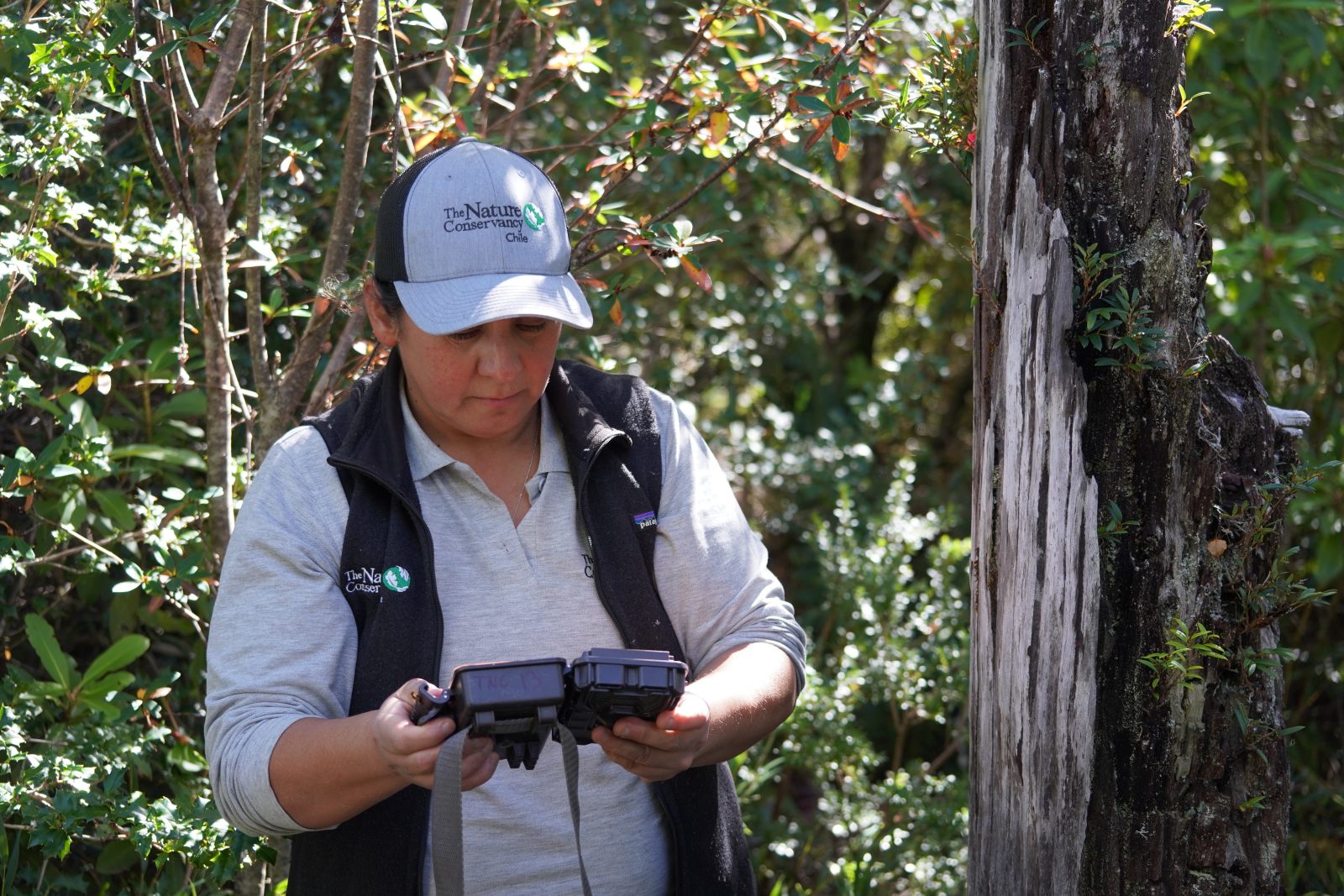
In 2007, Dr. Jim Sanderson, a North American researcher seeking new populations of Darwin’s fox, visited the Universidad Austral de Chile (UACH) in Valdivia. His visit sparked the first camera trap training sessions ever held in Chile—with the practical field work taking place at the VCR. Among those who attended were Eduardo Silva, now a professor at UACH’s Institute of Conservation, Biodiversity and Territory, and park rangers Danilo González and Erwin Ovando.
TNC in Latin America
“That practical workshop was like the beginning of everything,” recalls González, today the VCR’s Coordinator of Park Rangers. “We installed the cameras. Jim showed us how to orient them, what height to place them at depending on the species we wanted to record. We understood it all through practice.”
“The collaborative work here was the precursor of the current National Camera Trap Program,” confirms Diego Valencia, Manager of protected areas and monitoring expert at CONAF. Today, the monitoring program spans more than 35 protected units, over 2,000 cameras, and 2,000 monitoring points from Arica to Magallanes.
A Biodiversity Hotspot in Disguise
The forests of Chaihuín made headlines in the late 1990s for all the wrong reasons—the logging of ancient alerce trees and the stripping of native habitat. In 2003, the Valdivian Coastal Reserve was established, and the land’s story changed. Today the VCR and the adjacent Alerce Costero National Park together encompass 75,000 protected hectares, pioneering a model of integrated planning, monitoring and community engagement.
“The VCR is a box of surprises,” says Francisco Fontúrbel, a professor at the Pontificia Universidad Católica de Valparaíso known for his research on the monito del monte—a tiny, ancient marsupial endemic to these southern rainforests. “When you arrive and see the eucalyptus, it doesn’t seem very interesting. But with camera traps and wildlife surveys, you find an enormous diversity of species.”
Behind the eucalyptus trees that have been interacting with the native forest since the reserve was created, unique and vulnerable species live. In a landmark discovery in 2014, Darwin’s fox (Lycalopex fulvipes) were confirmed in the reserve for the first time, a scientific milestone with global significance.
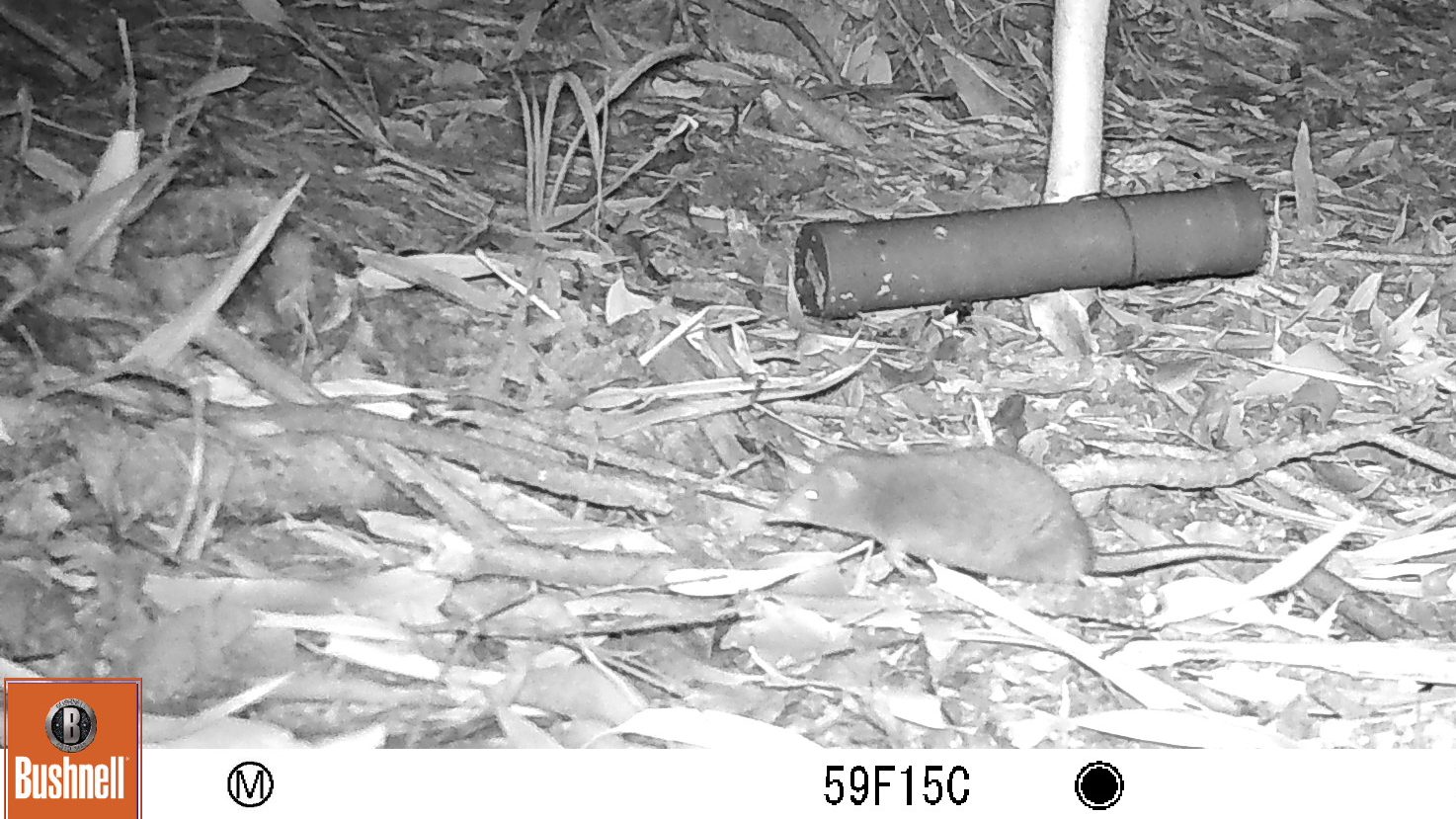
Between 2015 and 2022, camera traps at the VCR and the Alerce Costero National Park detected the presence of the long-nosed shrew opossum (Rhyncholestes raphanarus)—the only surviving member of the Rhyncholestes genus and a relict species—in evergreen and alerce forests, as well as in eucalyptus plantations.
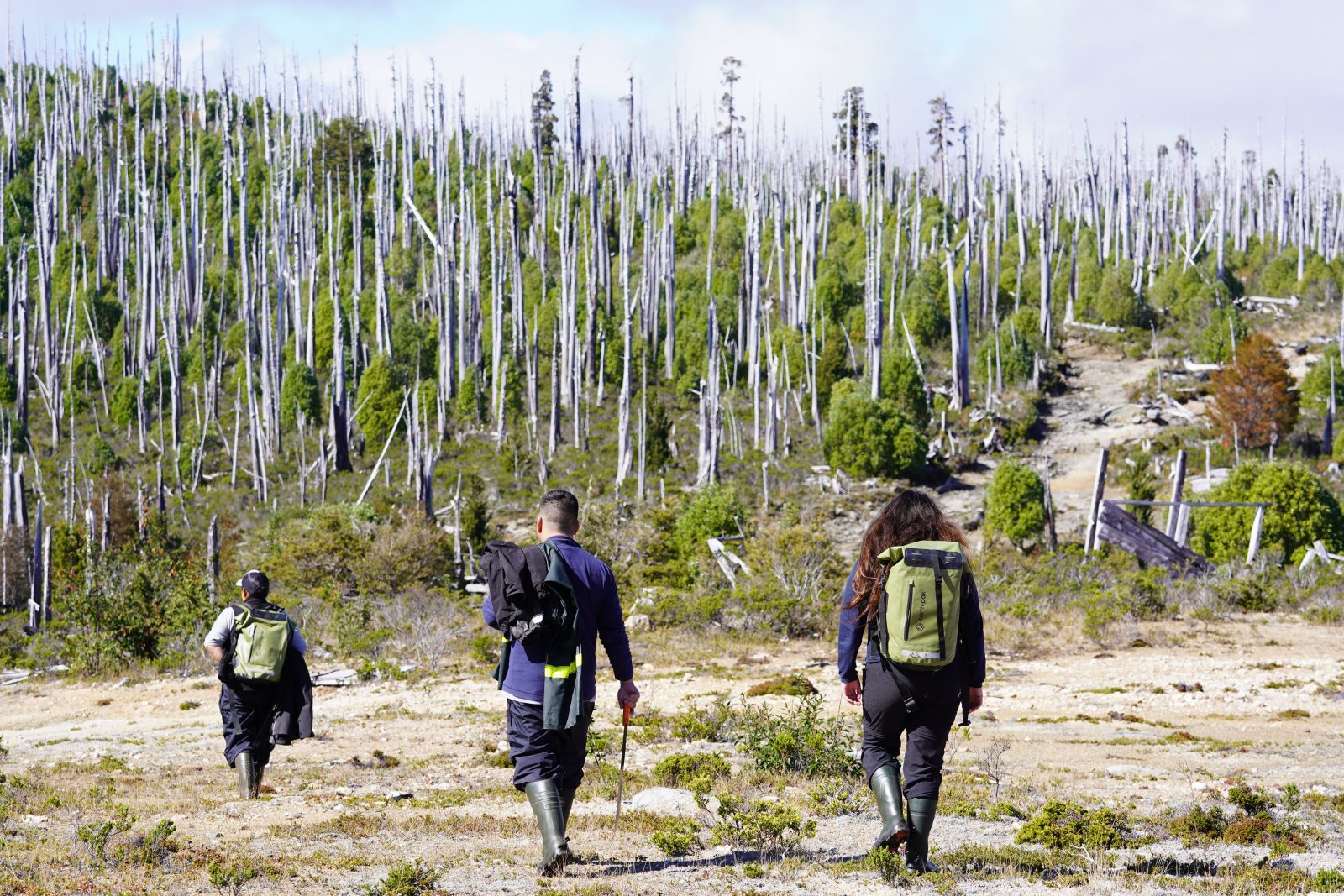
“You can see the burned larch trees in the higher areas, and in other spots, you can see the replacement process. Twenty-five years ago, the area was the cause of the Chilean forest tragedy, and today, it is one of the main examples of conservation in Chile, a total change of trajectory,” Silva points out.
“When you talk about unique amphibians or critically endangered populations like Darwin’s fox, the relevance of this reserve becomes planetary,” he says.
“We Count Life”
Park ranger Jemima Sánchez, who grew up in the area and now leads the reserve’s amphibian monitoring program, puts it plainly, “Monitoring amphibians is fascinating—it’s not just about recording data on paper. It’s about taking the pulse of a place, a place you come to love, care for, and protect. We don’t just count individuals; we count history, persistence, and resilience. It’s filled with magic. We count life.”
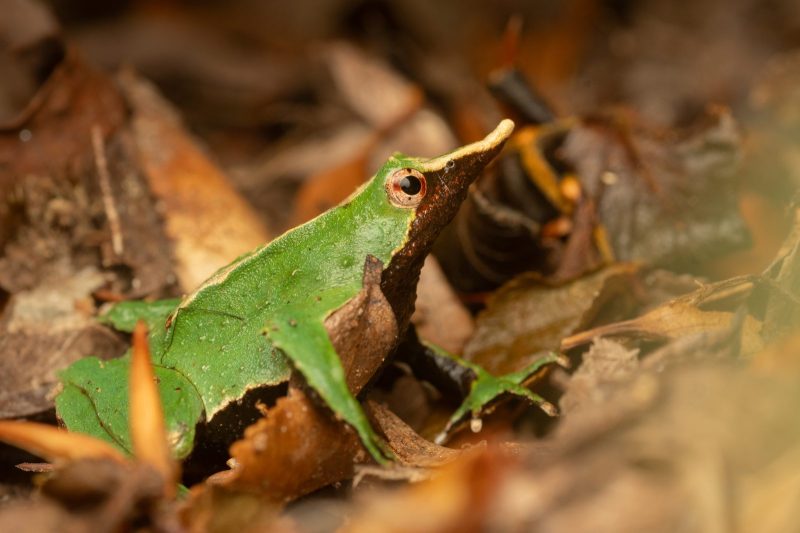
The Valdivian Coastal Reserve is home to at least 13 amphibian species, many of them endemic and highly sensitive to environmental change. Among them is Alsodes valdiviensis—the Cordillera Pelada spiny-chested frog—an endangered species found only in Chile’s Los Ríos Region. Until just over a decade ago, the reserve was the only place where its presence had been documented, underscoring the site’s critical importance for biodiversity conservation.
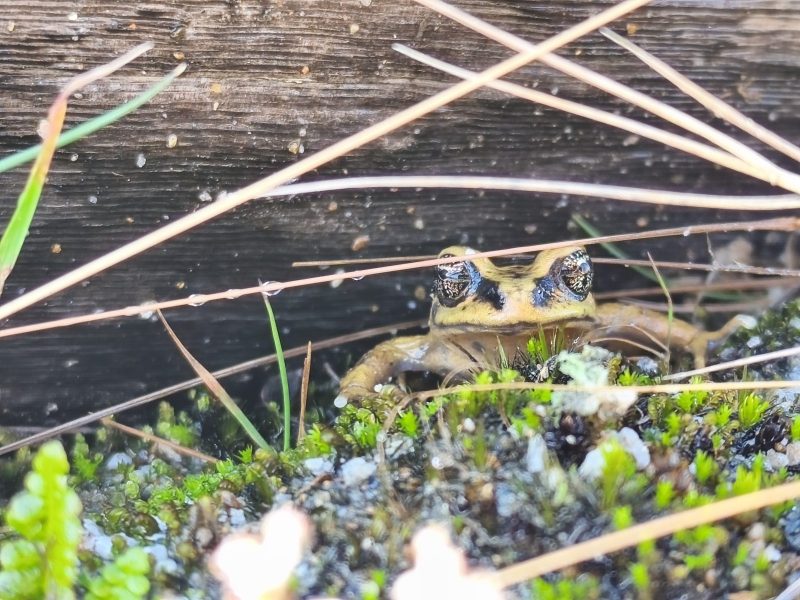
In April 2026, reserve rangers carried out a new amphibian monitoring campaign in the mountainous Lahual sector, adjacent to Alerce Costero National Park. Using a methodology developed by The Nature Conservancy and shared with CONAF, researchers are surveying at three monitoring sites. Despite a landscape heavily altered by forest plantations, remnant ancient alerce forests and native forest regeneration persists—highlighting the long-term value of field monitoring for guiding conservation decisions.
Fontúrbel adds a thought-provoking observation, “The abandoned eucalyptus plantations with regenerating native undergrowth may be becoming what ecologists call novel ecosystems— human-altered environments that have found their own self-sustaining dynamics. “I believe the VCR offers an excellent natural laboratory for studying these ecosystems and answering fundamental questions in ecology and evolution.”
Collaboration and Hope
A native forest restoration project is currently underway in the Valdivian Coastal Reserve as the result of a long-standing aspiration expressed by local communities. Emerging from a participatory consultation process, the initiative seeks to restore 3,000 hectares previously planted with eucalyptus through low-impact harvesting and the replanting of native species. The restoration work will be carried out using native species, including coihüe, notro, and ulmo, cultivated at the reserve’s nursery. Led by local workers and reinvesting all revenues into restoration, the project reflects a shared commitment to ecological recovery, local livelihoods and the long-term care of this unique landscape.
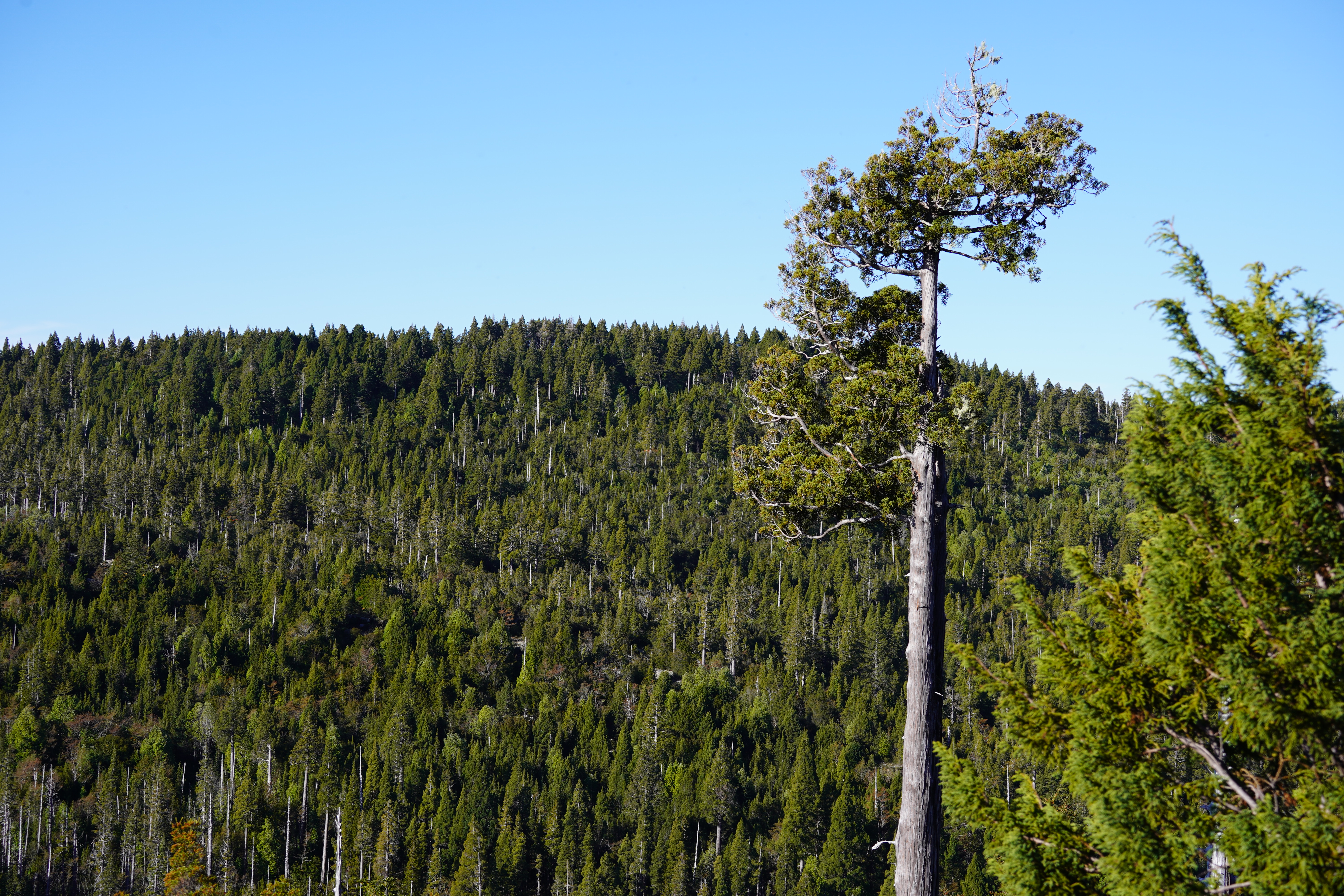
© Paula Noé
To learn more about the Valdivian Coastal Reserve and The Nature Conservancy’s work in Chile, visit nature.org.
Join the Discussion