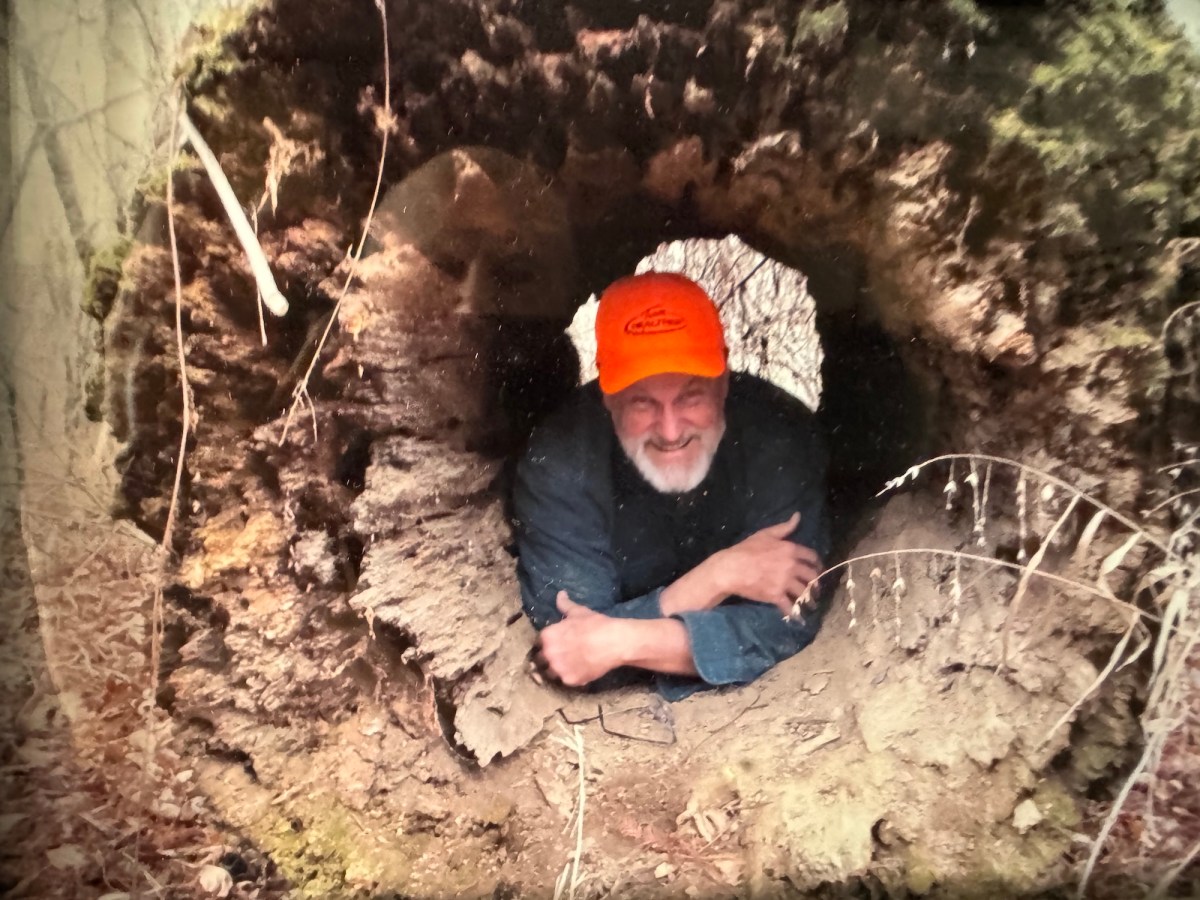
Gary Williamson, while leading a nature hike, pointed out a flock of purple finches. As the group enjoyed the birds, Williamson noticed something else: the tree where the birds perched. Specifically, it was a sumac. A very large sumac.
A sumac, even an especially large one, would escape the notice of most people. But Gary Williamson has been a curious and attentive naturalist since he was a young child. And he had recently started paying attention to big trees. That sumac would turn that interest into a decades-long quest.
When Williamson got home, he called a forester friend to note the big sumac. The friend in turn put him in touch with science teacher Byron Carmean, who enjoyed finding big trees. The two returned to the sumac and measured it.
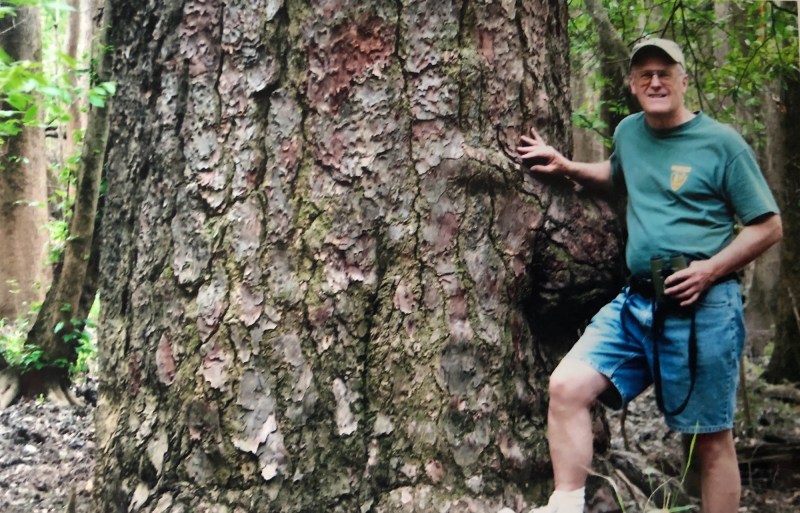
The sumac turned out to be the biggest in the state of Virginia and in the nation, what is termed a “Champion Tree.” That was in the 1980s, and it was the beginning of a quest that is still going today.
“Byron and I started exploring around the Chesapeake, Virginia,” Williamson says. “We went canoeing and hiking and looking for trees. We found seven or eight other champions. Soon, we had found more Champion Trees than anyone else.”
Williamson, age 82, has devoted his career and free time to conservation and natural history. He has been a Nature Conservancy volunteer for more than 40 years, contributing to the organization in many ways. He’s a herpetologist, park ranger, author and canoeist. And he’s always on the lookout for big trees.
I recently had the chance to talk to Williamson about his passion for conservation and how his search for Champion Trees contributes to the protection of the natural world.
A Life Outdoors
Williamson was born in Norfolk, Virginia, but moved to western Pennsylvania at an early age so his family could support his ailing grandfather. His grandfather, an expert fly fisher and hunter, and ignited an interest in nature that remains to this day.
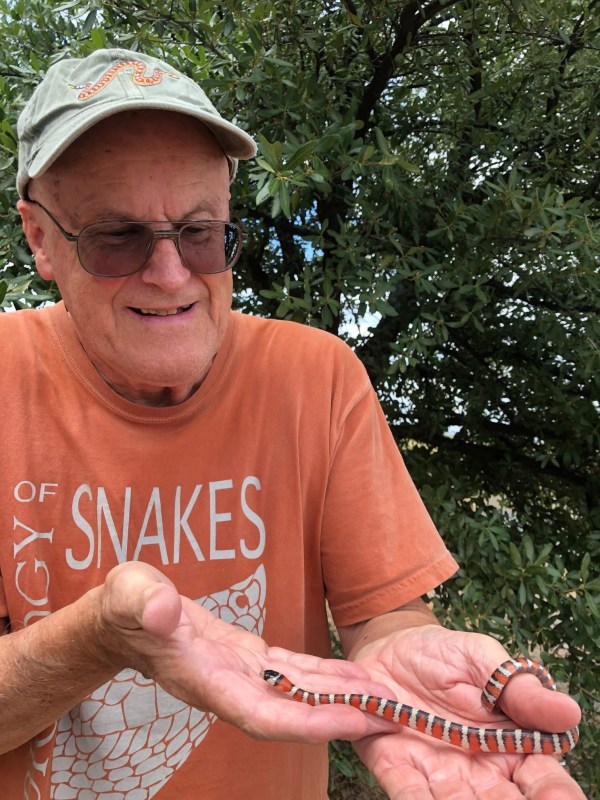
“I developed a love for the out-of-doors in western Pennsylvania,” he says. “I caught crayfish and snakes. I’d play in the creek. As I met others with similar interests, my love of snakes and other wildlife grew.”
He fortuitously met other adults who encouraged his interest in snakes and other wildlife, leading to a career as a state park ranger, herpetologist and freelance wildlife biologist. This gave him plenty of field time as well as sharing his love of nature with interested visitors. Williamson found he still had the energy to continue these activities outside of work. He especially appreciated the approach to land and water protection activities of The Nature Conservancy (TNC), which led to decades of volunteer activities.
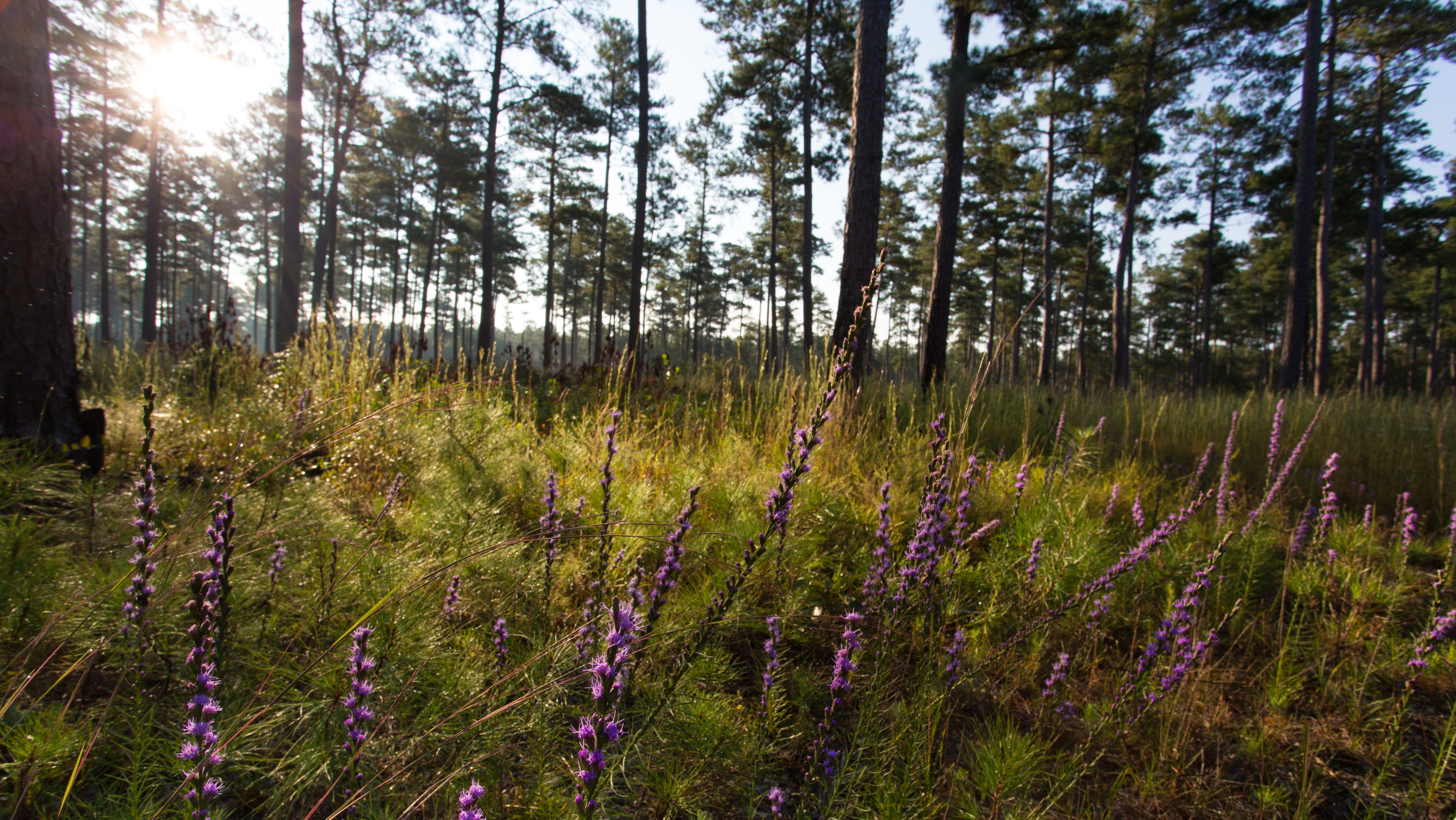
“I’ve always been impressed with the work TNC does,” Williamson says. “They work with landowners. They’re doing tangible work like replanting longleaf pines. They focus on habitat, and when you save the habitat, you save everything. I really feel that without TNC, and similar organizations, many of our special wild areas wouldn’t be here.”
Over the years, he’s logged an incredible list of contributions to TNC, including surveying endangered red-cockaded woodpeckers, collecting seeds, monitoring easements, maintaining trails and leading canoe trips.
“Gary’s drive to study and enjoy nature with others and his quest to find the biggest trees in Virginia has led to the protection of some of southeast VA’s finest swamp forests,” say Brian van Eerden, director of TNC’s Virginia Pinelands Program. “His knowledge of the natural history of the region is a treasure.”
His love of the natural world and for TNC’s work is often contagious. He recalls one canoe trip to Virginia’s Pinelands that he found fairly routine. “I pointed out the bald cypress, a watersnake here and there, a prothonotary warbler calling out,” he says.
Later, he learned that one of the participants on that trip was so inspired by the place that he gave a significant donation to protect more of that habitat.

Williamson has also taken copious field notes of his time spent on TNC preserves. Those journals are currently being catalogued, providing an invaluable record of past and current ecological conditions.
Inevitably, Williamson’s love of big trees has intersected with TNC’s work. He was once hired to explore the Blackwater River area to rank the top 10 areas for mature, old-growth trees.
“One of the areas I found became a TNC preserve, one a state preserve,” he says. “Most of those areas I identified have been protected.”
Tree Amigos
Williamson and his friend Byron Carmean have been exploring Virginia for big trees for decades. Recently, they’ve been joined by a younger tree hunter, Dylan Kania, who works at Norfolk Naval Shipyard and grew up in the woods around Suffolk.
“Byron and I would go to interesting areas and explore,” says Williamson. “Dylan brought a new dimension. We’re in our 80s and he’s in his 20s. He understand the technology. He’s mapped and located a lot of trees for us.”
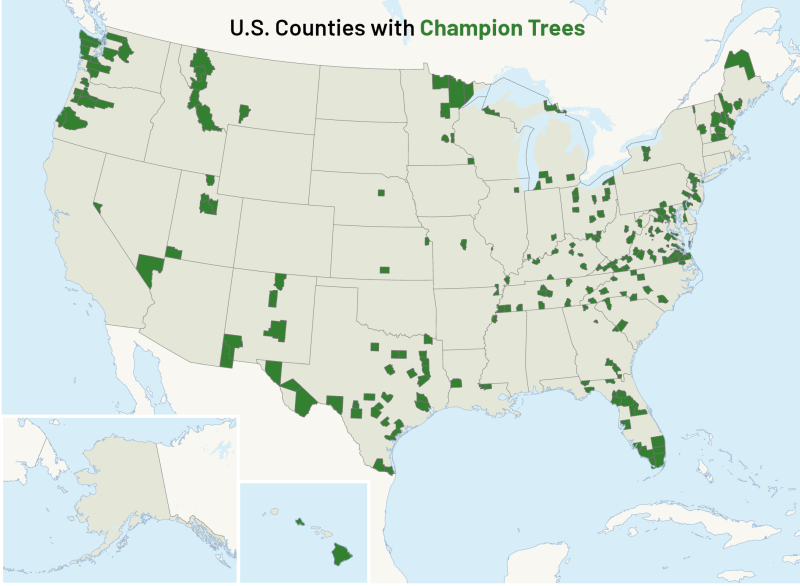
They’re now affectionately known as the “Tree Amigos,” and for good reason. Virginia, with a diversity of tree species and relict old-growth stands, is the top state for Champion Trees. It has 380 living state champions and 93 that have gone on to earn the national title, which is administered by the National Champion Tree Program at the University of Tennessee.
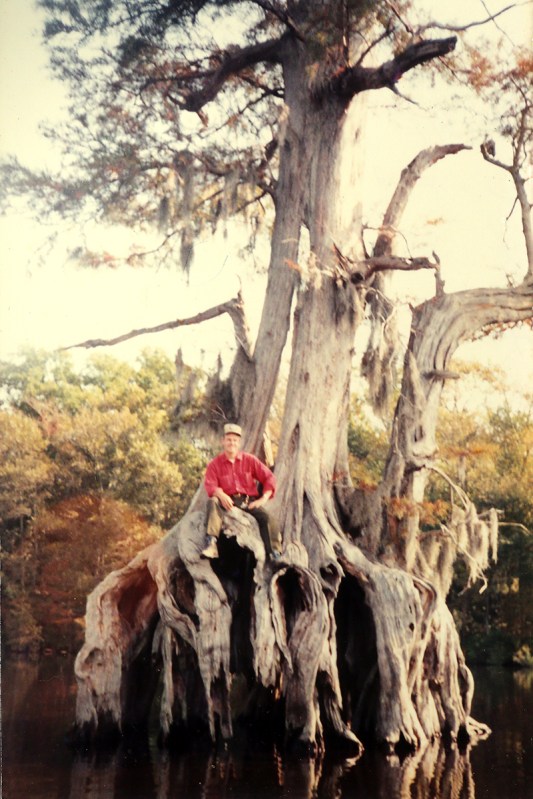
“We’ve found 62 of those national champions, more than anyone else,” Williamson says.
Champion trees can be found anywhere, and the Tree Amigos have been known to knock on doors asking to measure large trees they can see in backyards. The trees are evaluated using three measurements: height, girth and crown spread (where the top section branches out). There is a point system that weights the first two more heavily.
“Hunting for Champion Trees is an activity you can do year round,” Williamson says, adding with a chuckle. “There’s no season or bag limit.”
They have found Champion Trees on TNC preserves, including on the Blackwater River Preserve, a property that Williamson identified for protection years earlier. That preserve is home to the champion persimmon and champion bald cypress.
The hunt has taken them to magical old-growth forests, but they’ll search for old trees anywhere. Sometimes, the Champion Tree is a surprise: the champion silky camellia is only 25 feet tall, or what Williamson calls “the tiniest titan.”
But Williamson is most taken by the big bald cypress, and the stories they tell.
They’ve Seen The Wind Blow
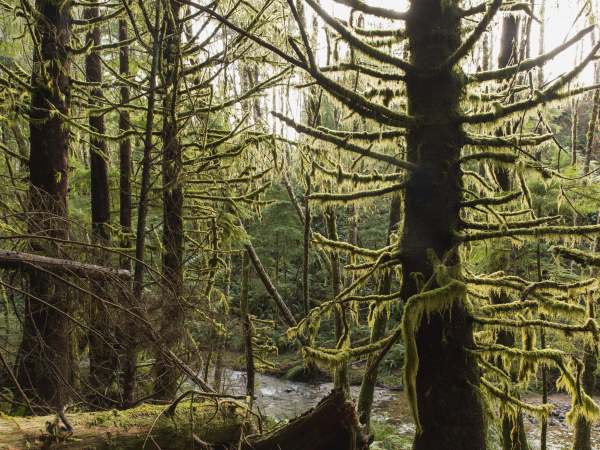
Williamson loves canoeing and kayaking, and has paddled all the rivers in the region. As he paddles, he’s looking for bald cypress forests, his favorite habitat. These trees grow in flooded wetlands and are habitat for warblers, wood ducks, a diversity of turtles and snakes and more. Slowly canoeing through them is a magical experience.
The bald cypress trees are often called “the redwoods of the East,” with the tallest documented tree reaching 145 feet.
“Some of those tall bald cypress are 1000 years old,” says Williamson.
He believes documenting these trees can lead to their protection. And he sees that many people connect to the stories of these ancient trees.
“Those old bald cypress have seen the wind blow,” he says. “They’ve experienced hurricanes and drought too. Their rings record fire. It’s fascinating to consider what those trees have experienced.”
Even in his 80s, Williamson remains on the hunt for big trees, still searching for wildlife and still volunteering. When I spoke to him, he noted that if he didn’t have this appointment, he’d be out kayaking. As we wrapped up our call, he spoke of an upcoming trip to Arizona and New Mexico to search for reptiles and amphibians.
“I want to keep helping TNC. I’m going to try to keep doing what I can do,” he says, then laughs. “I’m 82, still not through, with lots to do.”
Join the Discussion