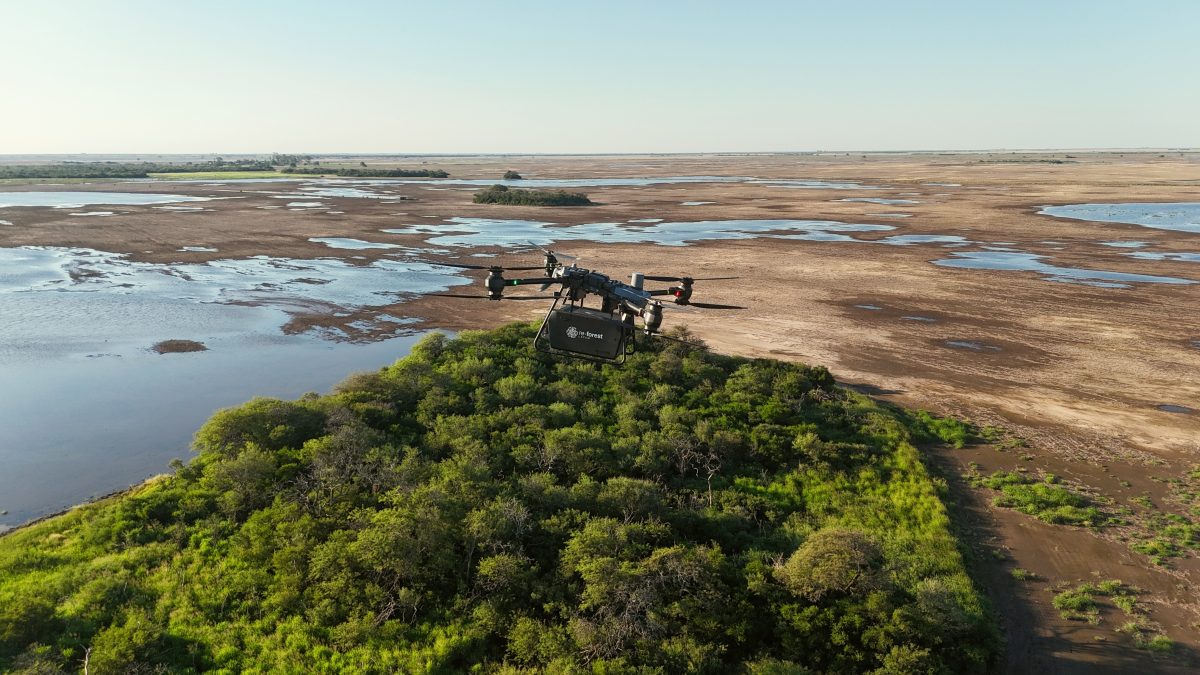
Planting a tree has always been on the list of good deeds—both individual and collective—to contribute to improving the quality of life on the planet. But in the 21st century, planting methods are changing. At TNC Argentina, we’re exploring a new aerial seeding technology using high-precision drones that deploy biodegradable capsules containing native seeds, nourishing the soil and revitalizing this ecosystem.
And it’s not science fiction: it’s an intervention we carried out together with the startup ReForest Latam to promote restoration in degraded areas destined for agricultural production in Tostado (Santa Fe) and Bandera (Santiago del Estero), in the heart of the Gran Chaco.
This intervention is part of a project by TNC Argentina in partnership with the John Deere Foundation, which aims to increase forest cover in agricultural landscapes. In this area, the goal is to plant 100,000 trees. More than 300 hectares (about 740 acres) have already been planted using traditional methods with seedlings.
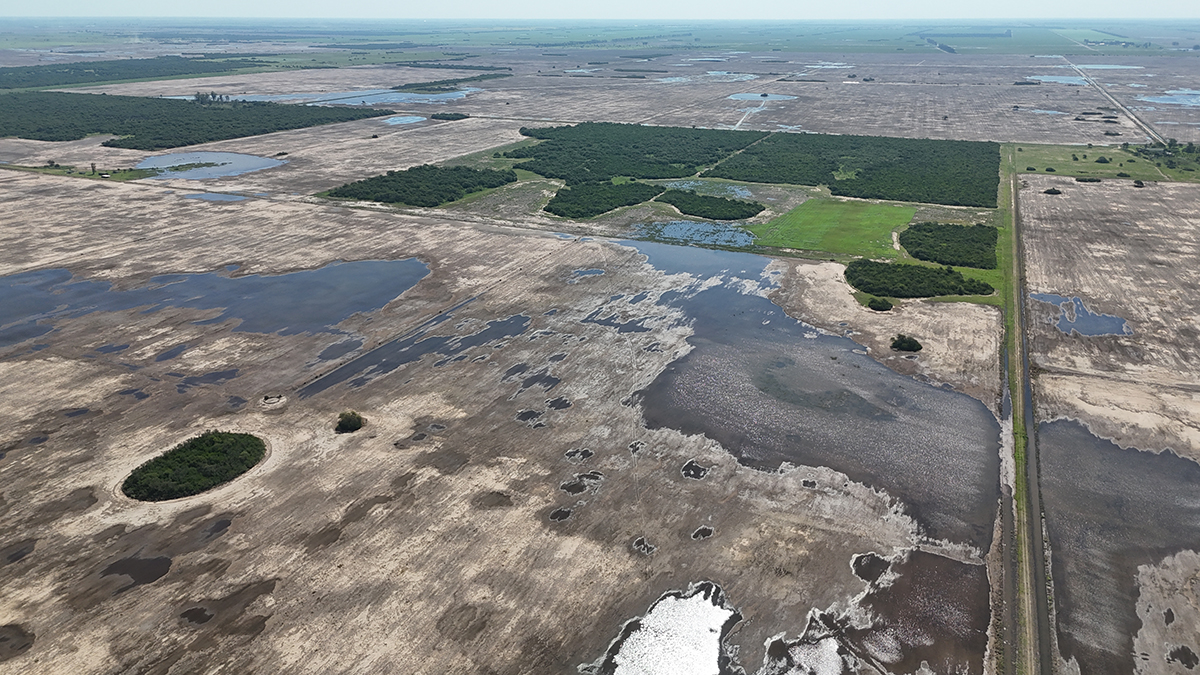
Maia Plaza Behr, a forest conservation and management specialist at TNC Argentina, explains: “The Gran Chaco is a vital, diverse, and deeply productive territory. At the same time, it is one of the most deforested and degraded areas on the planet. Restoration efforts are crucial. We are looking to explore complementary strategies, based on technology and innovation, that allow us to scale up these interventions. Drone-assisted regeneration could be a key component in this.”
Why Reforest from the Air?
In the context of forest restoration in hard-to-reach areas, planting nursery trees is relatively expensive and complex to implement due to the logistical complications involved.
The use of drones for planned seed dispersal allows us to overcome these operational difficulties, lower costs, and cover large areas. This technique also makes it possible to manage the forest through the regeneration of particular species and in deforested areas, which suffered fires or environments where it would be unfeasible to carry out plantings manually.
The goal of our current pilot project is to reforest and enrich 13 hectares with aerial seed dispersal, which will represent 8,000 native trees using assisted regeneration techniques. The main species is the white carob tree (Neltuma alba), accompanied by species such as yellow floss silk tree (Ceiba speciosa), guayacán and Santiago red quebracho (Schinopsis lorentzii).
These species are naturally adapted to the climatic conditions of the Gran Chaco. Furthermore, native trees are essential for restoring ecological interactions. They facilitate the movement of fauna and insects, thus aiding in the recovery of functions lost in a highly fragmented landscape.
Crew, Ready for Takeoff
Aerial seeding is carried out using drones that fly over areas previously delimited based on their logistical, productive, ecological, and forestry conditions. This technology was provided by ReForest Latam. Ignacio Gasparri, science director at ReForest, explained, “Our approach combines biotechnology applied to seeds, precision drones and ecosystem analysis, with the aim of making restoration efficient, adaptive and scalable.”
Selecting the areas to be treated and which native tree seeds to use are part of the planning stage. ReForest combines biotechnology and data science to accurately match tree species to specific environments.
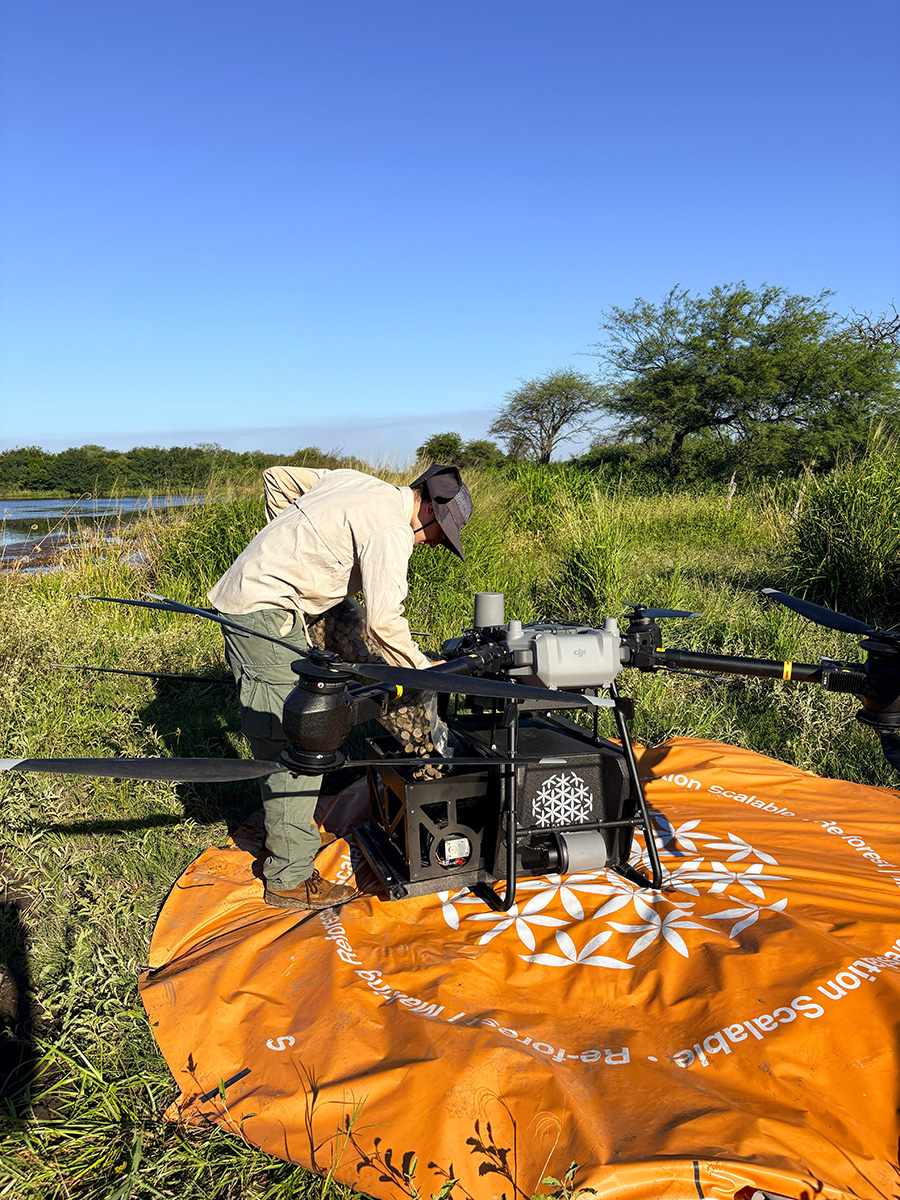
The seeds aren’t transported loose on the drones: they’re prepared in biodegradable capsules (iSeeds) that include biostimulants to boost germination and seedling establishment. The formulation of these capsules is designed according to local genetics, ensuring that each flight meets the specific needs of the area.
The preliminary work involves characterizing sites to be intervened using geographic information systems, an ecosystem analysis platform, and Artificial Intelligence. The startup team explains that it’s like doing a “tailor-made planting,” adapting each intervention to the real conditions of the place to increase the chances of success and regenerate the ecosystem more intelligently.
Takeoff Authorized
Once the capsules are ready, it’s time for the flight. ReForest uses drones equipped with seeding technology and a specially designed container to store the capsules and disperse them.
Before takeoff, it’s necessary to assess the weather conditions. This is not only to ensure flight safety, but also to guarantee dispersal windows that anticipate rainfall, which is crucial for seed germination without being exposed to drought or extreme heat.
Seed Rain in Santa Fe and Santiago del Estero
Each flight results in a shower of iSeeds, as the quantity of seeds included for dispersal is oversized compared to the desired plants. This is because natural processes continue to operate and it is not realistic to expect a plant from all the iSeeds that are dispersed.
To continue the learning process, control plots were installed on the land where the capsules are monitored every 45 days. Approximately 120 days after the flights, the seeds are expected to have germinated and the seedlings established. The site is then visited to assess the presence of new plants, comparing the treated and untreated areas.
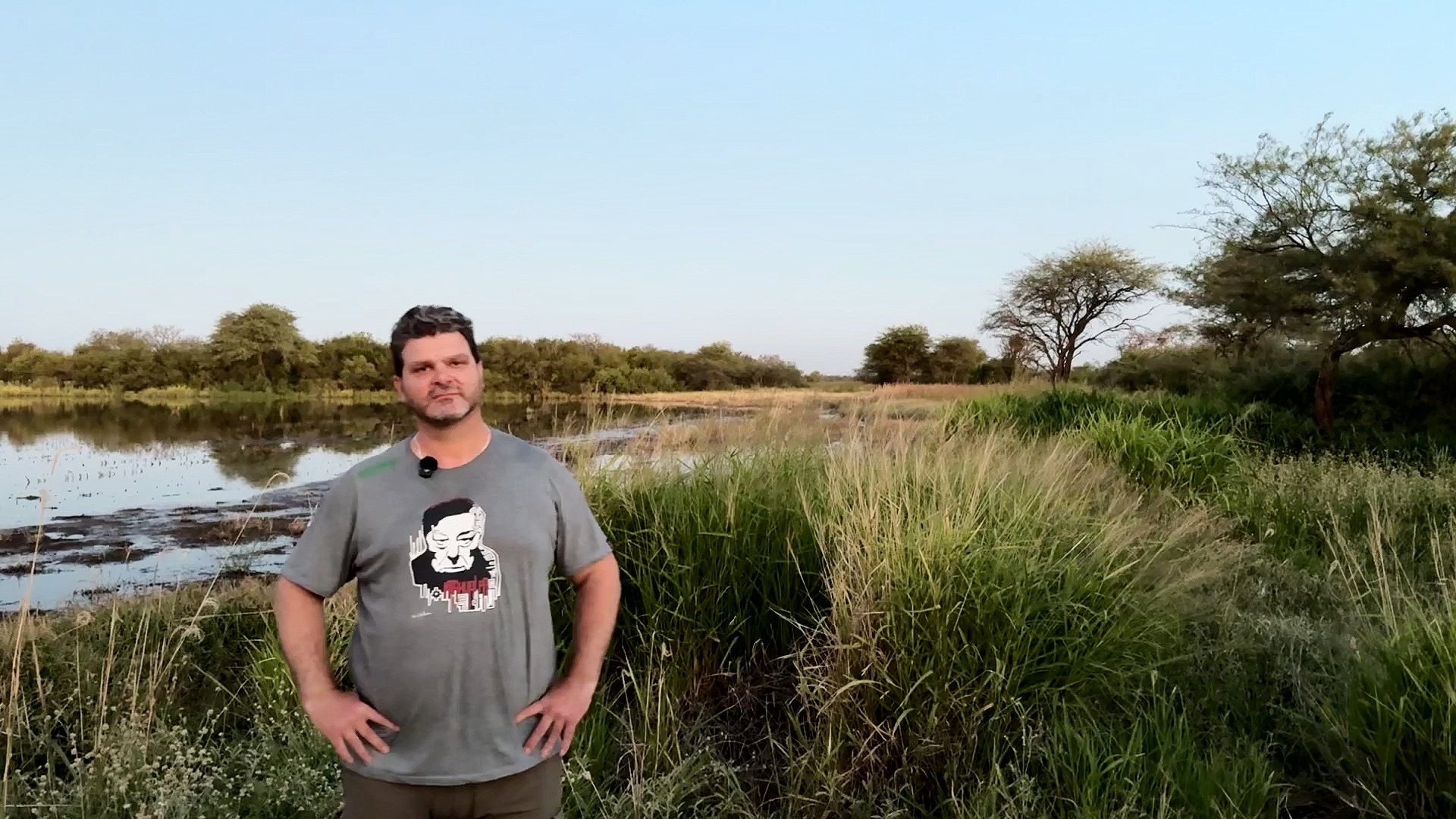
Part of this action was carried out in the farm of Mariano Fiori, an agricultural farmer from Santa Fe, who opened his gates for the restoration. “I’m interested in implementing integrated livestock management in the forest,” he said. “I realized the value of having trees. But most importantly, I want to pass this legacy on to my children and future grandchildren. I’ve learned that progress comes from working with nature, not against it.”

Join the Discussion