Kristen Lear knows bats. Even before she joined Bat Conservation International as the director of their Agave Restoration Initiative, Lear spent more than 6 years of doctorate research working with nonprofits and communities in northeastern Mexico. She was studying nectar-eating bats, including the endangered Mexican long-nosed bat, as well as how those communities were harvesting and using the agave plants the bats relied upon.
Now the Agave Restoration Initiative she directs is working across 14 states in the U.S. and Mexico to, among other things, restore agave plant habitat to places like The Nature Conservancy’s Marathon Grasslands Preserve in West Texas. But to help rebuild habitat where the bats need it, she first has to discover where they’re migrating. And that’s no small feat.
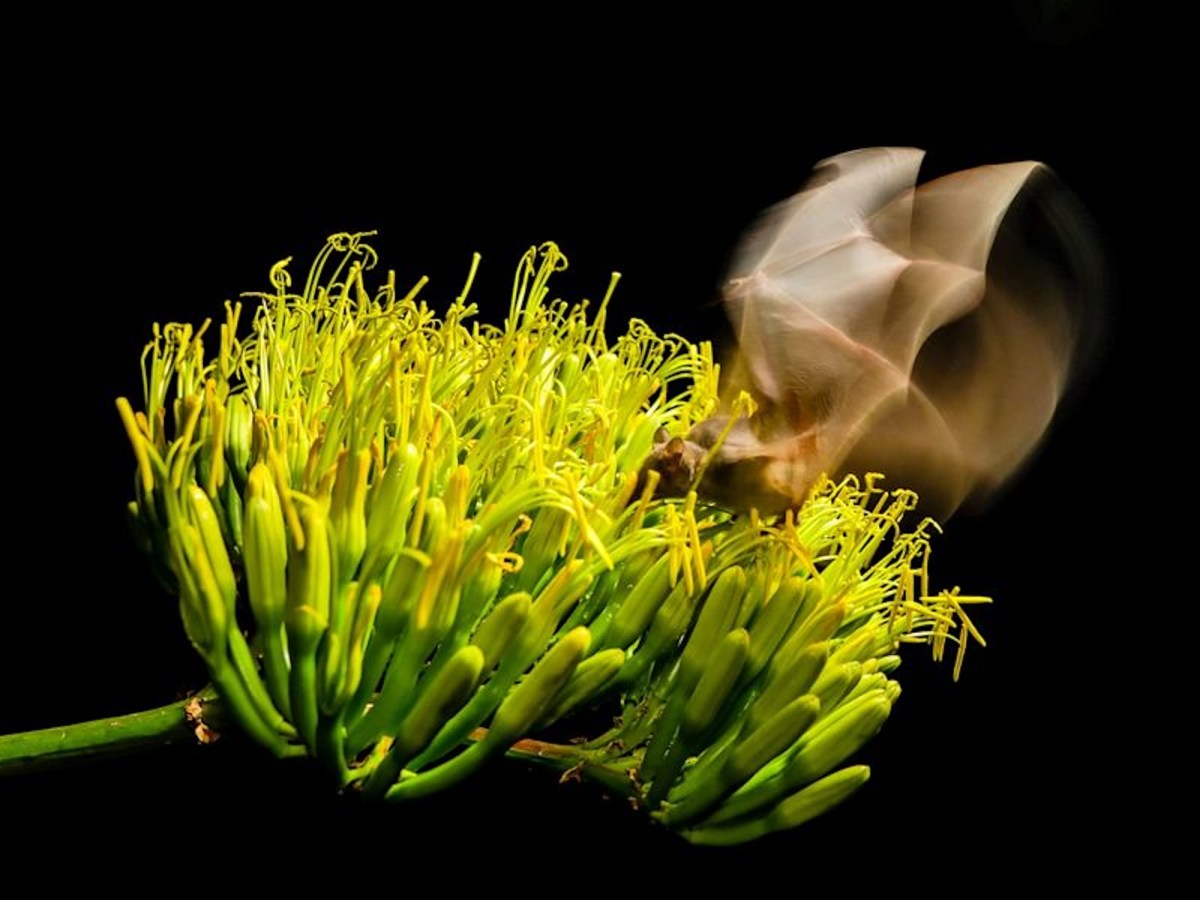
- The Mexican long-nosed bat is this fluffy-looking medium-sized bat with a 3-inch-long tongue. Tell me more about this species.
-
It’s one of three nectar-feeding bat species that migrates annually into the United States from Mexico. All three of these species are pollinators of important plants like agave. In fact, the Mexican long-nosed bat is one of the primary pollinators of many of agave species, and [in turn] agaves are the only known nectar source for that bat species in Texas and Northeast Mexico.
A bat approaches a flowering agave stalk in West Texas. © Bat City Films
- So these bats and agave—a type of succulent with a super tall flower shoot—go hand in hand.
-
Exactly. These bats, just like hummingbirds or butterflies, are primarily going for that sweet nectar [from the agave’s flower], and when they’re drinking the nectar, they’re also getting the pollen, which is a good source of amino acids and other nutrients for them.
But, compared to pollinators like hummingbirds or insects, these bats tend to spread a lot more pollen across a much larger distance, up to 30 or 40 miles one way in a single night. They’re helping spread that pollen to different agave patches and helping maintain healthy genetic diversity of these plants. So they’re really important for agaves, and without these agave plants, these bats would not have food.
- And people use agave too, right?
-
Yeah, it’s this really cool intricate system of relationships. We use agave to make products like tequila and mezcal, rural communities use agaves for food and beverage products. And wild agave populations feed livestock and wild ungulates, especially in times of drought. But there’s unfortunately lots of threats to this.
- What sort of threats?
-
Two things [for the bats]: One is loss and disturbance of roost sites—essentially people destroying or going into caves and disturbing the bats. And then the second primary threat to the species is loss and fragmentation of that agave foraging habitat. Unsustainable grazing and agricultural expansion is degrading and fragmenting agave habitat across both countries, and direct harvest of wild agave plants can impact populations. And then natural stressors, such as drought and wildfires, are becoming more frequent and intense.
- So how do you begin to help these bats and the agave they need?
-
We know that there is a roost for the Mexican long-nosed bat in Big Bend National Park in Texas. It’s the main roost of this species in the United States. And we know that there is another Mexican long-nosed bat roost in the bootheel of New Mexico. But we don’t know how they get between Big Bend and the New Mexico bootheel. So we’re doing things like eDNA research to try to figure out where exactly they’re migrating through so we can then protect and restore those foraging habitats.
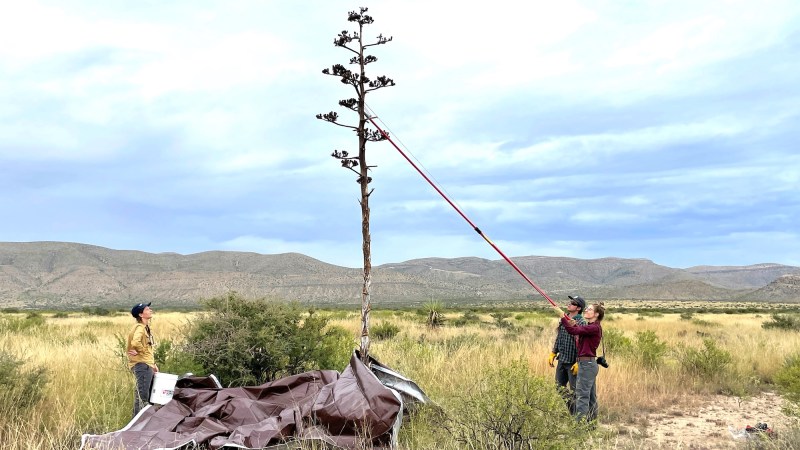
Alongside staff from Bat Conservation International, Kaylee French, TNC’s West Texas Project Director, uses a pole to swab agave flowers for possible bat DNA at TNC’s Marathon Grasslands Preserve. © Kristen Lear / Bat Conservation International
- What does it look like to conduct that eDNA—or environmental DNA—research?
-
It [sounds] a bit sci-fi, right? But the actual collection of the samples is laughably simple. We basically put together these long telescoping poles, like painter’s poles, that we shove a long Q-tip into the end of. And then we raise that pole up, 20, 30 feet in the air to swab the agave flowers when the flowers are open. By rubbing that Q-tip on the flowers, we can collect the saliva or the hair or whatever DNA the bats left behind while they were feeding. And then we put those Q-tips into vials and ship them off to our partner lab at Northern Arizona University. They tell us which, if any, of the three nectar-feeding bat species were present and feeding on that plant.
- How many vials are we talking about here?
-
We have collected hundreds of samples from agaves. In Texas, we’ve been targeting areas like the Davis Mountains, Chinati Mountains, the Marathon Grassland area, all up through these agave corridors. We have worked with the Texas Parks and Wildlife Department, with TNC and with private landowners to go out and swab.
- TNC has helped protect a bunch of land in West Texas—you mentioned Marathon Grasslands and the Davis Mountains where TNC has preserves. Have you found anything there?
-
So far we have not had any positive detections in Texas from the eDNA samples. All of these results—positive and negative—are informing where we’re continuing to survey. So we know that just across the border in Chihuahua there’s good agave habitat, and that area is also right on the way to the New Mexico bootheel. So we’re starting to shift our survey focus over there. It’s all part of an adaptive survey approach to home in where we search.
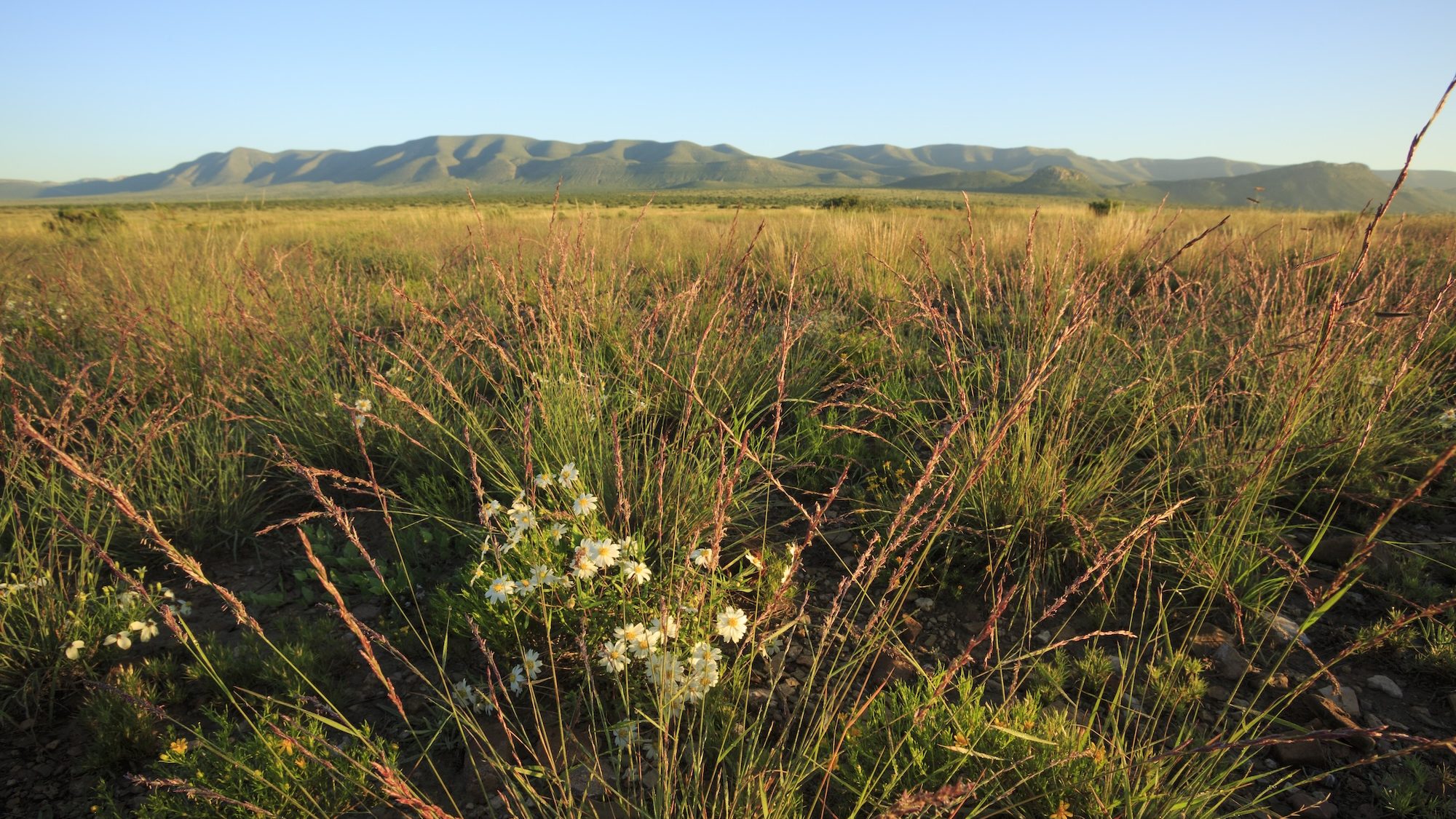
TNC’s Marathon Grasslands Preserve in West Texas © Jerod Foster
- All information is information, right?
-
Exactly.
- Identifying where the bats go is just one part of this though, right? How does agave restoration come in?
-
We’re going out and collecting native agave seeds from each of these areas and growing those seeds with local partner nurseries, and then planting those baby agaves back out on the landscape. In 2021, we started to collect seeds in West Texas from places like TNC’s Marathon Grasslands Preserve. We have about a thousand agaves growing with Sul Ross State University, and those are just now getting big enough to plant. They’re like 8 or 9 inches in diameter now, but they’ll grow to several feet wide. And then that flowering stalk can be 20, 30 feet in the air. But it takes 5 to 20 years for that baby agave to flower and actually feed bats.
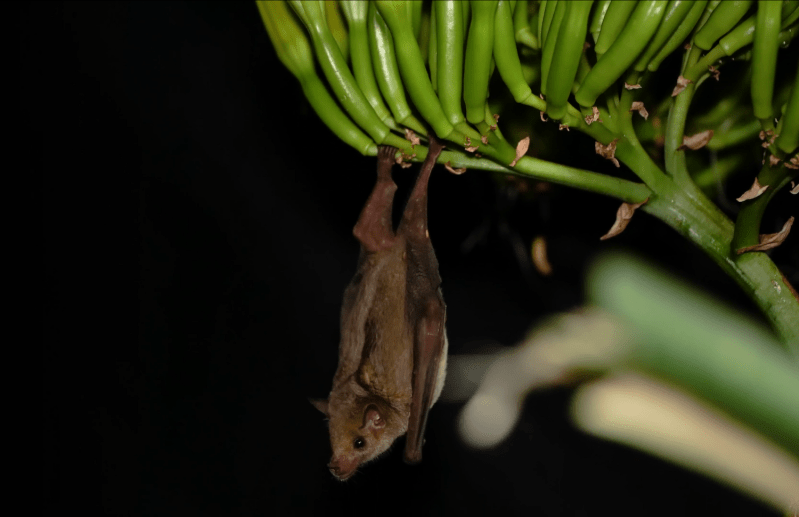
A bag hanging from a flowering agave. © courtesy of Horizonline Pictures / Bat Conservation International
- So this is a long-term bet?
-
Yeah, one of the things we grappled with when we first started our work in Texas was deciding how much we should focus on restoration work before knowing [via the eDNA surveys] that these nectar bats were actually outside of Big Bend National Park. But it’s not just the bats that rely on these agaves. There’s the wild ungulates, and the agaves themselves play a critical role in water retention and erosion control in a lot of these areas. We’re also seeing some projected shifts, with climate change, in the bats’ range areas and migratory corridors. We want to make sure that there is good foraging habitat in some of these areas where the bats might be going to more in the future.
- Alongside all this research and restoration, the initiative is working with communities on more sustainable land management too. Looking back at it all, have you made any fun discoveries about the bats?
-
I think we’ve had a lot of great success with the eDNA work in Arizona and New Mexico. We actually discovered the Mexican long-nosed bat in Arizona for the first time with the eDNA surveys. We detected them through sampling hummingbird feeders in people’s backyards in very far southeast Arizona. These bats were drinking the nectar. And then we also discovered the Mexican long-nosed bat 100 miles farther north than they’ve ever been discovered before in New Mexico. Again, all through the eDNA surveys.
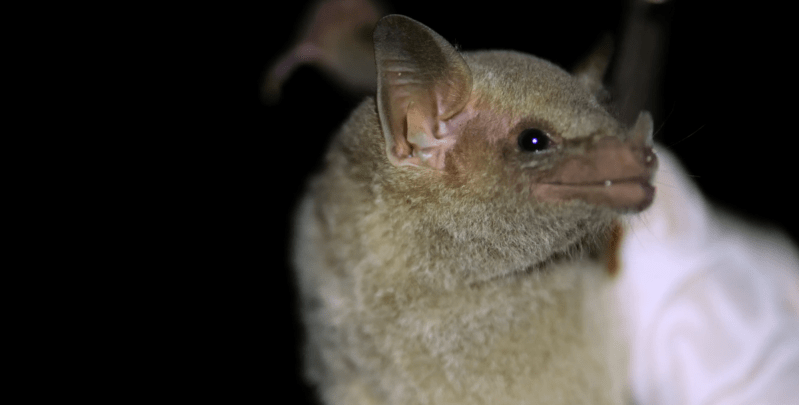
Mexican long-nosed bats are endangered in the United States. © courtesy of Horizonline Pictures / Bat Conservation International
- Do you have a sense yet of how the bats are doing overall?
-
It’s hard to know for sure, and it’s hard to monitor because of their migratory nature and the fact that these bats and most bat species around the world only give birth to one baby per year. Any population increases are going to take time to show up. But we are monitoring at some of the critical roosts and, for example in Mexico, we are seeing a couple of those roosts appearing to have stabilizing populations. It’s not definitive, but signs that they are potentially starting to stabilize are really exciting.
- That is exciting. Is there anything you wish people knew about bats or about this project?
-
Bats themselves are cool—at least, I think so. People are curious about bats and even if they might have some hesitation about bats, a lot of people want to learn more about them. That’s a really exciting part of this job, to be able to connect with people and share about how neat and important these bats are for healthy ecosystems and healthy economies. And, to me, this Agave Restoration Initiative as a whole is really an all-hands-on-deck endeavor. To save a migratory species, and especially one that’s migrating such long distances across national boundaries, you really have to work together and bring people together.
A version of this Q&A ran in Nature Conservancy magazine’s Issue 3, 2026. Read other stories about restoring New York’s waters and all about TNC’s 75th anniversary at nature.org/magazine.

Join the Discussion