The marsh grass sways in the breeze as we walk along the water’s edge, watching our feet as small crabs skitter away. A flock of scoters rests a short distance off shore and sandpipers flush before us. I stop for a second as a jellyfish pulses by.
But tonight, we’re here in search of much bigger salt marsh denizens.
I’m with a group of Nature Conservancy colleagues and Monmouth University researchers on New Jersey’s Long Beach Island. The researchers are leading an effort to understand how sharks use these marshes as feeding, resting and nursery areas and where they go once they leave here.
To accomplish that, sharks need to be tagged. That’s tonight’s task.
Keith Dunton, associate professor of biology at Monmouth University, pulls a caddy loaded with heavy fishing rods, bait and tagging gear. He tells us to settle in for what could be a long night, as we wait for a shark to bite.

Salt marshes are vital for a variety of creatures as well as the people who live along the coast. But these habitats are facing sea level rise and erosion. I’m here not only to hopefully get up close with sharks but also to learn more about solutions to restore their habitat.
The Nature Conservancy is working to restore and bolster salt marsh habitat by using dredged material from nearby boat channels. Such restoration keeps valuable sediment in the marsh system, promising to benefit local communities and the many creatures that rely on marshes as nurseries. Including sharks.
The Frontlines of Climate Change
Dunton carefully checks each rod before baiting them with cut fish or eels. He then casts each bait out into the bay, placing the rod in the holder. Now he lines up all the scientific equipment so any shark can be quickly tagged and released.
As we wait, I wander along the grassy shore. “Watch your step along the edge,” Dunton warns. “That bank is unstable and the drop off is steep.”
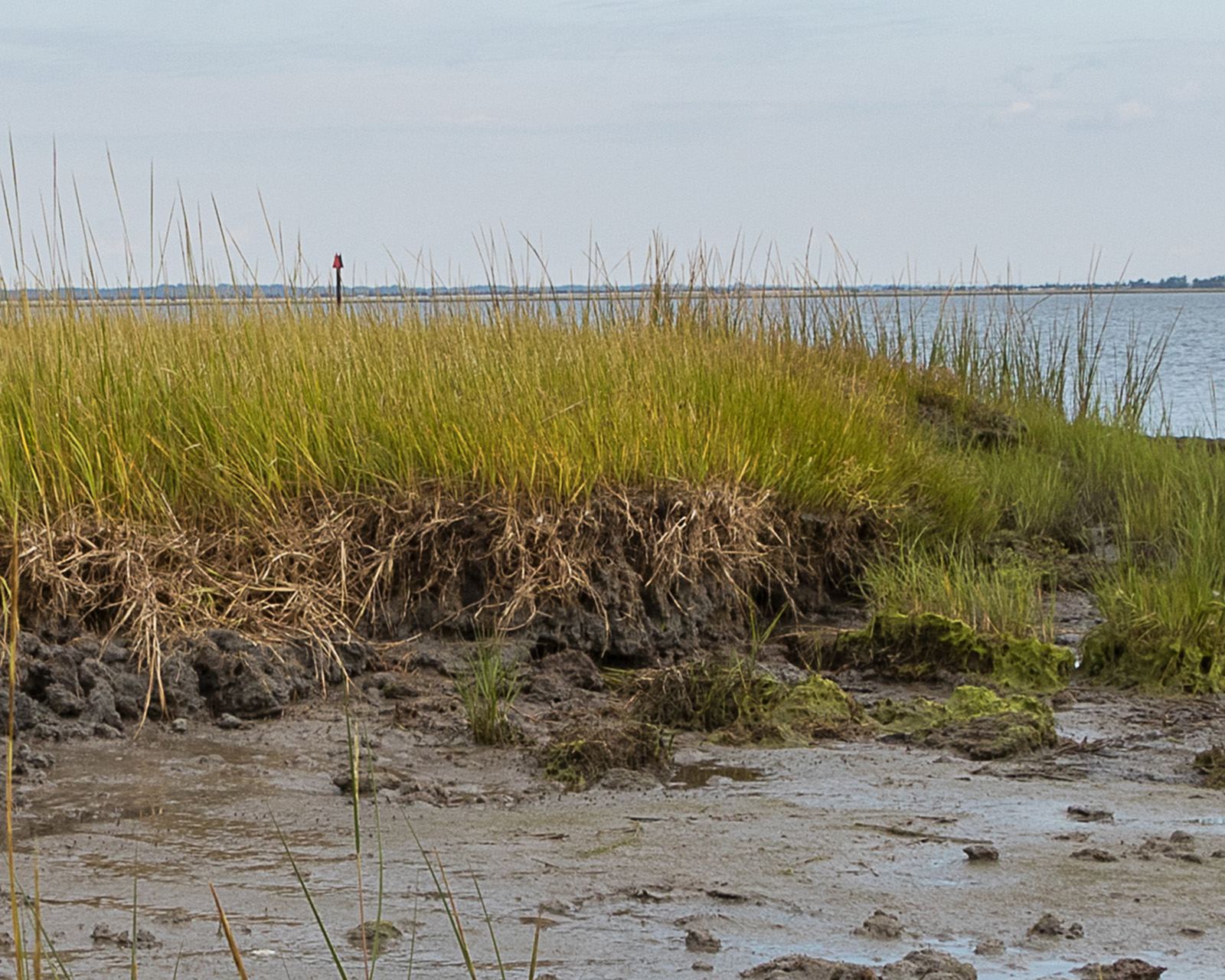
That steep bank actually helps explain why we’re here, according to Adrianna Zito-Livingston, climate adaptation project manager for The Nature Conservancy in New Jersey.
“A healthy marsh should have a nice even slope,” she says. “Here we end up with this steep drop. It gets really unstable.”
That drop is more than just a nuisance for walking. A healthy salt marsh provides so much benefit for both local communities and wildlife. The grasses slow down waves, protecting homes and property (studies show that New Jersey’s coastal wetlands prevented $430 million in damages in New Jersey during 2012’s Superstorm Sandy). The calm, resource-rich waters are a critical nursery for a huge diversity of marine life. But this habitat is also at risk, with sea level rise threatening to drown many New Jersey salt marshes.
“These marshes are really the frontlines of climate change,” says Zito-Livingston. “They protect the people vulnerable to climate change by providing a natural buffer. They protect habitat for the fish we enjoy eating. They protect a wide variety of animals from crabs to the sharks we’re tagging tonight.”
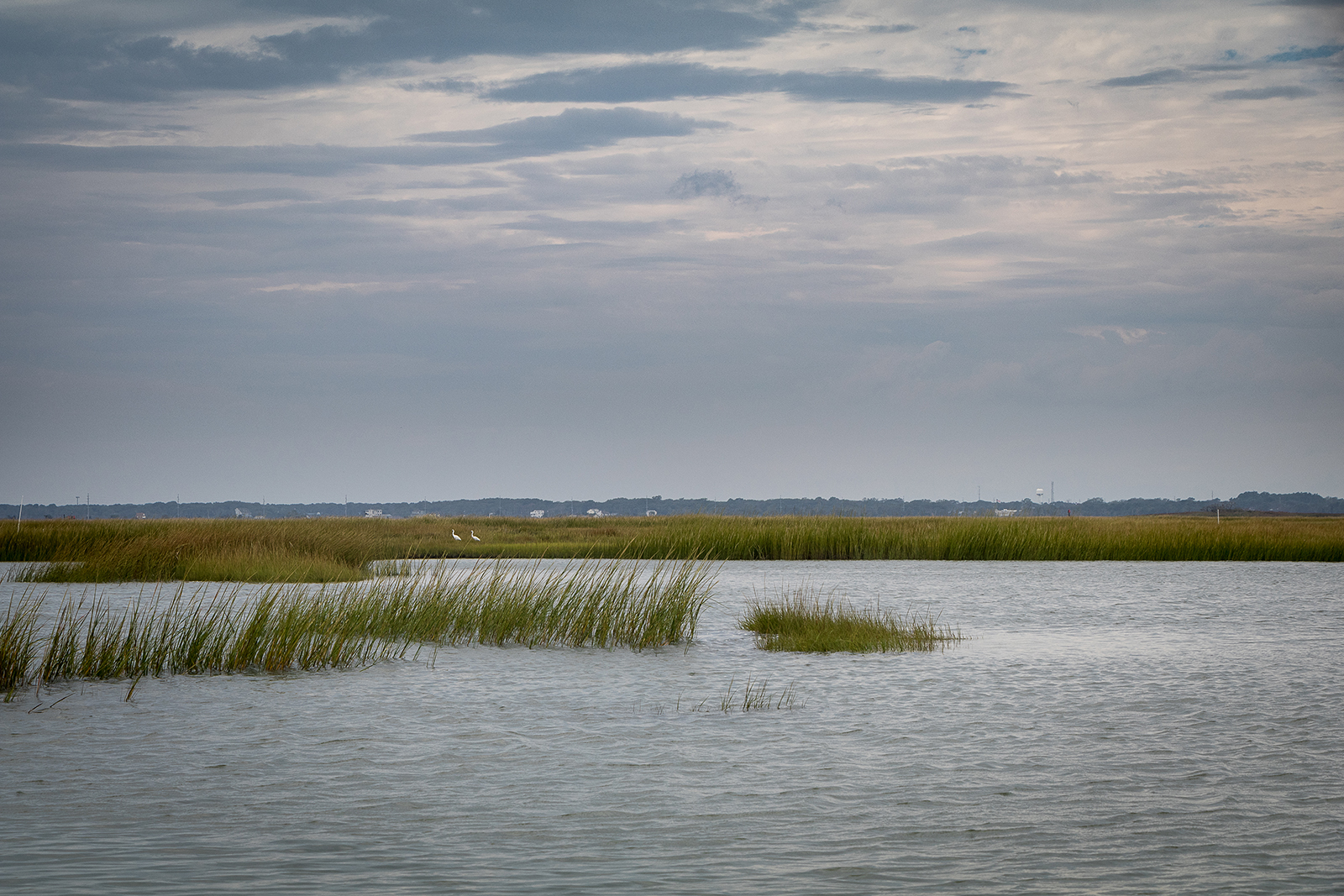
The sharks use the calm waters to feed, and also to give birth to live young, called pups. The open ocean can be a harsh place, filled with predators, but in a secluded estuary, the pups can take cover in the marsh’s vegetation. The crabs and smaller fish we see darting along the edges provide abundant food for the young sharks, improving their odds for survival.
But the marshes are drowning—degrading from accelerating sea level rise, boat wakes, storm waves and hardened shorelines.
“It’s a big problem that needs big solutions,” says Zito-Livingston. “We need to find ways to renourish these marshes.”
Looking for Solutions
One solution may be found in the channels carved for commercial and recreational boating along the coast. These channels fill with sediment and periodically need to be dredged. Often that means taking that sediment to an upland location far from the coast. But using it to restore marshes could meet dredging goals while offering ecological benefits.
Become a Member
Making a lasting impact for nature when you join The Nature Conservancy!
“Instead of taking it far away, we can work with agencies and engineers on where to place the sediment,” says Zito-Livingston. “We need to maximize the sediment available for marsh nourishment.”
The Nature Conservancy and partners have restored 60 acres of marsh in Avalon and Fortescue at the Jersey shore. With results showing promise, we are promoting expansion of the approach to other sites while advocating for additional policies that protect and restore coastal habitats in New Jersey for people and as a wildlife nursery.
That’s why TNC is supporting shark research on these bays. “If you protect habitat for sharks, you are protecting habitat for a lot of smaller creatures too,” says Zito-Livingston. “A salt marsh without sharks is much scarier than one with sharks. The presence of sharks means healthy marshes and all the benefits they provide.”
Enter the Dogfish
Our conversation is interrupted by the clicking sound of line peeling off the fishing reel. “Fish on!” someone yells, as volunteer Bill Gordon grabs the rod. He’s tight to a fish, but he announces that it’s not a very large one.
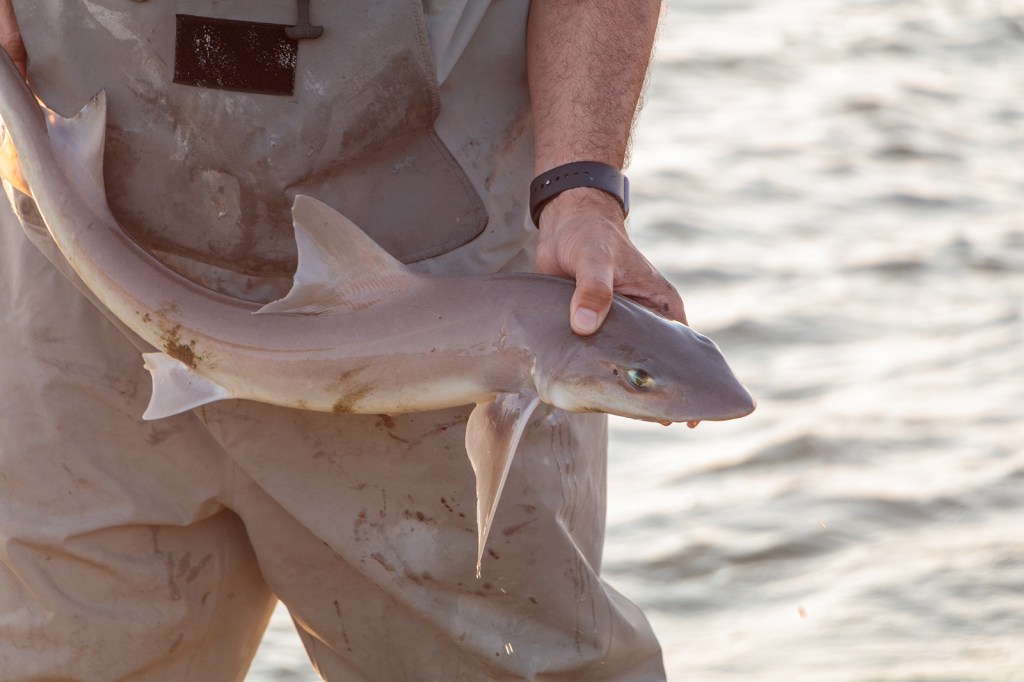
He reels quickly and soon a smooth dogfish is pulled onto the bank. Dunton and one of his students spring into action. They want to get the shark processed and back into the water quickly and safely. They take some basic measurements. They gently flip the shark onto its side and make a surgical incision along its belly. They insert a small device that will emit pings that are picked up by sensors along the U.S. East Coast. The scientists can then track the sharks’ journey. [click photos to enlarge]
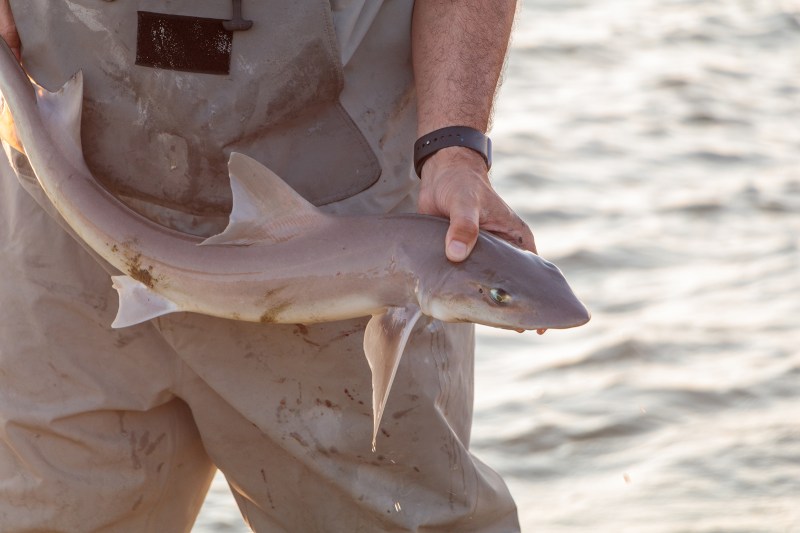

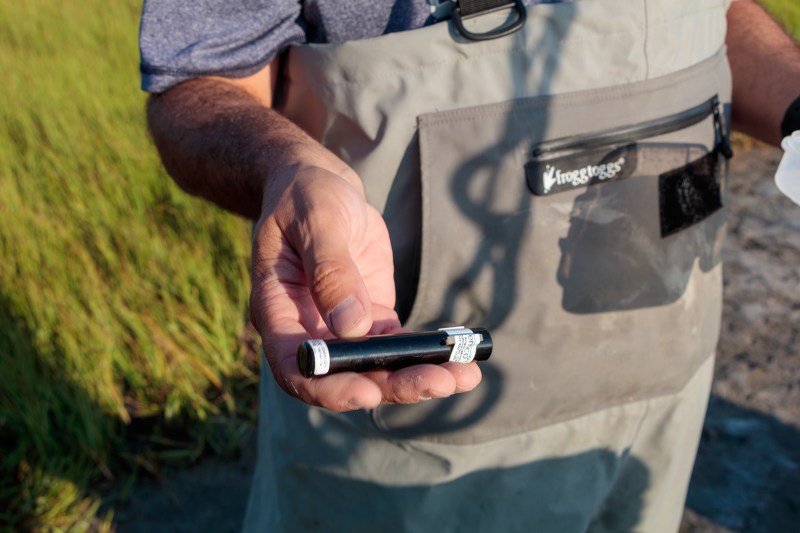
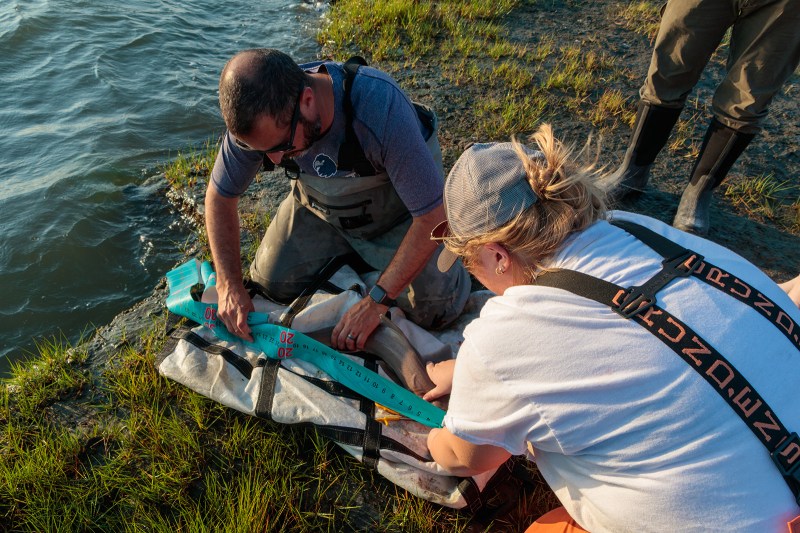
The shark is stitched up, then a visible tag is placed on the shark’s dorsal fin. If an angler should catch the shark, they can report the tag’s number to the researcher.
The whole operation takes only a couple of minutes. Then the dogfish slides back into the water. It gives a shake and is gone, back into the bay.
The Shark Nursery
“We always knew sharks were here,” Dunton tells me. “They use this bay for protection and foraging. We’re trying to evaluate this area as a nursery ground and to get an idea of where they’re moving.”
The bay is used by sandbar sharks, sand tiger sharks, smooth dogfish and even the occasional larger species like bull sharks.
Once the shark pups move out of the nursery ground, they embark on a long migration down the Atlantic coast. “We have recorded sharks as far south as Florida,” says Dunton.
But they most often return. “A lot of sharks come back year after year,” he says. “They are showing high site fidelity. They arrive in spring, are here all summer and then in September begin migrating back.”
Dunton glances up as the sound of clicking fishing line again interrupts the evening. “Do you want to reel this one?” he asks.
Of course I do.
He hands me the rod and, as a lifelong trout angler, my first impression is one of the raw power on the end. This isn’t a dogfish but a larger shark. I strain against the fish as Dunton and Gordon coach me.
“Keep pressure on it, but if it runs, let it run,” Gordon advises.
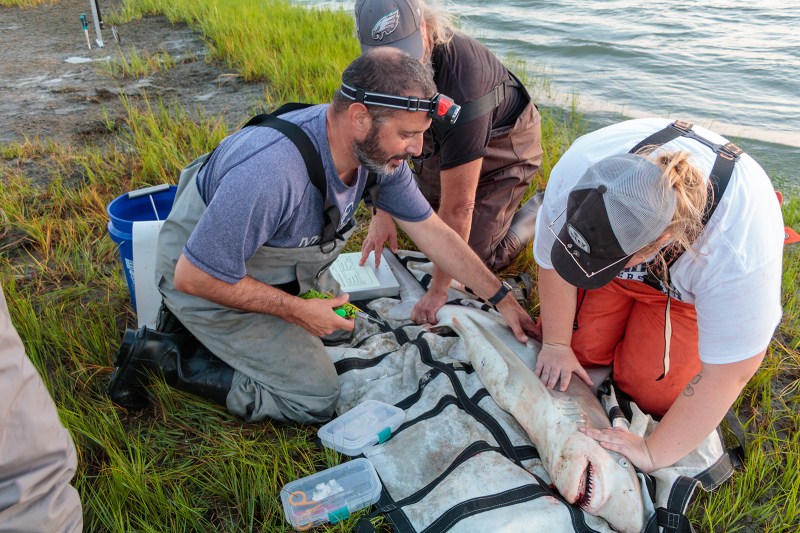
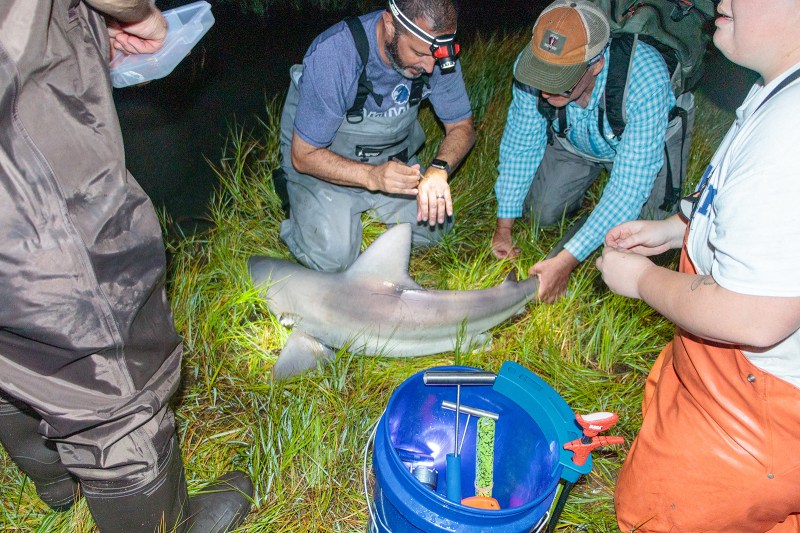
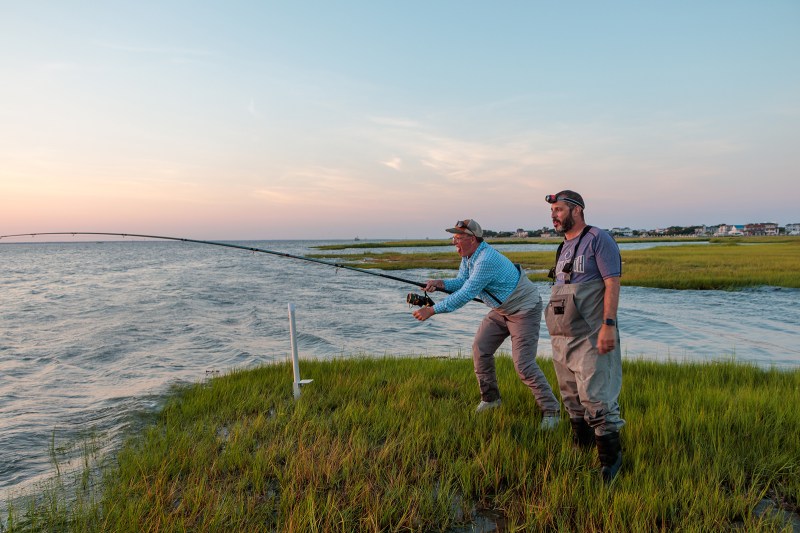
I pump the rod, trying to maintain contact, as I see the telltale fin out of the water. It’s a huge thrill mixed with the anxiety that I might mess this up. But soon the shark is along the bank and Gordon lifts it to the researchers.
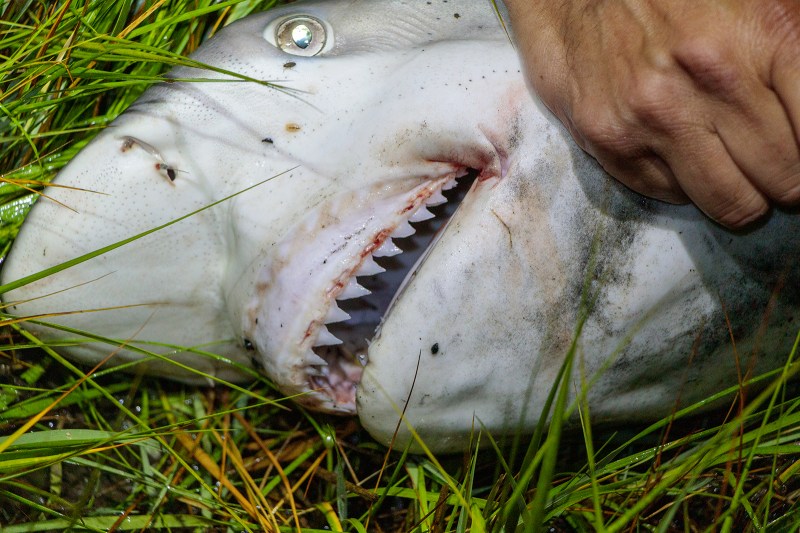
It’s a four-foot sandbar shark, a pretty typical catch for this bay. I help hold the animal down as measurements are taken and tags implanted. I’m struck by just how incredible an animal I have before me, one that you might not imagine swimming around this bay.
Dunton asks me if I want to release this sandbar shark. He shows me how to liftone hand on the tail, one on the dorsal. I feel awkward and ungainly doing so, as I trip around the marsh grass, careful not to slip over the edge.
As I get to the water, I place the shark nose down. It gives a shake, dowsing me with water, and then it’s gone. The calm surface of the bay gives little hint that apex predators swim here. Hopefully this project gives people a new look at this habitat—and gives them hope for the salt marsh’s future.
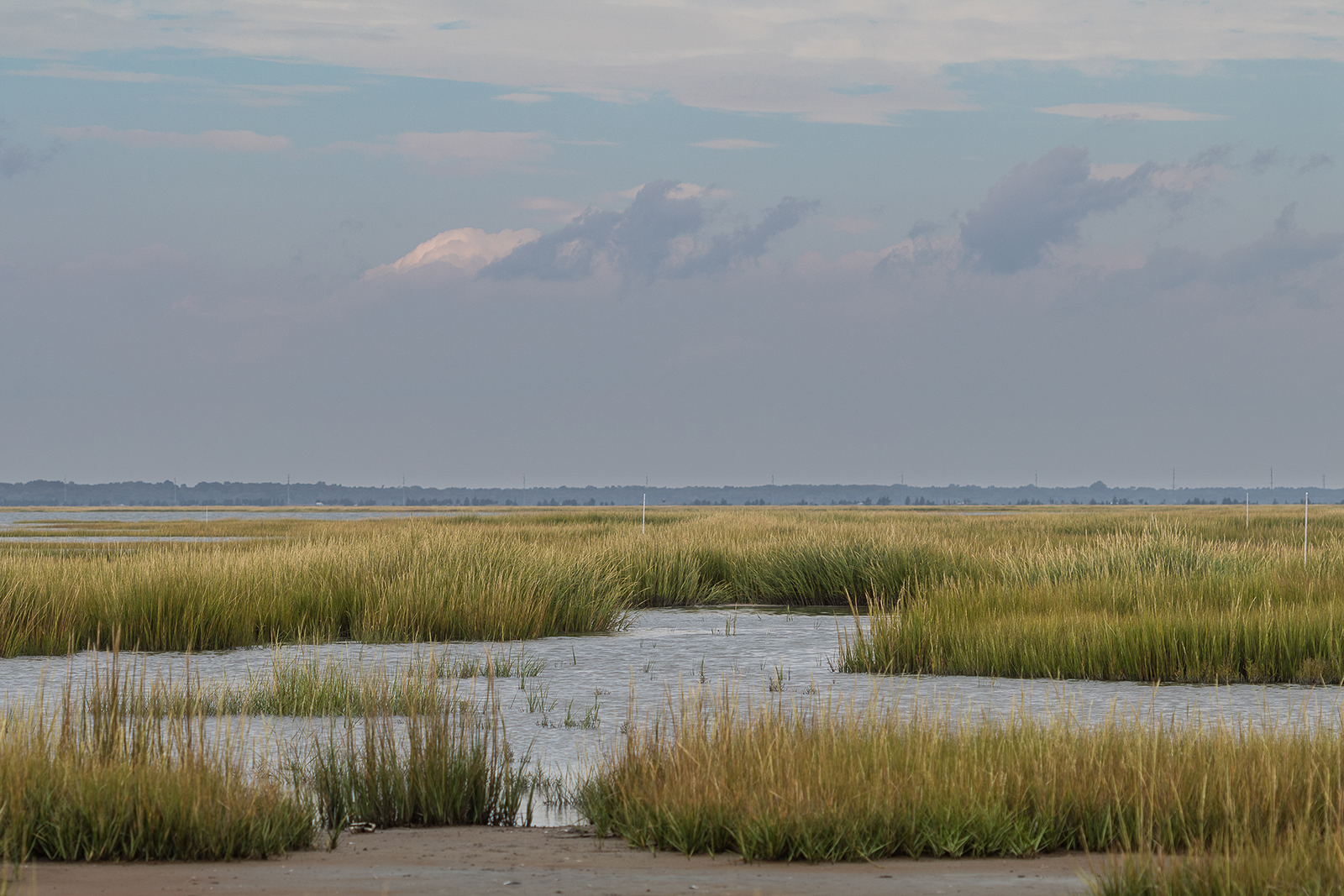
“We want people to understand what a marsh really is,” says Zito-Livington. “It’s more than what you see on the way to the beach. There’s a lot more going on here. This one little unassuming habitat provides us so many benefits.”
“I want people to feel hope for these habitats,” she adds. “We’re working with a number of partners to keep these systems functioning. That benefits sharks, and it benefits all of us.”

If you, and the researchers, want people to “know what a marsh really is” you might recommend they read a wonderful little book from about a half-century ago. “Life and Death of the Salt Marsh” by John and Mildred Teal is still a great source, and the threats they mentioned have, for the most part, come to be.