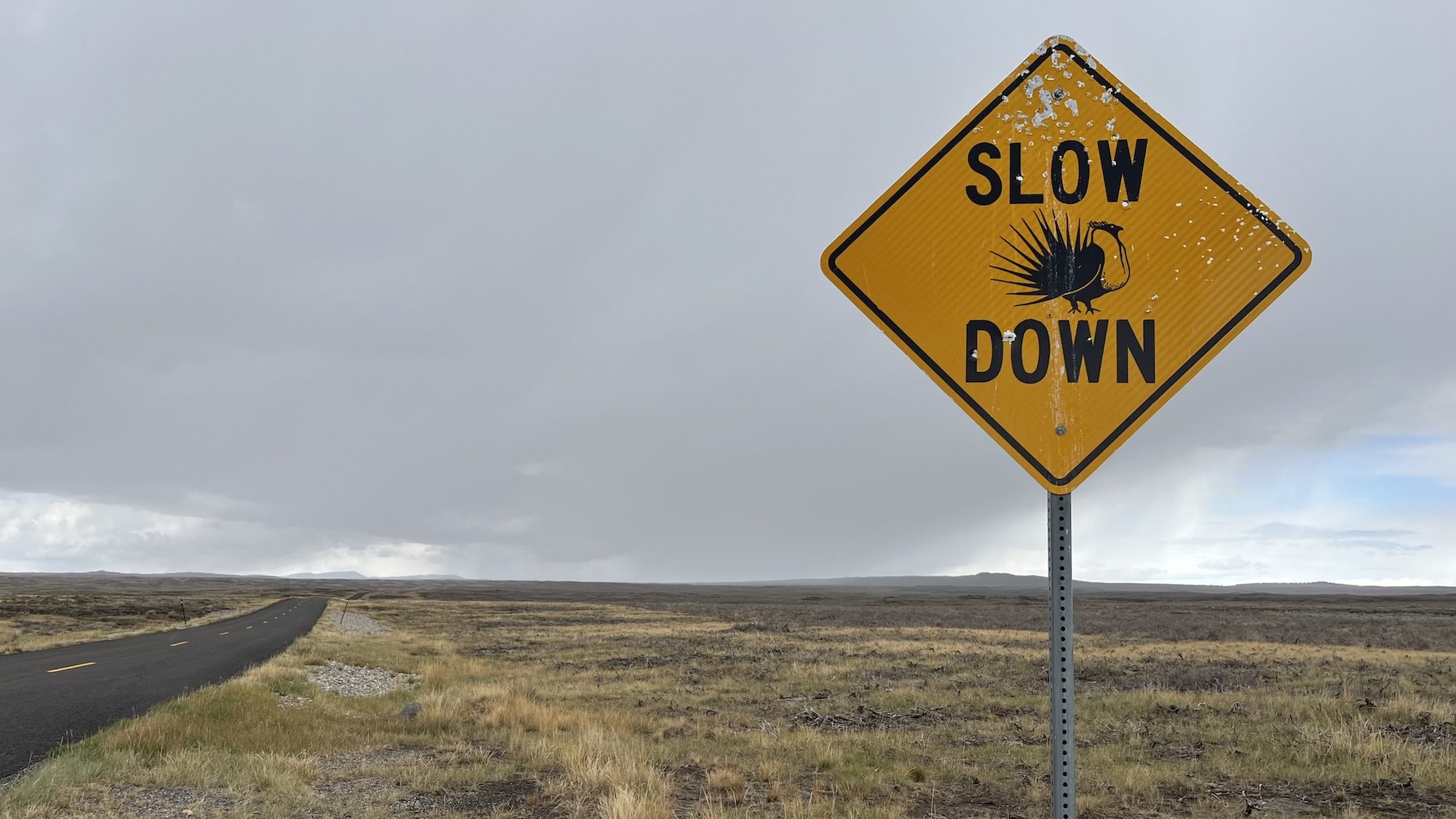
There’s a unique wildlife crossing sign on the side of the road among Idaho’s vast sagebrush sea. It’s a standard, yellow diamond with a black symbol, but the symbol is anything but ordinary.
Usually, wildlife crossing signs display a leaping deer, but this isn’t a deer. It’s a sage grouse, tail feathers fanned, sandwiched between two bold, black-lettered words that read, “SLOW DOWN.”
The sign indicates I’m in the right area to shoot footage of the largest grouse in North America for the new wildlife film, Sage Wisdom West. While the desert bird has lost 80 percent of its population since 1965, this particular spread of undeveloped and unburned brush still hosts enough birds to warrant traffic control.
That doesn’t mean drivers heed the sign’s warning. Many assume sage grouse must be dumb if they’re straddling the road’s center line, but that’s far from true. Sage grouse are not dumb. They’re faithful. They’re programmed to gather in specific spots that are much older than the newly paved road now bisecting their stomping grounds.
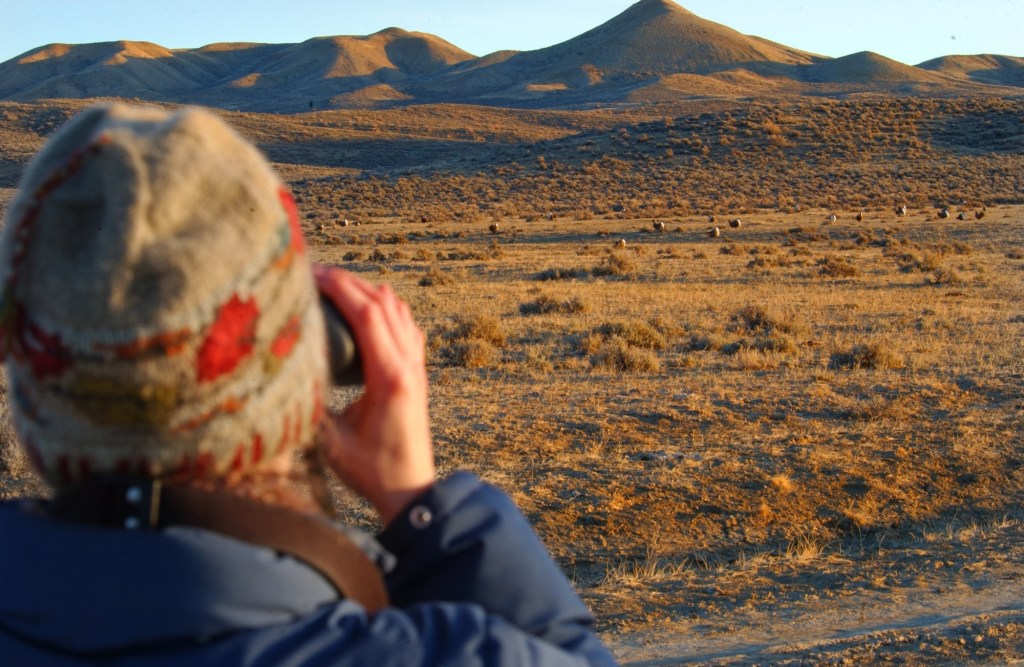
To document the faithful few, I dodge roads and wires to sit in pre-dawn dark. This is how most days with grouse go.
4:00 a.m.
I’m a morning person even when morning opens its potential ridiculously soon after midnight shutters the previous day. I’m too hyper for caffeine at any hour so I don’t have a coffee mug, but Zach does.
“I am not an early bird, but I’m always happy once I’m out,” says Zach Lockyer,
Idaho Dept. of Fish and Game Southeast Region regional wildlife manager. “Responding to the alarm is a little difficult, but there’s a lot going on in the morning. These sagebrush habitats come to life.”
We plow down dirt roads pocked with mud puddles and snow drifts in the dark for an hour then park next to a barbed wire fence and strategize in what’s left of the heat in the cab. There’s a slight glow in the east.
The sun will surface soon. I’ll be in place before that. Inside of the fence, there’s a blind—a pop-up tent with many windows and no floor. You hide inside it when monitoring wildlife. That’s my destination.
5:00 a.m.
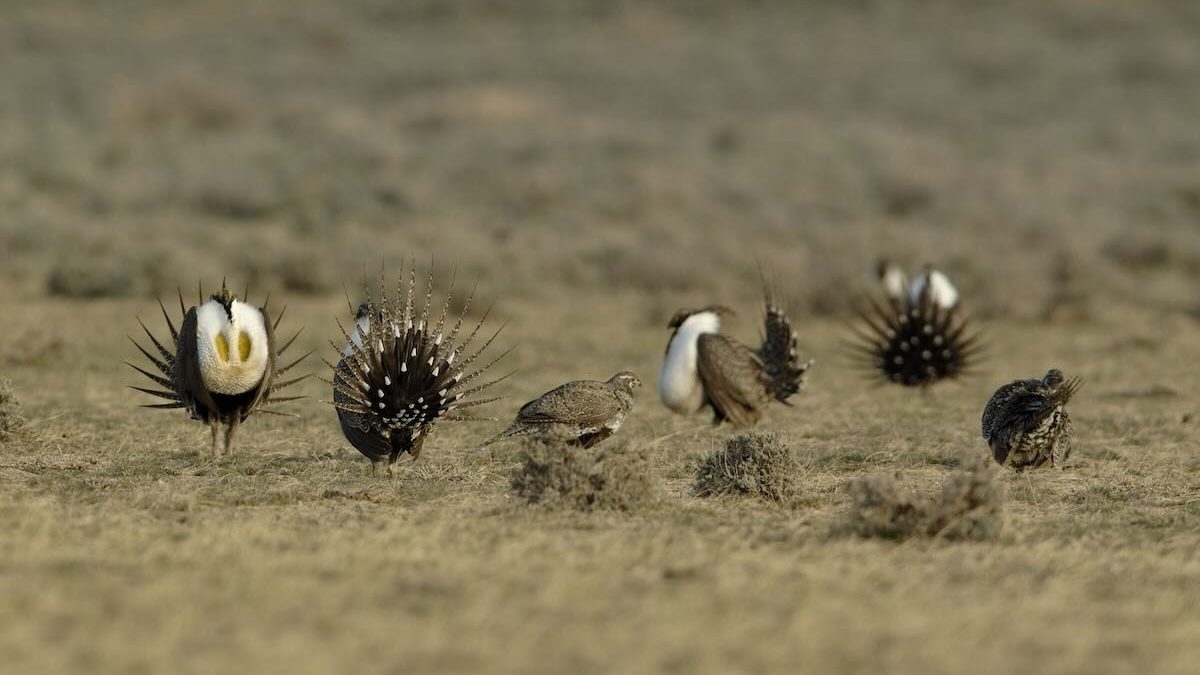
I exit the truck, softly shutting the door. I hear birds vocalizing in the dark. The males are arriving to meet the ladies at the lek. A lek can be a bald spot between sagebrush, or a stubble field next to sagebrush, or even a cow corral surrounded by sagebrush with cleared ground and a water trough in the center, as is the case with this lek. Unobstructed line of sight is key, however it appears.
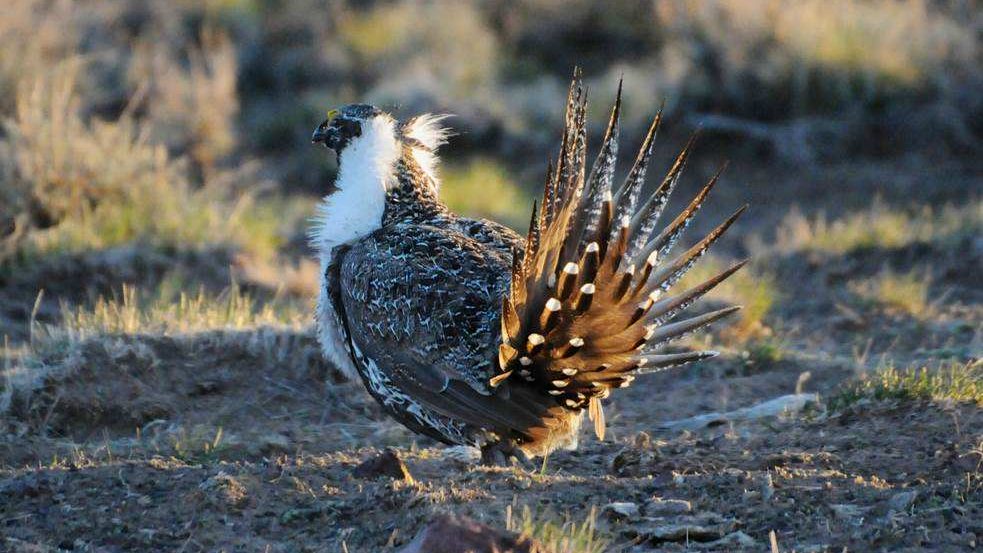
Male sage grouse seek open ground so they can show off without obstruction for females. It’s a prey-of-the-prairie reproduction adaptation. The more that can see, the better the offspring count will be. The lek is the male’s stage. The best dazzler by grouse standards makes babies with the ladies. To me, they all look dazzling, but I’m not in charge of selection. If I were, they’d all mate and there would be plenty of chicks to restore this shrinking upland population. I have no say in how this happens. I just have the honor of witnessing it.
Tripod and camera pack are over the fence. I plank in the blue-frostbit notes of dawn, all I can see is bottom wire and the bottom of the blind, but I hear much more than that. The birds are warming up.
The sound of legs sliding along satin sheets hits my ears first. It’s the sound of two grapefruit-sized-and-colored air sacks on the chest of a seven-pound-bird inflating between whisking wing feathers.
The sound of a champagne cork always follows the satin slide. Pop! That’s the quick deflate of a puffed chest for repeat. When satin and champagne tango, I know the dance is on even if the sun’s spotlight isn’t on yet.
6:00 a.m.
I dip from plank, lowering my belly to the ground, then turn my head toward the sounds of the strut. Frost chills my left cheek. I lie for a moment, leveling my breaths and my adrenaline, thinking through next steps before making them.
I close my eyes, inhale deep and prepare to roll under the bottom wire that Zach is lifting just high enough to avoid snagging my coat. I wonder for a split second if he’s still sleepy and wishing for the coffee in the cab of his truck.
I catch his eye right before rolling. He’s concentrating. He’s all in. He gives me go-ahead with a quick tip up of his chin, indicating that the wire he’s holding is lifted as high as it will flex. I need to be flat as a pancake to clear the barbs. I hug the earth, then roll.
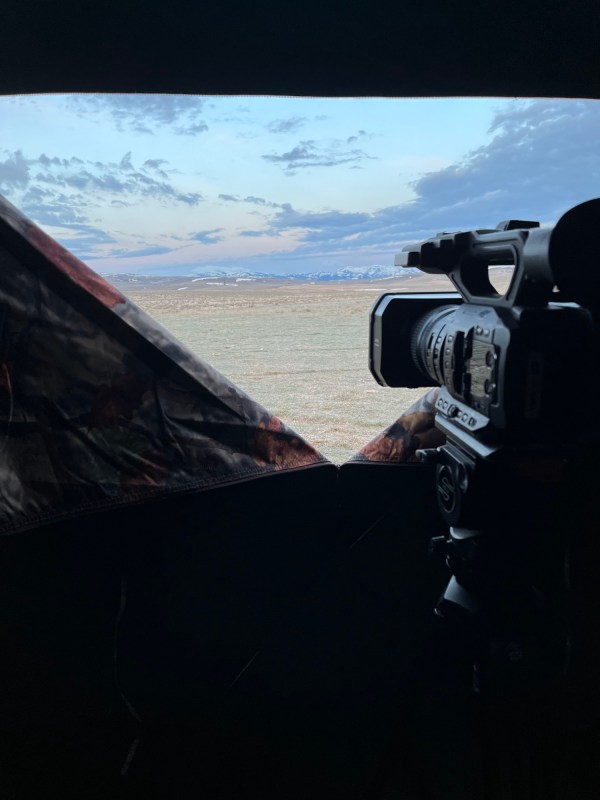
One roll and I’m clear of the wire. One more roll and I’ll be in the blind. Zach releases the bottom wire and begins soundlessly creeping back to his truck. I hug the earth again, hold my breath, then start one more roll, the last roll in this escapade.
If we pull this off, I’ll have the shots I’ve been chasing. The shots that make you stop what you’re doing and connect with nature. Those shots. The ones that are nearly impossible to get and nearly impossible to look away from if you do get them.
I’m mid-roll when I realize the wings are not whisking anymore. They’re fleeing. They’re flying away. With my forehead in the dirt, pretending to be calm, I hear birds frantically recede into the slight breeze.
I’m busted.
I whisper cuss to myself, trying not to kick the toe of my boots in the dust like I’m having a toddler tantrum. We blew it. No one will get lucky today, especially not me. There will be no footage collected and no future birds made. Everyone up three hours before daylight—the birds, Zach, and me, for nothing.
7:00 a.m.
I sit in the blind anyway, camera ready to roll. Around me, it’s as quiet as a graveyard. There’s not a single bird on the lek when the sun comes up. I’m staring at an empty stage, show canceled. I skulk out of the blind, not caring about the loud rip of its Velcro closure. I toss my tripod over the fence. Zach gets out of his truck. We’re both heads down, hopeless wishing for hopeful. The grouse skunked us again. I’m anxious.
My angst is not exaggerated or unfounded. It’s confirmed. Sage grouse are proving harder to capture on camera than salmon underwater and grizzlies in berry bushes.
The unexpected hounds you when you work in the wild, but this—the grouse giving me the slip—I did not expect. Spring is short. Mating season lasts mere weeks. If I can’t get the footage this year, I’ll have to wait another full year for the birds to dance again. The film can’t wait that long, and neither can my sanity.
Join the Discussion