In forests, grasslands, and deserts around the world, scenes of quiet cooperation unfold every day. A jay feeds a chick that isn’t its own. A weaver defends a nest for its siblings. A woodpecker stands guard while others search for food.
Become a Member
Making a lasting impact for nature when you join The Nature Conservancy!
Across species and continents these small acts of care reveal a remarkable social strategy known as cooperative breeding—a system where more than two birds help raise a single brood of chicks.
In these feathered families, survival depends not on competition, but on collaboration.
What is Cooperative Breeding?
In most bird species, a pair of adults raises their own young and then move on. But in about 9% of bird species worldwide, families take a more collective approach.
Here, helpers—often older siblings or other relatives—stick around after fledging, contributing food, defense and even incubation assistance.
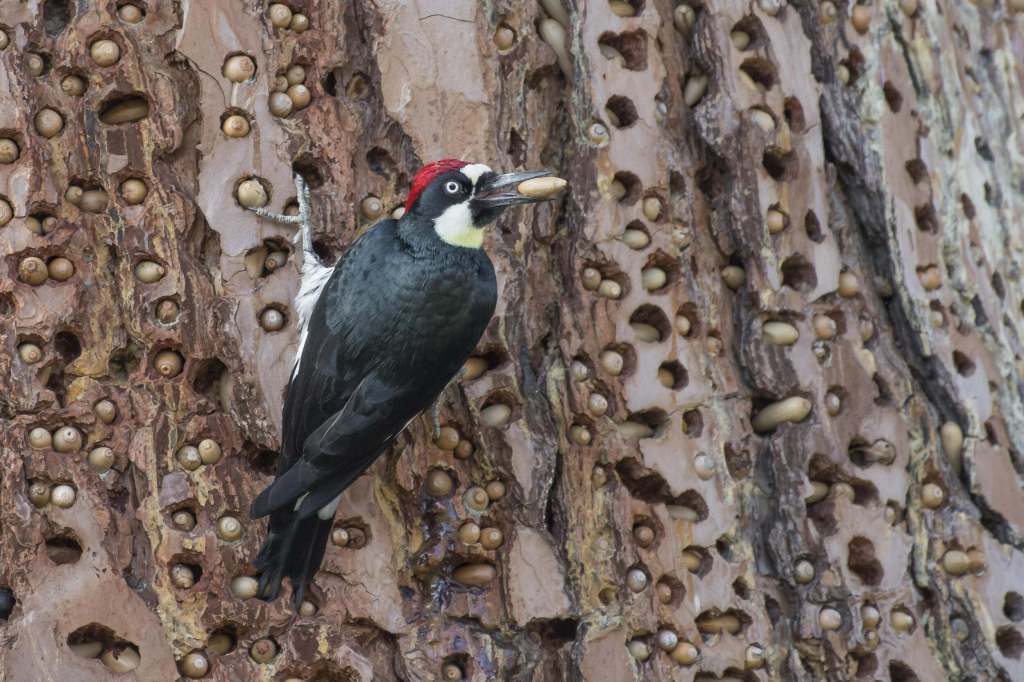
Species like Florida scrub jays, acorn woodpeckers, and Seychelles warblers are all famous for it. The red-cockaded woodpecker (RCW), found in the longleaf pine ecosystems of the southeastern U.S., is one of North America’s best-studied examples.
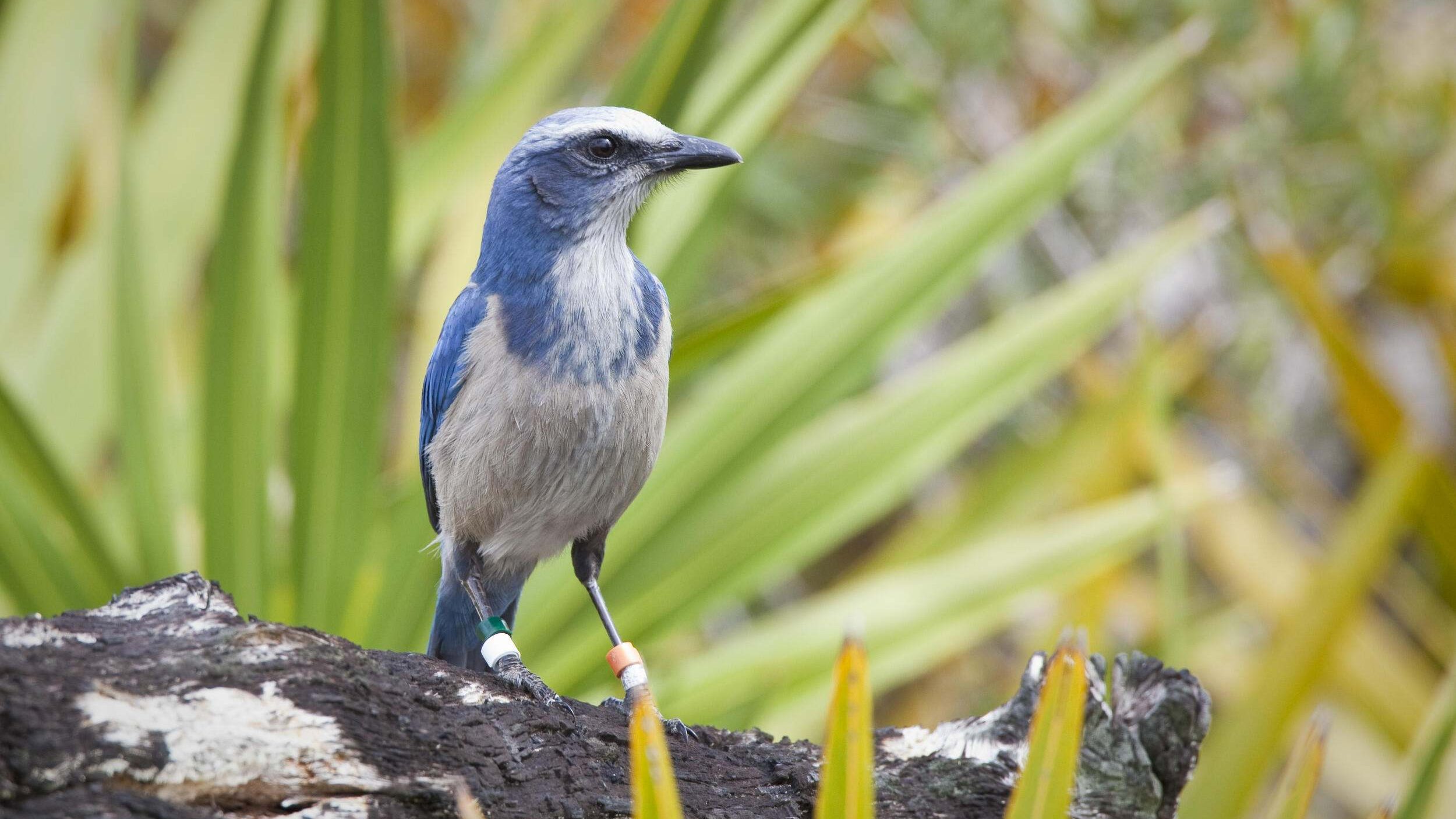
Each of these species evolved cooperation independently, shaped by different environmental and social pressures—a reminder that there’s no single path to family living in the natural world.
Why Do Birds Help Raise Someone Else’s Young?
At first glance, cooperative breeding seems like a bad deal. Why spend your energy helping someone else reproduce when you could be raising your own chicks?
The answer lies in evolutionary math. When helpers are related to the breeding pair, their efforts still pass on shared genes, a concept known as kin selection. Helping your parents raise more siblings, for instance, can boost your indirect genetic success almost as much as having your own offspring.
But it’s not just genetics. In some species, ecological pressures make independent breeding nearly impossible.
If good territories are limited—like the cavities RCWs carve into living pines, or the oak granaries that acorn woodpeckers defend fiercely—it’s smarter to stay home, learn and wait for an opening.
In that sense, cooperative breeding is as much about ecology as family ties. It’s an adaptation to life in tough, competitive landscapes.

The Ecology of Cooperation
Across continents, cooperative breeders tend to share a few traits:
- They live in stable, but limited habitats, like savannas, scrublands or mature pine forests.
- They often face high predation or unpredictable weather, where teamwork increases survival.
- Territories are valuable, and experience matters: learning from parents and group members boosts future success.
In acorn woodpeckers, cooperation revolves around resources: groups of up to 15 individuals work together to guard massive granaries storing thousands of acorns, a literal community pantry.
In Seychelles warblers, the pattern is driven by territory limitation; only the best patches of habitat can support breeding, so younger birds delay dispersal and help instead.
And in RCW’s decades of research show that helper males increase the number of chicks that survive each year, especially in larger groups that can defend their territory and feed nestlings more efficiently.

The Evolutionary Puzzle
Cooperative breeding has evolved independently dozens of times in birds, in lineages as different as kingfishers, jays, bee-eaters and babblers. That suggests it’s a powerful strategy, one that natural selection has favored again and again under similar pressures.
Researchers think it often emerges when habitats become saturated and competition for space intensifies. Once independent breeding becomes hard, staying home and helping kin becomes the best bet for survival—not a sacrifice, but a strategic investment.
Lessons from the Helpers
Cooperative breeders remind us that success in nature doesn’t always come from independence—sometimes, it’s interdependence that keeps species thriving. These birds thrive not in isolation, but in networks of shared responsibility, patience, and long-term care.
As we face our own global challenges—from climate change to habitat loss—perhaps there’s something to learn from the helpers: that thriving often means working together, sharing resources and investing in the next generation.
Because whether you’re a woodpecker, a jay or a human being, it really does take a village.


Excellent article. We most certainly can learn from our feathered friends. Thank you.