Waste(d)water, a groundbreaking podcast from The Nature Conservancy, exposes the global crisis of wastewater pollution—and the solutions possible through sustainable sanitation.
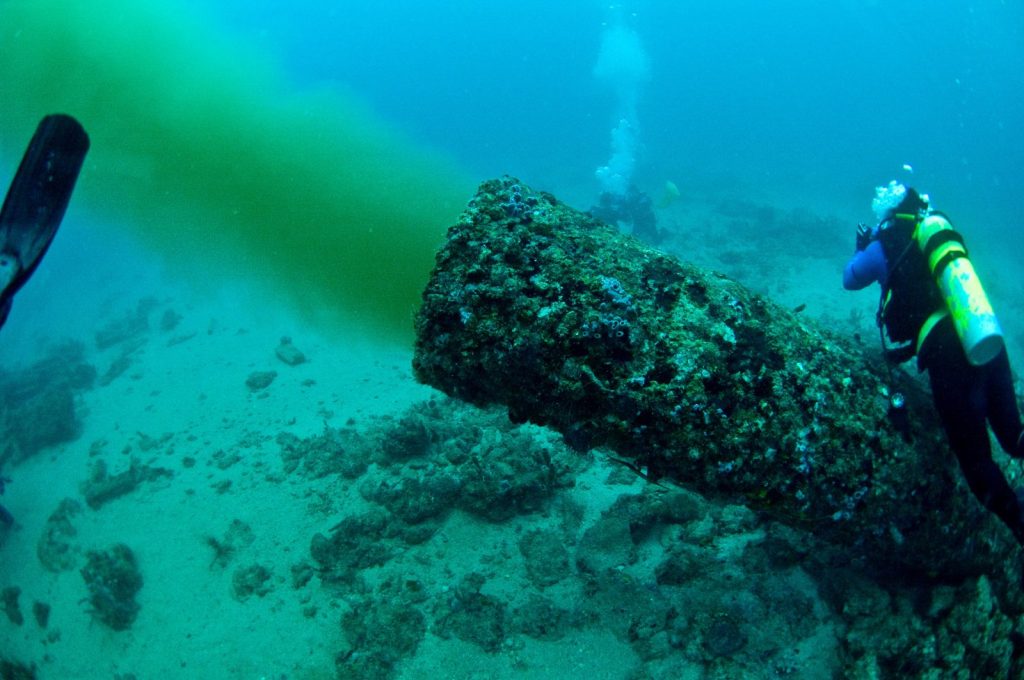
Eighty percent of the world’s wastewater is released into the environment without adequate treatment—and our oceans and coastal communities are suffering. Wastewater pollution decimates coral reefs with sewage-borne diseases and degrades over a third of seagrass meadows globally.
It is one of the leading causes of nutrient pollution, allowing algal blooms to outcompete and poison marine life. Even nature’s own filtration systems are at risk: oyster reefs, salt marshes, and mangroves are weakened by its presence.
As climate change intensifies, these stressors compound, weakening the resilience of ecosystems that support marine biodiversity and coastal communities. Wastewater pollution also threatens public health—contaminating drinking water, exposing communities to pathogens, and undermining food security through impacts on fisheries.
Environmental Impacts of Wastewater and How To Address Them
In this blog, adapted and condensed from Episode 1 of the waste(d)water podcast, we hear from Dr. Amy Zimmer-Faust, a water quality scientist and former director of The Nature Conservancy’s Wastewater Pollution Program. Amy shares her insights on the environmental impacts of wastewater, the unique and critical role the conservation community is being called to play in the solution space, and how organizations can engage in meaningful action to protect nature and people.
- Could you introduce yourself and your background in environmental science?
-
Zimmer-Faust: I’m a water quality scientist by training. I actually started in undergrad as a marine biology major and was really involved in Surfrider and other nonprofits, but became increasingly concerned about the impacts of pollution [on the oceans]. So I went on to graduate school to learn more about pollution and the sources and what the solutions are and the impacts on both people and nature.
- That’s interesting. Many people don’t necessarily think about the connections between marine biology and marine pollution in any kind of coordinated way. What would you say to people who aren’t sure why the conservation community should consider wastewater management in the context of marine of marine habitat conservation?
-
Zimmer-Faust: The conservation community and conservation organizations in general really want to conserve and protect nature. It [addressing wastewater pollution] is about both protecting nature and protecting functioning ecosystems for people, too. And so I think the wastewater pollution piece is really pivotal to both of those fundamental goals.
We’re seeing more conservation organizations get involved [in addressing wastewater pollution] for a couple of reasons. One is just that there’s more and more science in the last decade or so really showing the kind of multitude of pathways by which ecosystems can be directly harmed from wastewater and the different types of pollutants that are introduced. - What makes wastewater pollution such a complex environmental challenge?
-
Zimmer-Faust: Wastewater is particularly hard [to deal with] because it’s not just one pollutant, it’s this mixture of all kinds of really complicated pollutants. [This complexity makes it difficult to isolate specific and direct impacts on ecosystems.]
- How does wastewater actually harm ecosystems, and what kinds of pollutants are we talking about?
-
Zimmer-Faust: There’s the indirect route [to harm], and this is when wastewater pollution introduces things like nutrients [nitrogen or phosphorus, for example] that are okay and even good when you have a little bit, but when you have excess, that can do things like fuel rapid algal growth [which can lead to oxygen depletion and fish kills].
And then there’s direct impacts, where you have specific contaminants that are introduced from wastewater that can be harmful to different ecosystems [because they are toxic or interfere with biological processes].
For seagrasses, there’s a lot of great work that’s been done showing that seagrasses can be impacted by algae blooms in the water. But there can also be overgrowth of algae on seagrass blades, and that can block light and photosynthesis and lead to plant death [which reduces habitat for marine life].
Become a Member
Make a lasting impact for nature when you join The Nature Conservancy!
Salt marshes are another really productive ecosystem. And all the animals in salt marshes can concentrate metals and microplastics and endocrine disruptors, which can then bioaccumulate in the food web… leading to impaired reproductive function [in species higher up the food chain, including people].
In coral reefs…heavy metals, endocrine disruptors, and personal care products can be toxic and can lead to things like reduced [coral] tissue growth and reduced photosynthetic capacity [making corals more vulnerable to bleaching and disease].
- It sounds like a challenging problem. How is The Nature Conservancy engaging in wastewater solutions globally and locally?
-
Zimmer-Faust: One of the big ones is just building capacity of our conservation partners…The Nature Conservancy has really put a lot of effort into making these conversations more accessible. Reef Resilience Network has been a great partner and we’ve created different resources, including a wastewater pollution toolkit and a series of case studies just to help conservation practitioners really understand the landscape.
Our local chapter [in Long Island Sound] has been involved in wastewater work for a long time… They supported and were a strong partner in the creation of a ballot proposition that passed [in 2024] that secures over $4 billion to modernize wastewater infrastructure.” “Another is in the Dominican Republic, where TNC helped establish a watershed partnership… and that group has been really successful at both determining priority areas and then actually getting wastewater treatment wetlands implemented.
- What steps can other conservation organizations and even just people who care about healthy oceans take to get involved in addressing wastewater pollution?
-
There’s so much.] One thing is people and organizations can just be aware [that wastewater pollution is a big conservation issue.] Research and monitoring, conservation organizations can be good stewards for collecting more information on water quality and pollution sources. [We need to make] all of the science more accessible to policymakers and community members.
Policy [is also very important for action and] we have examples at The Nature Conservancy. I talked about the [work in] Long Island Sound, but our Florida chapter has also been really instrumental and a key partner in [promoting] policy that is providing the pathway for increasing water reuse within the state.
And then the last one… is just acting as a convener. Conservation organizations have a long history of pulling together important partners and facilitating productive conversations and really acting as that convener.
- So we can be hopeful that there are ways to address wastewater pollution right now?
-
Wastewater pollution… it’s complicated, it’s a big problem. But I’m an optimist… And the encouraging part is that we’re seeing a lot of examples of that when we combine good coastal management with efforts to reduce wastewater pollution. This [work] can lead to ecosystem recovery and make ecosystems more resilient in the face of climate change.
We don’t have to wait for some new moonshot technology. We know how to treat wastewater to levels that protect ecosystems and those solutions already exist. Instead, we really need to create opportunities for managers and communities to scale and utilize that amazing technology that’s [already] out there.
This Q&A was adapted from a full episode of The Nature Conservancy’s waste(d)water podcast, which investigates the far-reaching impacts of wastewater pollution and the innovative solutions emerging to tackle it. This podcast aims to reach a global audience of conservation practitioners, urban planners, environmental educators, philanthropists, water resource and utility managers—and anyone else who cares about the health of our ecosystems and the lives who depend upon them. Learn. Lead. Flush the status quo. Listen to the full episode here, subscribe to the pod on YouTube, Spotify or Apple Podcasts, and follow on Instagram and X for updates.
Join the Discussion