Waste(d)water, a groundbreaking podcast from The Nature Conservancy, exposes the global crisis of wastewater pollution—and the solutions possible through sustainable sanitation.
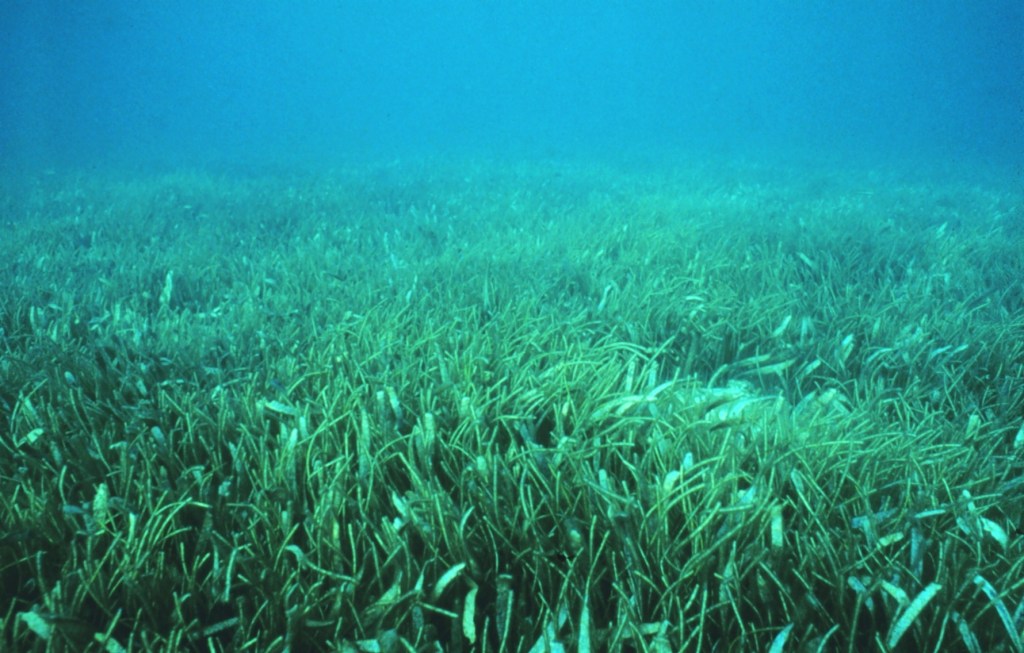
Wastewater pollution is often out of sight—but its impacts on coastal ecosystems are profound. Around the world, nutrient overload from sewage and runoff has fueled algal blooms, degraded water quality, and pushed habitats like coral reefs and seagrass meadows to the brink, and sometimes beyond. Yet recovery is possible.
Tampa Bay, Florida, shows how change is not just possible, but happening. Once plagued by chronic pollution and seagrass loss, the bay has staged a remarkable comeback thanks to decades of science-driven management and community collaboration. How did Tampa do it? And what lessons does it hold for other regions facing similar challenges?
Seagrass Recovery and the Power of Collaboration: A Conversation with Marcus Beck
In this condensed Q&A from Episode One of TNC’s waste(d)water podcast, Marcus Beck, Senior Scientist at the Tampa Bay Estuary Program (TBEP), shares how decades of science-based management and collaboration restored seagrass—and what lessons can inspire similar efforts worldwide.
- Seagrasses often get less attention than coral reefs or mangroves, but they’re vital to coastal health. Why are they so important in Tampa Bay?
-
Marcus Beck: [Seagrass] is not only a good indicator of how healthy the system is, but it is also a foundational species in itself that promotes good water quality and provides a lot of habitat for different species. So seagrasses are an indicator and a benchmark. They [also] stabilize sediments, cycle nutrients and support fisheries.
When seagrass thrives, it means the system is functioning well. That’s why we use it as a benchmark to assess how well we’re [TBEP] doing as a program to protect the environmental quality of Tampa Bay.
- Tampa Bay once lost much of its seagrass cover, which devastated marine life and water quality. Can you explain the historical factors behind that decline?
-
Beck: Tampa Bay being an urban estuary has, as you can imagine, a lot of stressors associated with human activities. Our watershed is over a third developed, whether that’s residential development or really dense urban infrastructure. Historically, [the main] stressors were originating from wastewater treatment plants…prior to the Clean Water Act [passed in 1972] and implementation of advanced wastewater treatment, there was basically a bunch of, for lack of a better description, sewage entering Tampa Bay.
[And so] there was an excess of nutrients into the Bay that it could not assimilate in a way that kept the system resilient or in balance. That fueled phytoplankton blooms and algae blooms in the water column… and basically the water became cloudy, so light couldn’t penetrate. And light is obviously very important for seagrass growth.
- After decades of decline, Tampa Bay is now considered a success story. Were there key actions and policies that reversed the trend?
-
Beck: Through the Clean Water Act and local legislation… wastewater infrastructure improvements… and stormwater regulations… all of that combined to really reduce the amount of point source pollution [entering the bay]. There was a steady rebound in seagrass coverage from the late 1980s to the mid-2010s. Tampa Bay is now considered a national success story. We still have a nutrient load from those wastewater treatment plants, but it’s much less than it was historically. Now the biggest stressors come in the form of stormwater runoff.
Become a Member
Make a lasting impact for nature when you join The Nature Conservancy
- Beyond legislation, what specific strategies and scientific principles guided the restoration of seagrass in Tampa Bay?
-
Beck: Our entire management paradigm to date has focused on addressing water quality issues to promote a favorable environment for seagrass growth. It’s fairly simple: limit the nutrients, improve the light environment, and seagrasses will come back. [Thanks to] those wastewater treatment upgrades and cooperation among the various entities… we were able to reduce the nitrogen loads into Tampa Bay. That had a cascading effect on reducing the amount of phytoplankton blooms [that were clouding the water.] Basically the water became clearer… and light is obviously very important for seagrass growth and [with more light] the seagrass rebounded.
- Setting nutrient targets sounds technical but crucial. How did your team determine the right thresholds for nitrogen and water clarity to support seagrass recovery?
-
Beck: Our criteria relates to an annual load target for total nitrogen as well as thresholds for chlorophyll A and light attenuation… A lot of that decision was based on what is the light requirement for seagrasses… From that empirical relationship, we could backtrack to an average annual chlorophyll concentration… and then relate that chlorophyll threshold back to a total nitrogen target… We used simulation modeling tools to test it… and validate the empirical relationships.
- Environmental recovery often requires more than science—it needs collaboration. How did you bring together regulators, industries, and the community to support Tampa Bay’s restoration?
-
Beck: With a lot of environmental issues, 90% of the time we know what the problem is. The challenges are not related to lack of understanding. It’s just that the actions are complicated and require a lot of coordination and buy-in and frankly resources. Tampa Bay has been considered a unique success story because the community, the public, environmental resource managers, wastewater dischargers, and regulators, they all kind of came together and collectively decided that, hey, Tampa Bay is not in a good spot right now. It’s bad for the economy… We are a community that depends on a healthy Bay for jobs, tourism… So let’s all work together.
This was done through our Nitrogen Management Consortium… We still facilitate the NMC… Every year we get together… We put together an annual report… Everyone is transparent in what needs to be done collectively as a community to support the Bay.
- TBEP is part of a larger network of estuary programs. How does this national framework help local efforts like yours succeed?
-
Beck: The Tampa Bay Estuary Program is one of 28 national estuary programs around the country… These are place-based solutions to restore and protect estuaries of national significance… We bridge the divide between the scientific communities and the management and policy communities… Each NEP has a Comprehensive Conservation Management Plan… our encyclopedia of issues and actions… We depend on partners to implement the actions because we are a small organization.
- Even with progress, new challenges are arising. What emerging issues—like climate change or urban development—are complicating Tampa Bay’s recovery today?
-
Beck: In Old Tampa Bay… we’ve kept nutrient loads below our target… but we have seen our chlorophyll threshold exceeded… That tells us maybe the system is responding differently… Are there confounding stressors? Temperature? Weather patterns? Climate change? We don’t have a solid answer yet… Some of our long-standing paradigms need to be looked at… because the system is dynamic… and it’s changing because of urban development or climate change… That’s the adaptive management framework… We can’t assume the system is static.
- Tampa Bay’s story offers hope for other regions. What lessons and tools can help scale this success globally?
-
Beck: A big part of my job is advocating and promoting the use of open science… Not doing science behind a paywall… but making the products that come out of research more accessible… The paper is important, but it just serves as the foundation… You’ve got to make these open products so the information is distillable, actionable, understandable… Just the mere fact that those tools are open and available… shows that we have nothing to hide… It’s all about building a community around shared trust.
This Q&A was adapted from a full episode of The Nature Conservancy’s waste(d)water podcast, which investigates the far-reaching impacts of wastewater pollution and the innovative solutions emerging to tackle it. This podcast aims to reach a global audience of conservation practitioners, urban planners, environmental educators, philanthropists, water resource and utility managers—and anyone else who cares about the health of our ecosystems and the lives who depend upon them. Learn. Lead. Flush the status quo. Listen to the full episode here, subscribe to the pod on YouTube, Spotify or Apple Podcasts, and follow on Instagram and X for updates.


Join the Discussion