Bill Gordon is one of those people not prone to half measures. Most of his wardrobe consists of concert t-shirts for the heavy metal band Anthrax. Dozens of Anthrax t-shirts, each with a specific musical memory.
Become a Member
Making a lasting impact for nature when you join The Nature Conservancy!
But his enthusiasm for heavy metal pales compared to his love of fishing. Each spring, he follows the runs of migratory shad, beginning in January in Florida and then on up the coast, after which he’ll travel to California to chase shad there.
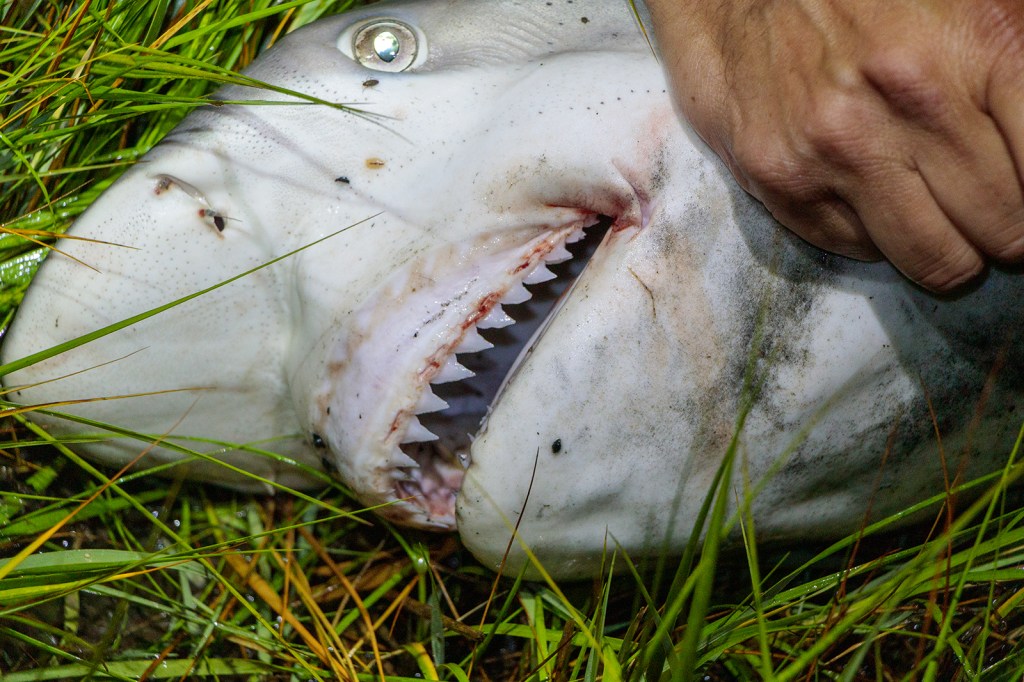
When he was 16, he had a shark tear off a bluefish from his line. “I got smoked by that shark,” he says. “I read books and I started to learn how to catch sharks. It became an obsession.”
Many years later, he met Monmouth University researcher Keith Dunton, who tracked and tagged shark movements. He began volunteering with Dunton, helping him with shark research.
Fishing for Science: Sharks of New Jersey
I recently joined Dunton and Gordon for an evening of shark tagging on Long Beach Island in New Jersey. The project tracks sharks, helping researchers understand the sharks’ use of salt marshes as nursery habitats and where they move once they leave. You can read more about the importance of salt marshes for sharks and people—and why The Nature Conservancy is restoring them—in my companion feature, “Seeing the Salt Marsh for the Sharks.”
Like Gordon, I’m obsessed with fishing. And perhaps my favorite form of fishing is when catching fish aids in scientific research. Two of my favorite trips have been tagging giant trevally on Palmyra Atoll and volunteering in Yellowstone National Park for cutthroat trout research.
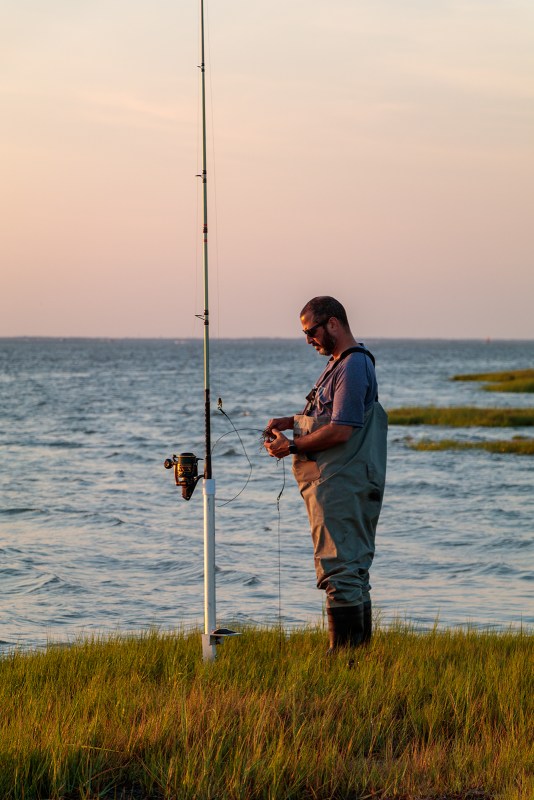
But I’ve never fished for sharks. In fact, in the small streams I love to fly fish, the trout I catch are often smaller than the eels we used for shark bait.
Dunton cast out three heavy spinning rods and then placed them in rod holders. These are baitfeeder rods; when a fish takes the bait, they are able to run with it, emitting a loud clicking sound from the reel.
We waited by the rods on a pleasant August evening, with a nice breeze keeping the mosquitoes away.
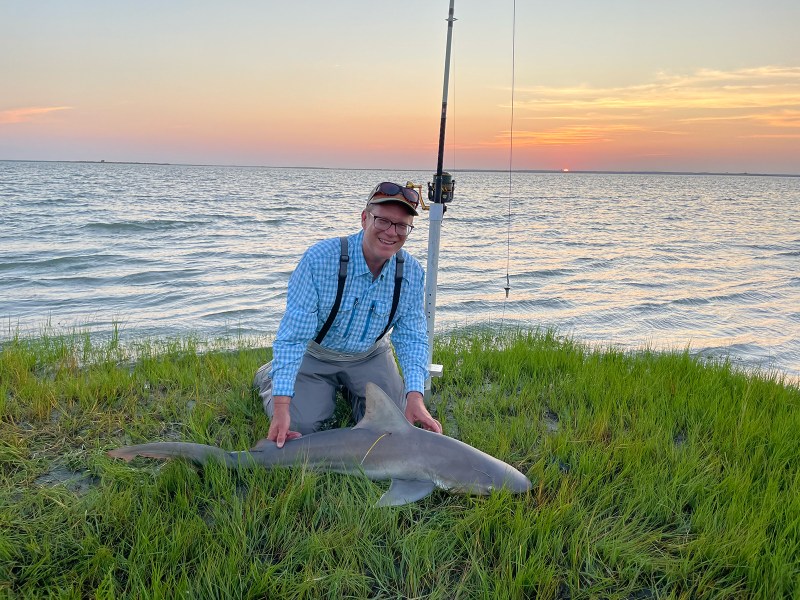
Gordon’s rod goes off first, with line peeling out and rod tip bent over. It’s a smaller shark, a smooth dogfish.
Dunton and team are practiced at getting sharks tagged and safely back in the water. While land-based, recreational fishing can cause heavy release mortality in sharks, Dunton has never lost one.
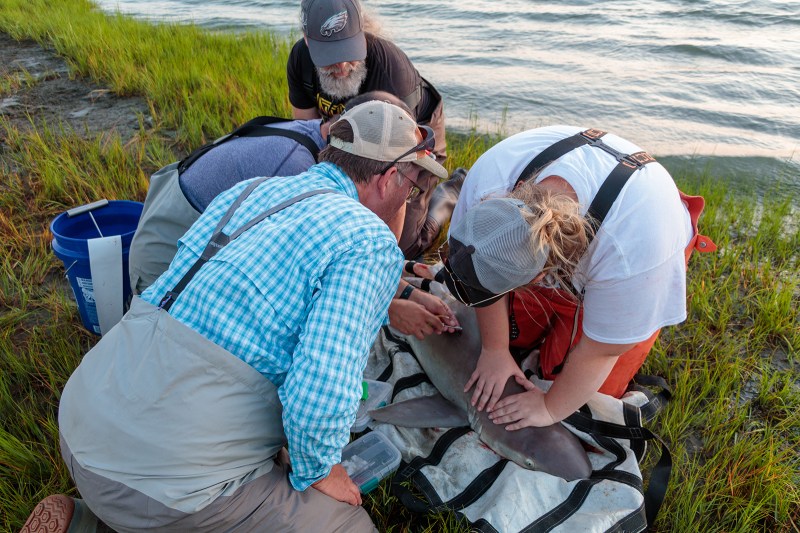
The shark is placed on shore, with basic measurements taken, followed by an incision in its stomach where a tag is placed. This tag that will emit pings that are picked up by sensors along the U.S. East Coast. The scientists can then track the sharks’ journey. They then placed another tag in the fin, one that can be recorded should the shark ever be caught or found.
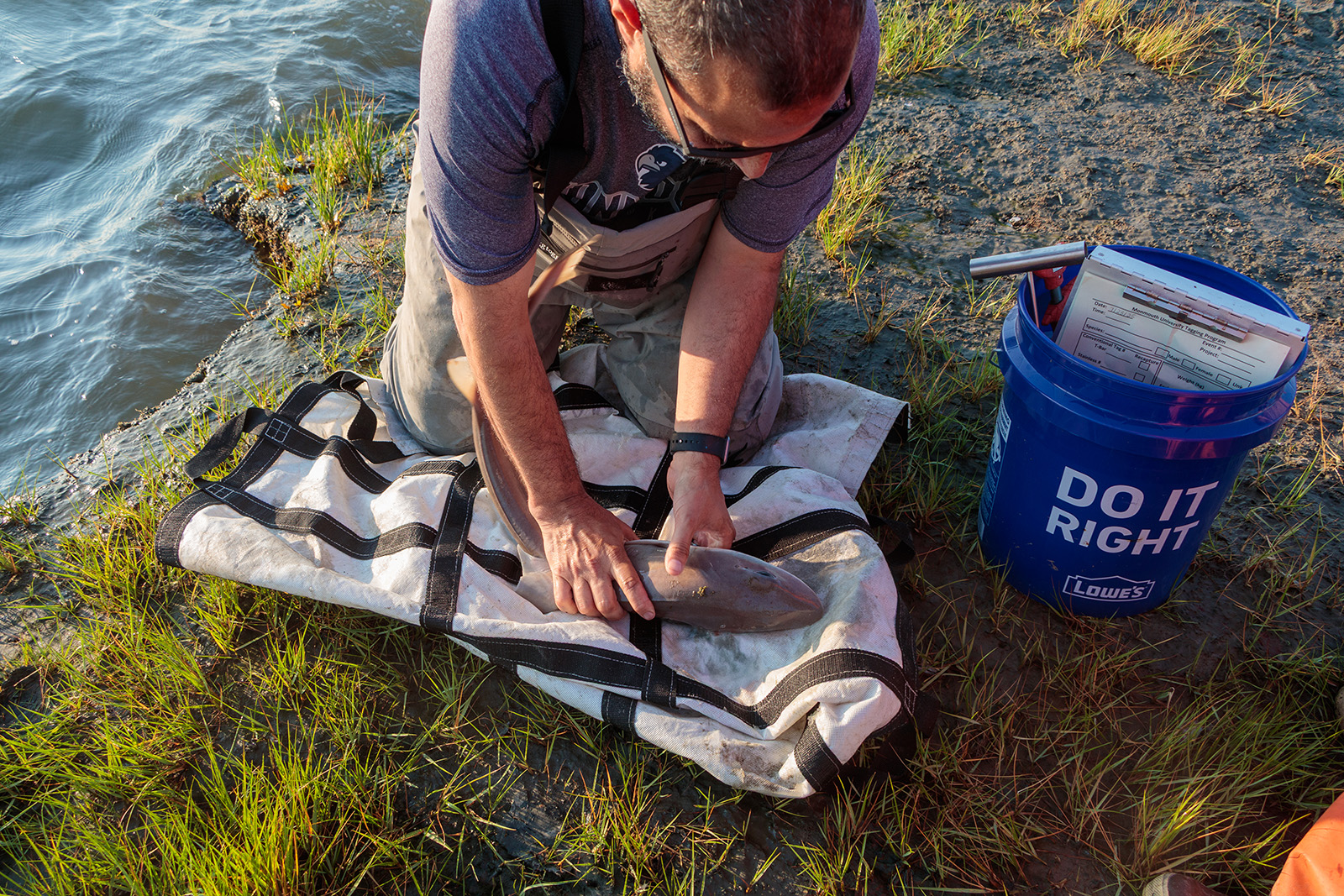
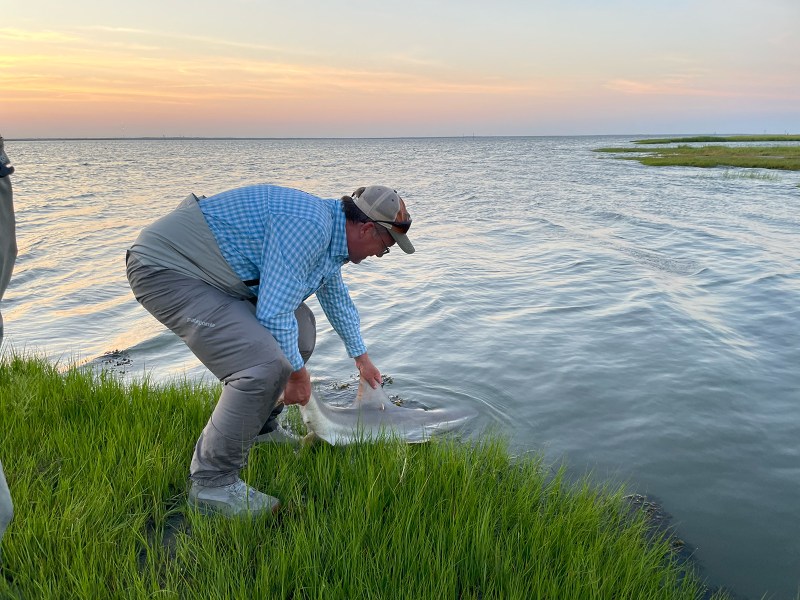
And then it went back in the water, disappearing without a trace.
I would not have to wait long for my chance, as a reel violently bent over, line whirring off the reel, as Dunton jumped up and headed for it. “You want to reel this one in?” he asked.
I did. And immediately wondered what I had gotten myself into, as this was no trout. It wasn’t even a bonefish. I could feel its power in my arms, my shoulders, my tricky back. But also: I just felt gloriously happy, seeing that dorsal fin cutting through the water. Attached to a life form so much more than the fictional portrayals.
Soon, Gordon lifted the 4-foot sandbar on the bank. I helped hold the shark down as it was tagged. I then rather clumsily lifted the shark, returning it to the water. [Click to enlarge photos.]
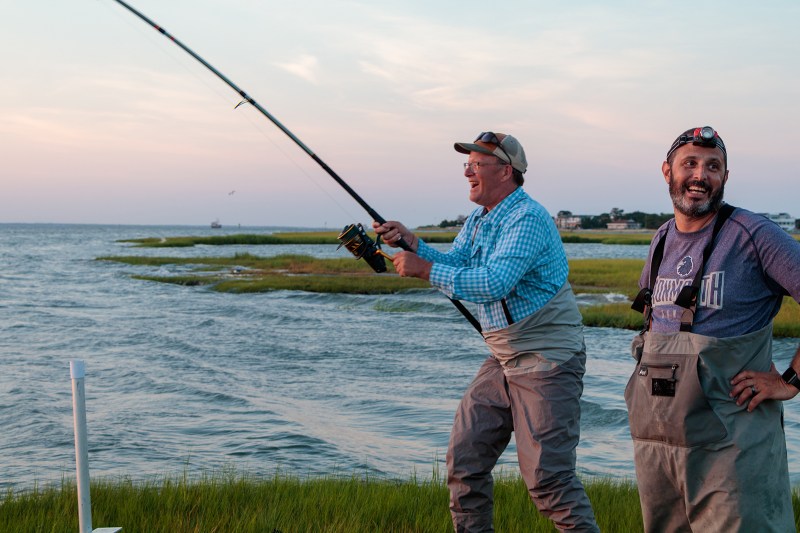
The night wasn’t over. A little while later, the line was ripping off again. “Want another one?” Dunton asked.
I didn’t want to be greedy, but he just laughed. “You came all the way from Idaho, so you deserve another shark,” he said. “Besides, I’m out here all the time.”
This one was bigger, making long runs. “When it runs, back off,” Gordon told me.
Soon I found it hard to even hear him. For a couple of minutes, it was just me and a sandbar shark, connected by what seemed like a too-thin strand of line. And then this shark, too, is ashore.
Save the Salt Marsh, Save the Sharks
The salt marsh habitat is so important in the front lines of climate change, for biodiversity, for storm protection. For me, the habitat is even more special for the presence of these sharks. I’ve traveled long distances to come close to apex predators like jaguars and lions, often found in remote national parks and wilderness areas. Here, the predators are found basically in the backyard of millions of people. Long may it be so.
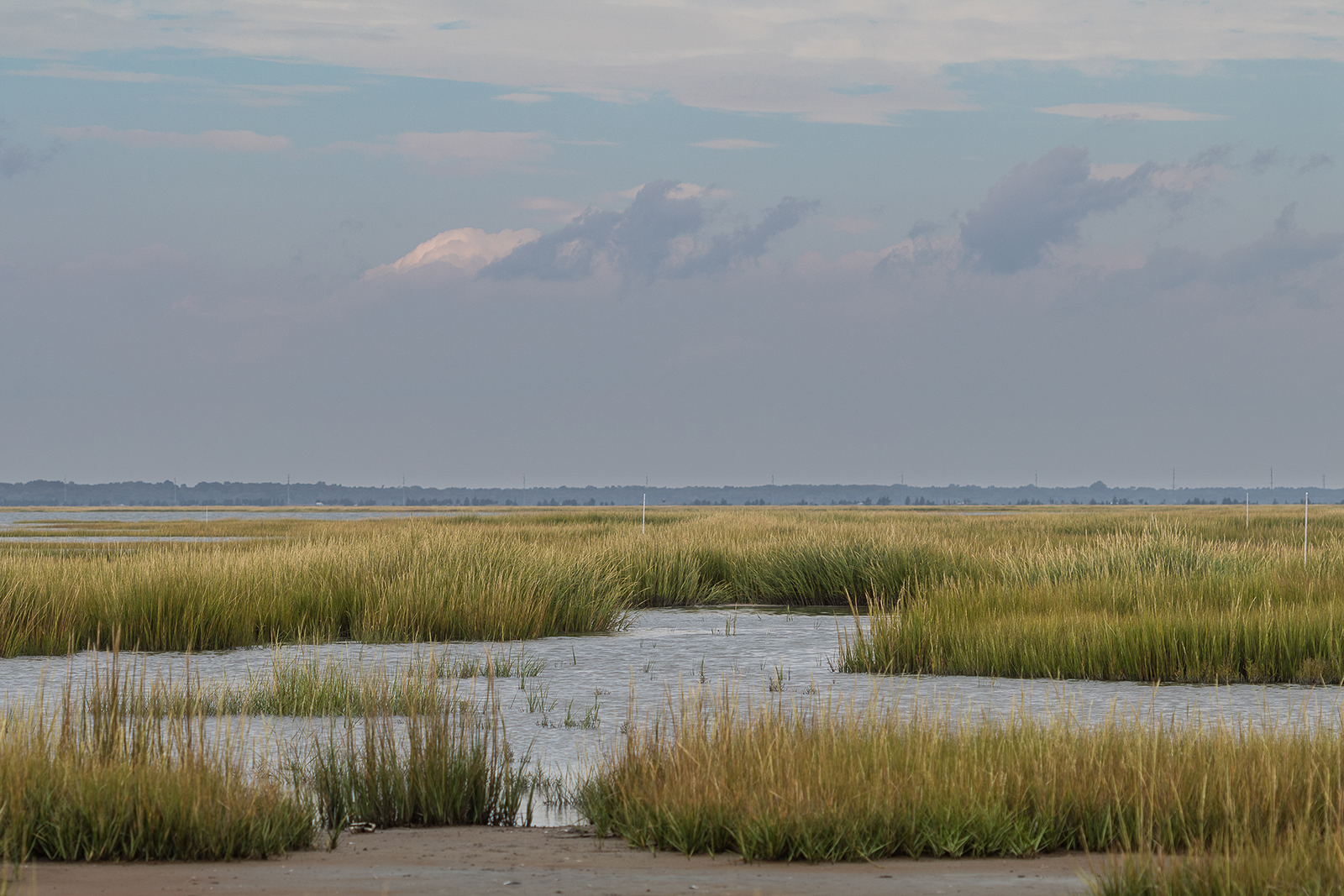
By midnight, most of the group that had joined for the shark tagging had gone home. I had nowhere else to be, so I just enjoyed the marsh breeze and reflected on the evening. We had gone an hour without any hits, so it seemed activity was winding down.
But there would be one more bonus catch. The rod went off with something big. I persuaded my Cool Green Science colleague Cara Byington to take this one. She gave a few cranks of the reel and decided it was enough. Or maybe she knew I’d appreciate it more.
Whatever the case, I was soon tight to an even bigger fish. And this one wasn’t giving up easily. It seemed to burrow down into the bottom of the bay, the sure sign of a ray. Now Gordon was really emphasizing that I not fight when the ray moved.
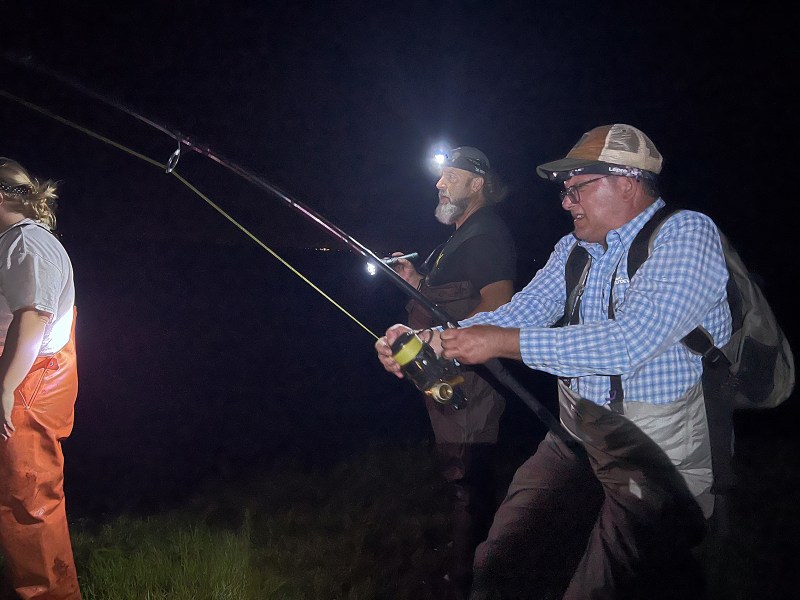
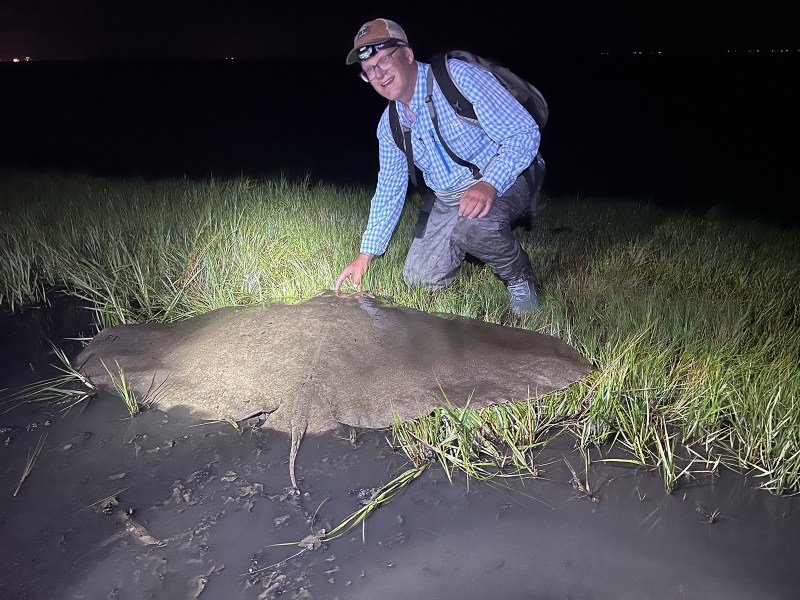
It was brutal, like having a washing machine on the end of the line. A washing machine with attitude. But eventually I brought it to shore, a 5-foot-11-inch spiny butterfly ray. The biggest fish I’ve ever caught.
It too was brought ashore and tagged. It will help tell the story of the salt marsh and the habitat it provides for a variety of wildlife.
The next morning, I’d pass similar bays along the coast as I made my way to the airport. As a colleague noted, many people drive by those waters without a thought as they head to the beach. But here there are sharks. Protect them and you protect the many benefits of the estuary.
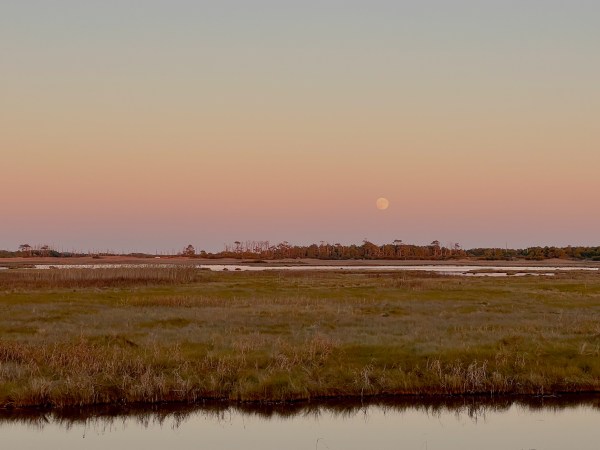
I grew up fishing for sharks off LBI, and exploring the marsh for hours on end. This brought back some great memories!