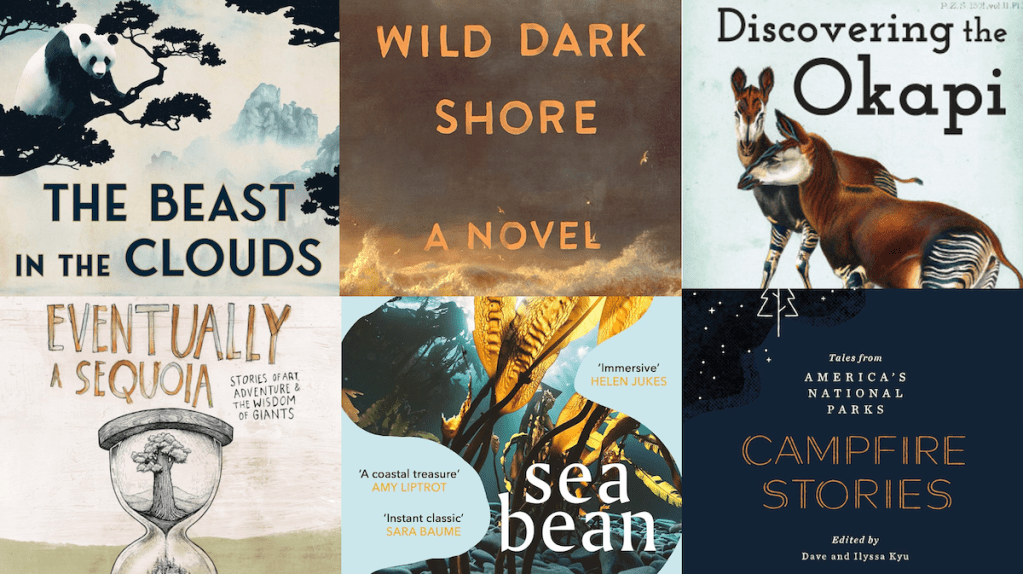
Maybe you’re seeking a book for the nature lover on your list, or you just want a good read to bring in the new year. With the prospect of airline delays and holiday travel hassles, perhaps you would like to be transported to a distant land, or if you’re ambitious, wrestle with some big conservation ideas. (Or both).
We’ve spent the year reading piles of books, many of them about nature and conservation. Here, my colleague Jen Winger and I pick six of our favorites.
And, if you need more ideas, Cool Green Science has a long list of book reviews covering birding, fishing, sustainable eating, nature-based mystery novels and more. – Matt Miller
Top 10 List
-
Eventually a Sequoia
By Jeremy Collins | Mountaineers Books
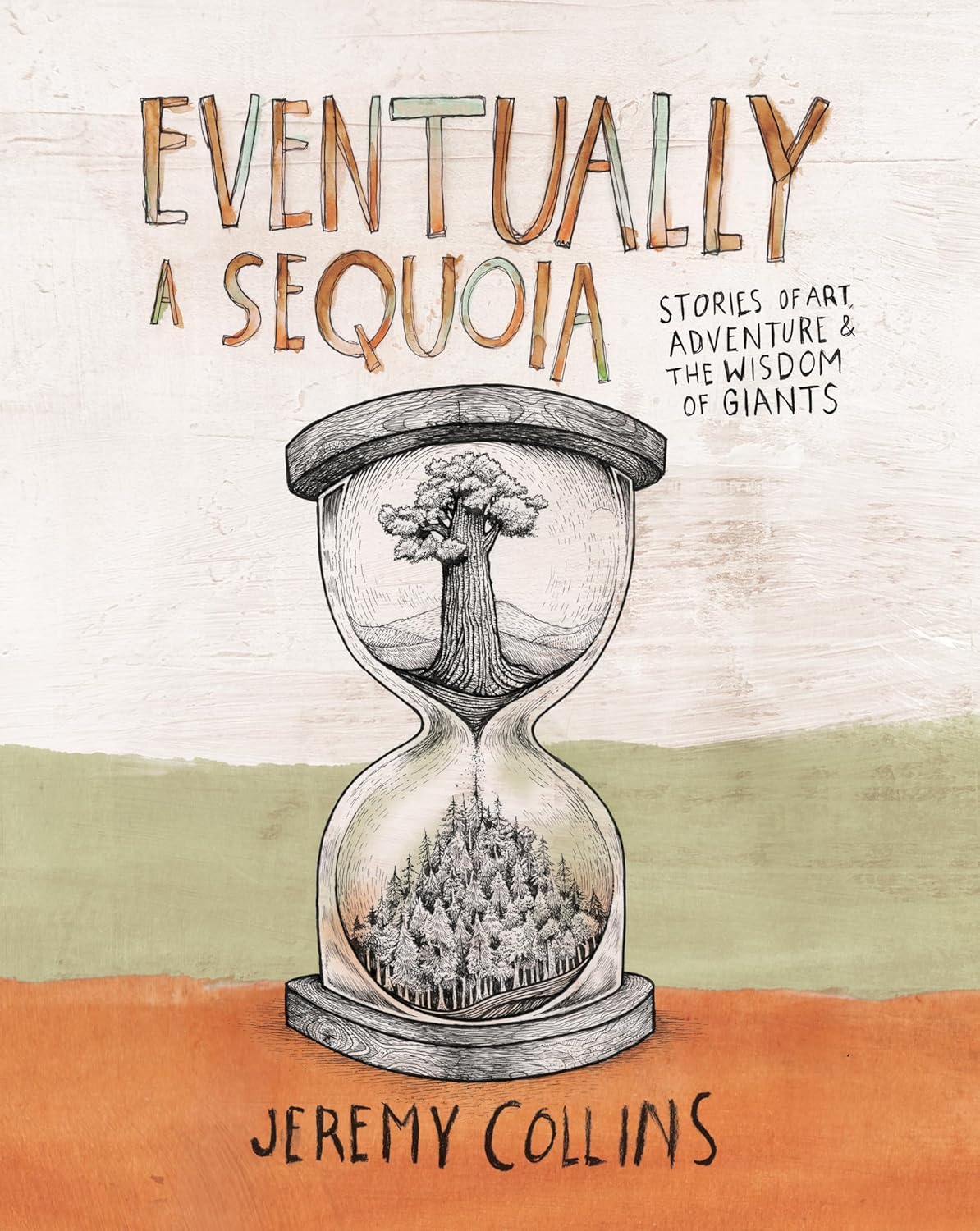
In his new book, Eventually a Sequoia, author and illustrator Jeremy Collins uses the image of the massive tree as a symbol of quiet strength, patience and the lasting impact of individuals—artists, adventurers and environmentalists.
He is inspired by these people during his travels to some of the most at-risk landscapes around the world, including the Arctic National Wildlife Refuge, Bears Ears National Monument and the Amazon.
Richly illustrated with sketches from Collins’ travel journals, the visual narrative of this graphic memoir doesn’t just complement the text, it offers its own moments of introspection and awe. Because of its nonlinear structure, Eventually a Sequoia can be read cover-to-cover or opened at random, so opportunities for reflection are always within easy reach. – JW
-
Wild Dark Shore
By Charlotte McConaghy | Flatiron Books

Set on a fictional island near Antarctica, Charlotte McConaghy’s novel Wild Dark Shore probes the moral complexities within the human psyche and natural world. Widower Dominic Salt and his three children—Raff, Fen and Orly—live on Shearwater Island, which houses a crumbling seed vault meant to safeguard biodiversity in the face of climate change.
When a mysterious woman washes ashore alive, the family’s world begins to unravel. Throughout the book, McConaghy uses the island not merely as a backdrop but as a living reflection of her characters’ emotional turmoil.
The landscape pulses with the same tensions and vulnerabilities that haunt its inhabitants, drawing readers into a powerful current of grief, isolation and fragile hope. – JW
-
Discovering the Okapi
By Simon Pooley | Hopkins Press
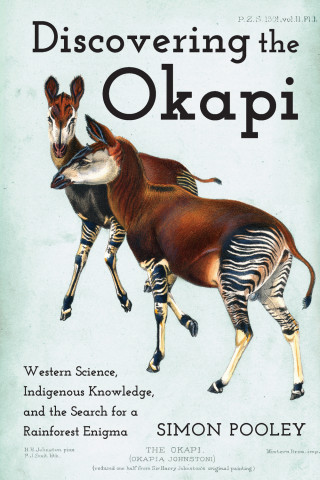
The okapi is one of the last large mammals “discovered” by Western science and it remains largely unknown outside its Congo rainforest range. Sometimes called a “forest giraffe,” this is a seriously fascinating beast, and Simon Pooley offers the definitive account of the okapi and its shaky recent history with humans. He traces the history of Western expeditions to hunt museum specimens and collect live okapis for zoos, including telling the stories of the Indigenous and local people who often received little to no credit for the pivotal roles they played in these searches.
The story of the okapi’s scientific discovery is one of imperialism, an unfortunate reality that carries over into modern-day conservation. Pooley elegantly writes of the complexities surrounding nearly anything involving this animal. It’s a compelling account that combines old-school natural history, Indigenous knowledge, myth, modern science and more. – MM
-
The Beast in the Clouds
By Nathalia Holt | Atria/One Signal Publishers

In the early 20th century, the giant panda was as mysterious a creature as the okapi. While the panda is highly familiar today, in the 1920s many doubted this bear even existed. A number of Western expeditions were launched to find the bear, all without success.
Ted and Kermit, sons of President Theodore Roosevelt, launched their own expedition to bring back a specimen of the giant panda. Nathalia Holt’s narrative nonfiction work, The Beast in the Clouds, tells the story of this quixotic quest.
One is struck by the extreme challenges of this journey, as the explorers and their crew faced disease, high altitudes, extreme weather, bandits and the rigors of months on the trail. But the considerable achievements are offset by the arrogance and colonial mindset of the Roosevelt brothers.
Holt does a masterful job of balancing this complexity. She also follows up with the aftermath of the expedition and how it affected many of its key figures in ways alternately hopeful and heartbreaking.
I will admit I read the Roosevelt brothers’ firsthand account of the journey, Trailing the Giant Panda. I wondered if Holt’s narrative would offer anything new, but I needn’t have worried. The Roosevelts hastily published their book and left out many of their own conflicted feelings and darker thoughts. Holt relies on their actual notebook entries, offering in many ways a deeper view of this type of expedition and how it affects local people and wildlife. – MM
-
Campfire Stories (series)
By Ilyssa Kyu & Dave Kyu | Mountaineers Books
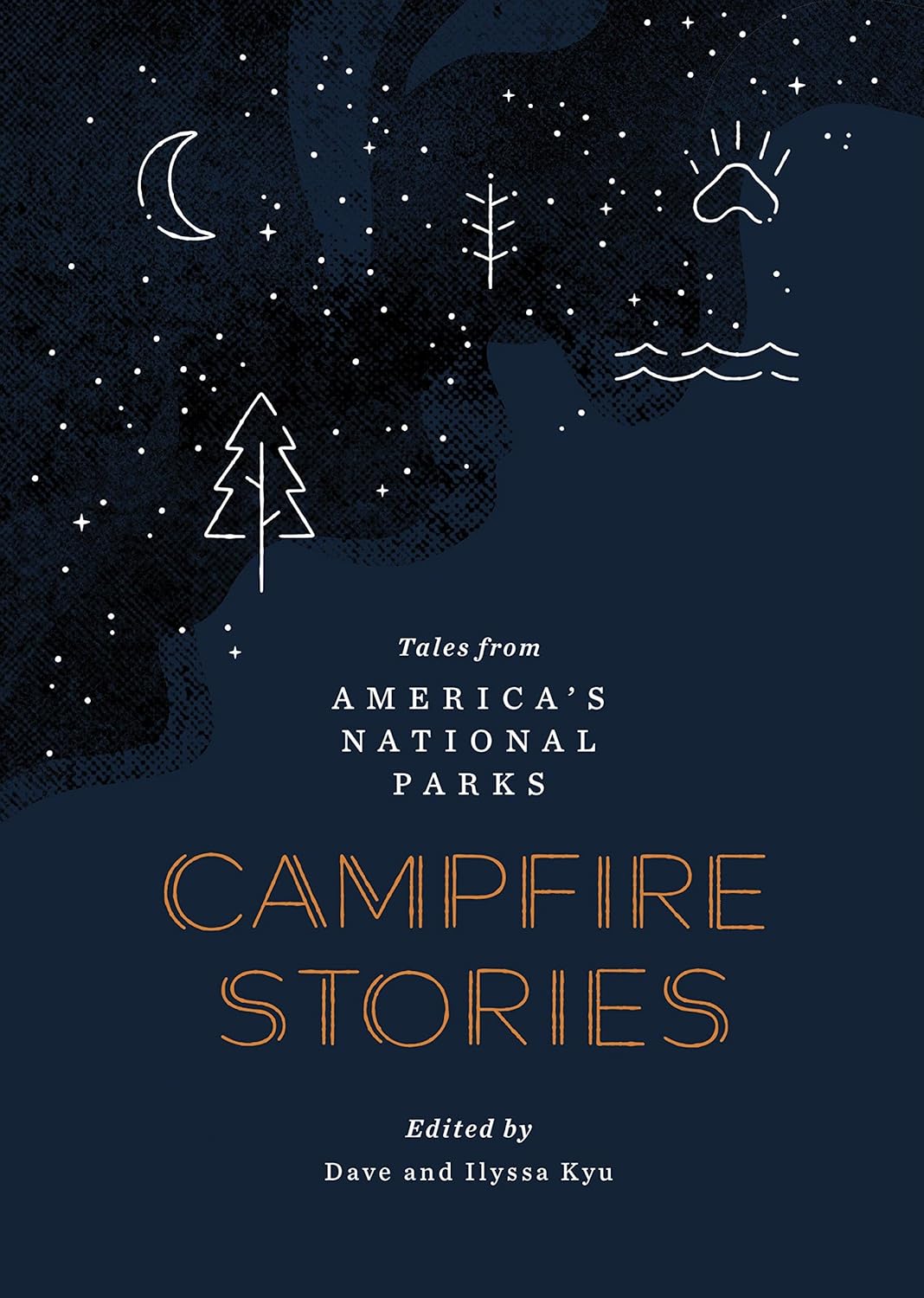
The Campfire Stories series published by Mountaineers Books are compact volumes that anthologize essays, fiction and poetry from popular U.S. destinations, including national parks, the Adirondacks, Chesapeake Bay, Santa Fe & Taos, the San Juan Islands and Cape Cod.
These are fun books to pack along on your trip or for pre-reading. Each includes a section of places to visit, specifically aimed at nature lovers and outdoor enthusiasts.
I read the Chesapeake Bay addition and loved the diversity of narratives that covered natural and human history. There were stories on geese and crabbing and fish houses and the Underground Railroad.
Editors Ilyssa Kyu and Dave Kyu believe stories give shape to landscapes, and to travel. These books succeed in helping us gain a richer understanding of the places we visit. – MM
Top 10 List
-
Sea Bean
By Sally Huband

Shortly after moving to the isolated Shetland Islands, Sally Huband faced a chronic illness that prevented her from long hikes. These rambles were in many ways her lifeline, and now she was fatigued, in a new and somewhat isolating home.
She turned to beachcombing, visiting the local coast in search of natural and human treasures. She focused her search on the sea bean, a seed that falls in the tropics and is carried by currents to the British Isles.
Huband ties her search to bigger themes, from human wellness to the harm we’re doing to our oceans. She contemplates the items she finds on the shores, from dead seabirds to sea glass to messages in bottles. I particularly like that she considers the human objects an essential part of the beachcomber’s odyssey.
Along the way, she participates in citizen-science efforts that turn beach finds into scientific or conservation data. With Huband as a guide, a simple walk on the beach becomes something more, a way to explore deep and complicated histories, ecological distress and a way forward. – MM
Join the Discussion