I once owned a poodle who was obsessed with gopher tortoises.
One winter, after Florida’s crushing humidity abated, my mother and I drove north to Wekiva to hike along the sandy trails that wound through the pine flats and oak thickets. We brought Jasper, our 6-month-old standard poodle puppy, who had boundless energy and was, even then, exceptionally well-trained and obedient.
Become a Member
Making a lasting imact for nature when you join The Nature Conservancy!
Red-cockaded woodpeckers chattered overhead as we walked, Jasper sniffing curiously at the curves of a snake left behind in the sand, or the splay-toed tracks of racoons and armadillos. And then he caught the scent of something else wafting on the breeze: eau-de-tortoise.
Before I could blink he’d ripped the lead from my hand and disappeared into the palmettos, whining with crazed excitement. After a few frantic calls it became apparent that he was not coming back. And so my mother and I waded into the scrub after him, following the sound of crashing fronds and high-pitched yelps.
After a frantic half hour — it’s here I should note that Wekiva has a healthy population of black bear and diamondback rattlesnakes — we found Jasper standing outside of a burrow, wagging his tail and prancing with delight. Peering into the entrance, I could see a disgruntled gopher tortoise staring back at us from deep within the sandy tunnel.
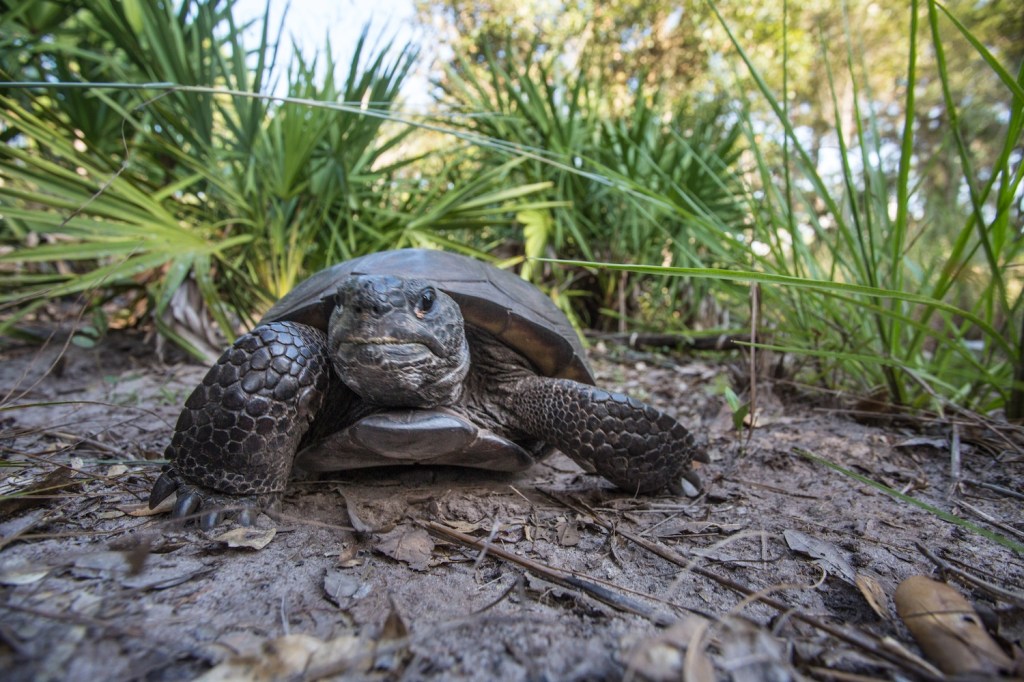
It was my first look at one of Florida’s most fascinating reptiles, and a keystone species of the longleaf pine ecosystem.
Gentle Giants, Deep Burrows
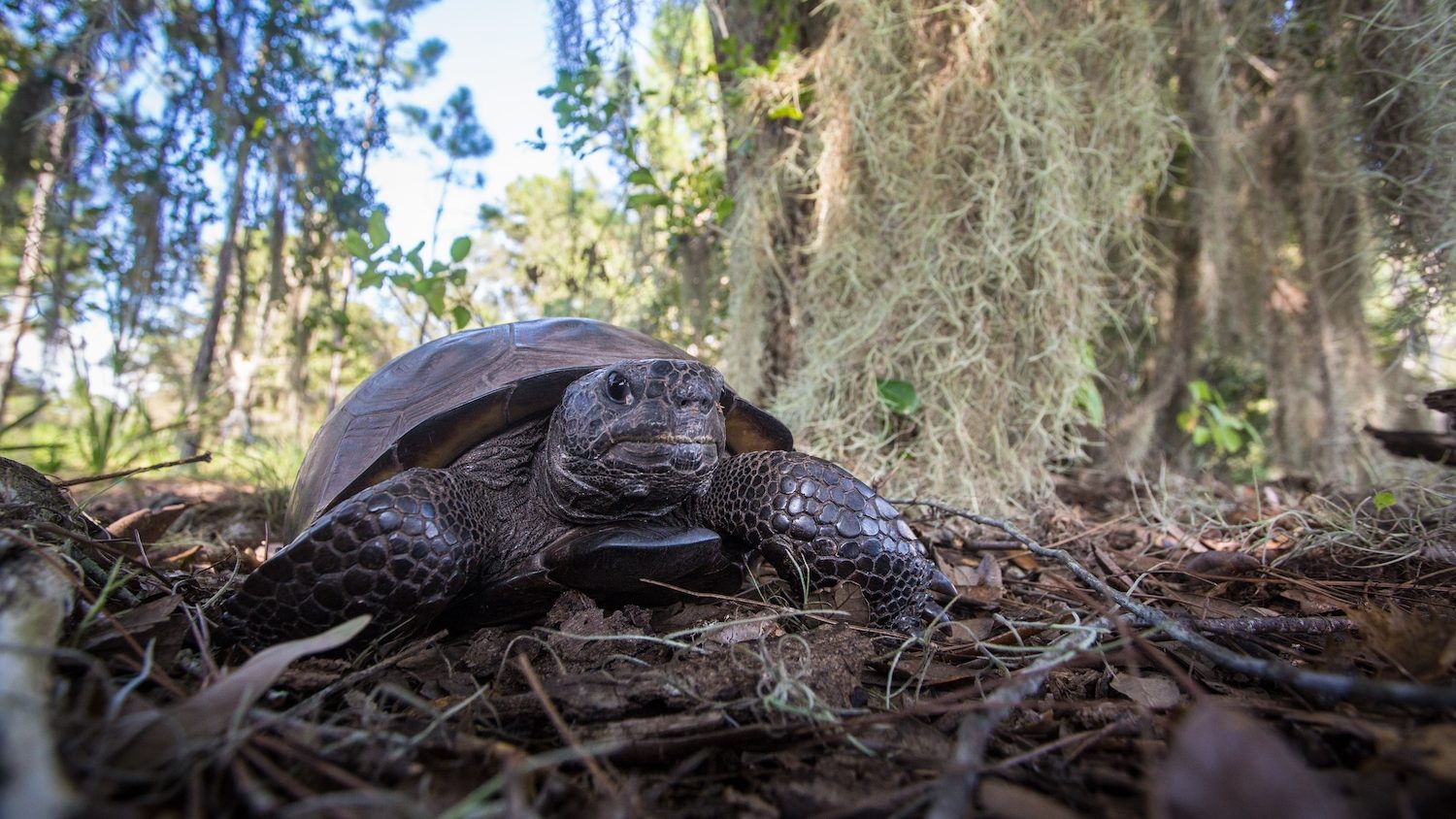
Gopher tortoises are native to the upland pine forests of the southeastern United States, and are the only tortoise found east of the Mississippi. Their muted-brown, domed shells are distinctive; like a tiny round bulldozer plodding through the palmettos. Adult turtles average between nine and 11 inches long, although girthy adults can grow up to 15 inches. Like other slow-growing reptiles, these tortoises are especially long-lived, surviving an average of 40 to 60 years in the wild. (One individual lived more than 75 years in captivity.)
The tortoises are found on the coastal plain that stretches across Mississippi, Alabama, Georgia, Florida, and South Carolina. While the species is often associated with the longleaf pine forests, they are also found in other habitats, including coastal dunes, xeric oak hammocks, scrub, and dry prairie.
The thing that all of these ecosystems have in common? Sandy soils.
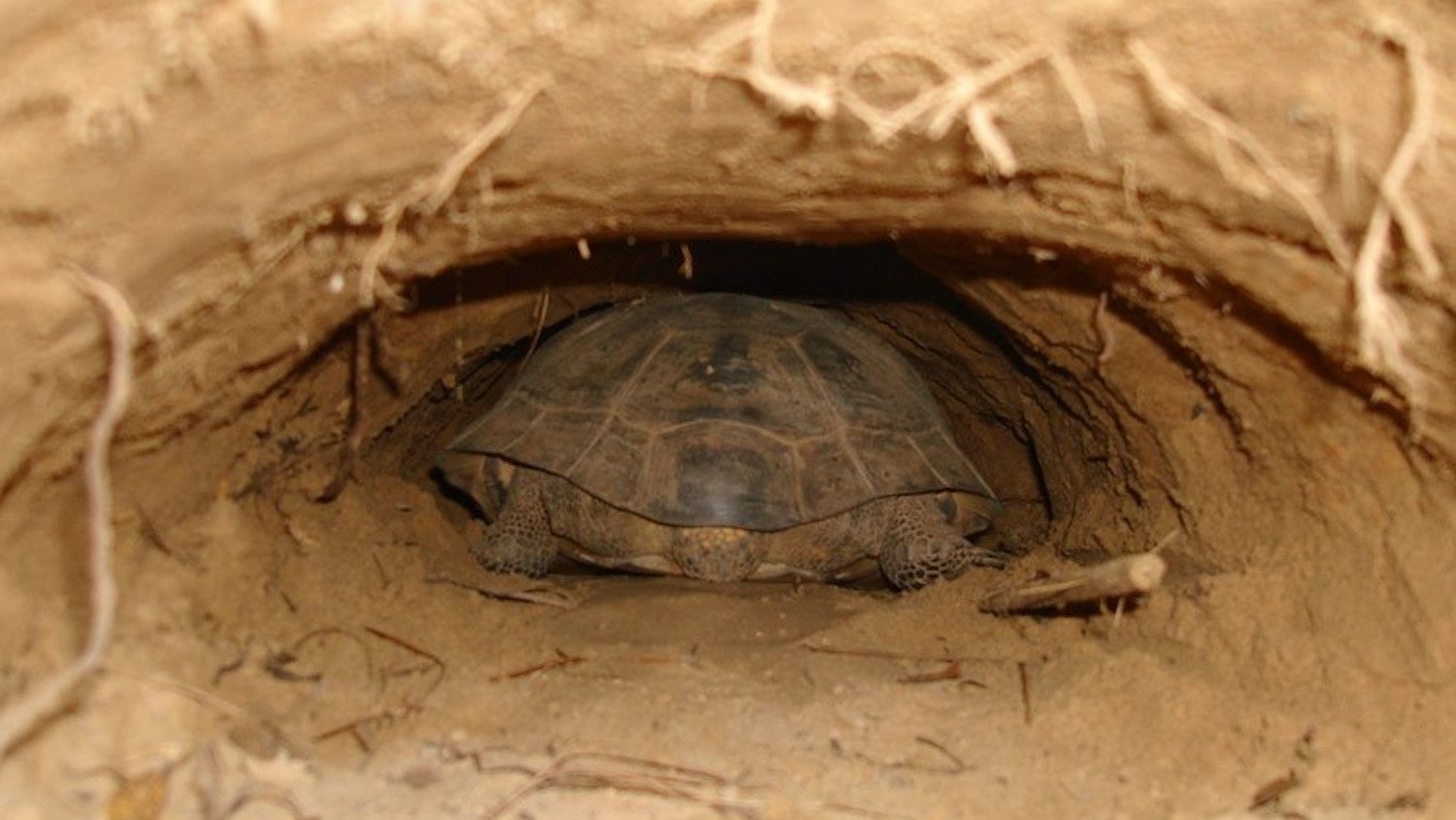
Gopher tortoises are fossivirial — one of my favorite ecological terms — meaning they specialize in digging and burrowing. Tortoises use their flat, shovel-like forelimbs to dig burrows into the sand. These tunnels can stretch between 15 to 40 feet underground, protecting the turtles from fire, frosts, and predators.


When the Tortoise Has a Houseguest
Burrows keep the tortoises safe and comfortable, but they also provide critical shelter for hundreds of other species. Camera trap studies show that more than 300 invertebrates and 60 vertebrate species utilize tortoise burrows, including everything from armadillo and opossum to Bachman’s sparrow, burrowing owls, diamondback rattlesnakes, and pinesnakes.
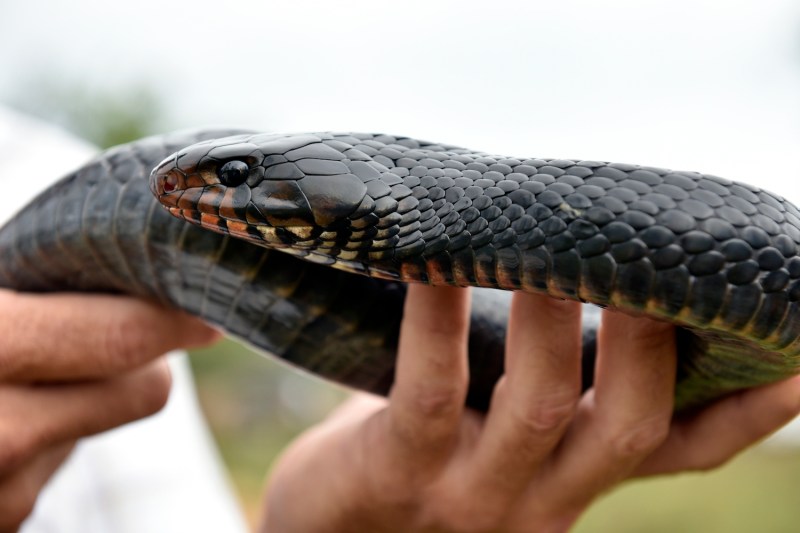
Some are occasional visitors, while others are more dependent on the tortoises. Eastern indigo snakes — another of the southeast’s threatened reptiles — are the longest nonvenomous snake in North America, reaching lengths of more than 8 feet. Once widespread throughout the southeast, today indigos are only found (with difficulty) in peninsular Florida and southern Georgia. Indigos are heavily reliant on tortoise burrows to survive cold winter temperatures.
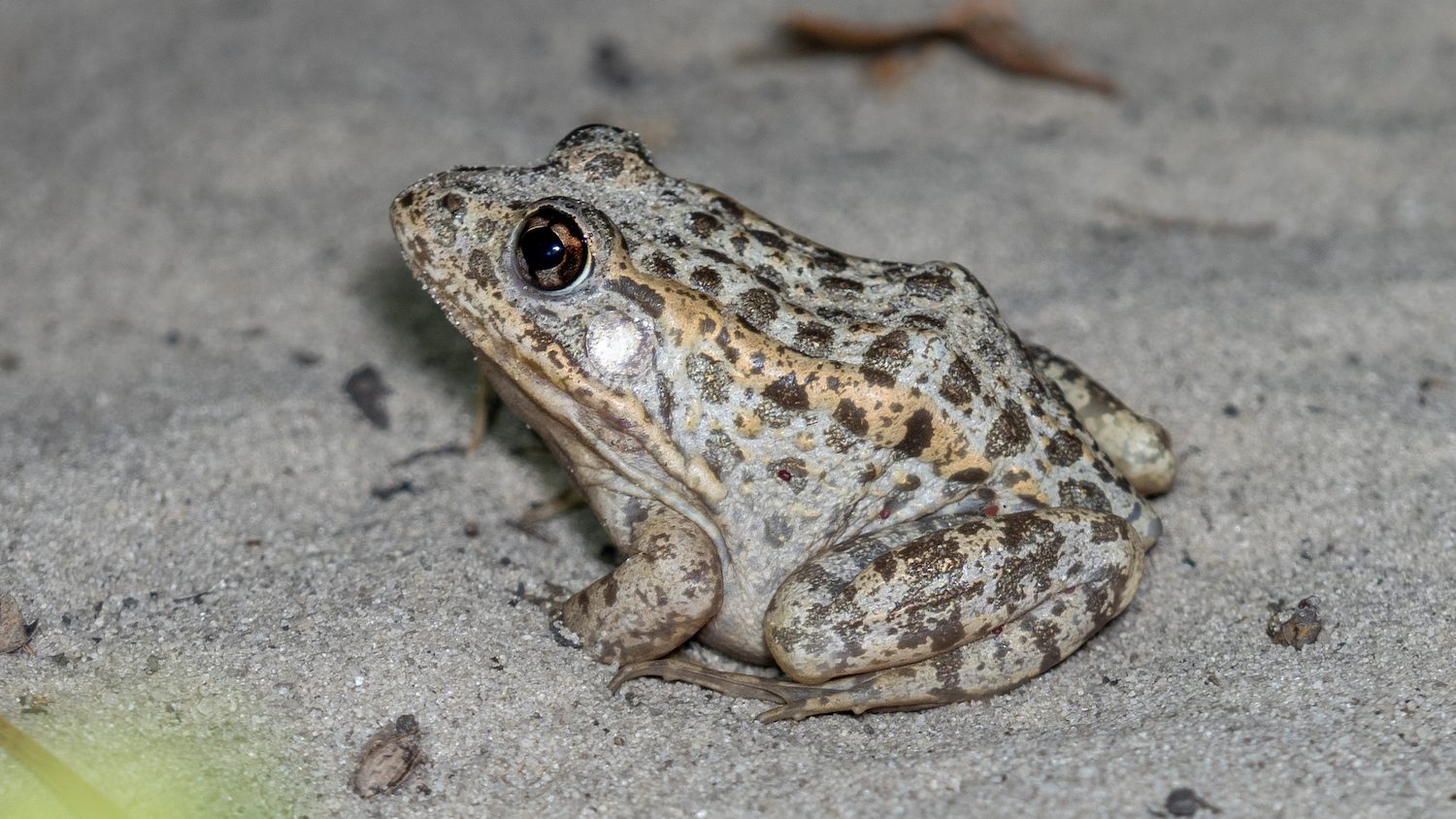
Gopher frogs (Lithobates capito) are another frequent tortoise houseguest. Like indigo snakes, these plump little frogs shelter almost exclusively in tortoise burrows. The underground tunnels provide a humid environment, which helps the frog’s skin stay moist during the day. By night, the frogs emerge to forage for earthworms, spiders, and other small insects. Come winter, the frogs relocate to nearby wetlands to breed, and then return to their tortoise burrow homes.
Florida mice (Podomys floridanus) are endemic to their namesake state, where they live in dry, upland habitats. Tortoise burrows provide the perfect shelter from predators. The mice often dig a small side chamber off of the tortoise tunnel, where they can rest and raise their young during breeding season. Evidence from fossil beds, uncovered by paleontologists at the Florida Museum, suggests that the two species have lived alongside one another for at least 1.35 million years.
Tortoise burrows keep small critters safe from predators, and they also offer a relatively cool and stable climate, away from the oppressive Florida heat. Longleaf pine ecosystems are also prone to fire, which plays an essential role in maintaining the health of the forest. But those fires pose a danger to small animals, which often scurry down a gopher tortoise burrow for shelter.
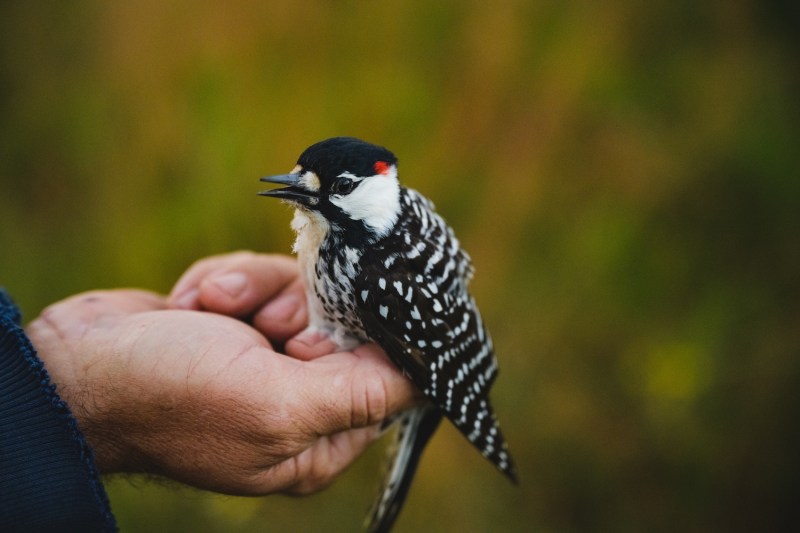
The gopher tortoise’s digging provides other benefits to ecosystems they inhabit. By excavating deeper soils to the surface, the tortoises influence soil turnover and nutrient distribution, and provide a critical ecosystem service in nutrient-poor sandy environments. This in turn provides extra nutrients and minerals for plants, including the iconic longleaf pine, and the many other species that depend upon them, like red-cockaded woodpecker.
Even the tortoise’s shell gives back to the ecosystem, eventually. Calterpillers of the aptly named gopher tortoise shell moth (Ceratophaga vicinella) feed exclusively on the keratin found in the shells of dead tortoises. Other species in this moth family feed on the horns and hoofs of dead ungulates, but Ceratophaga vicinella will only eat tortoise shell.
The Fall (and Rise) of the Longleaf Forest
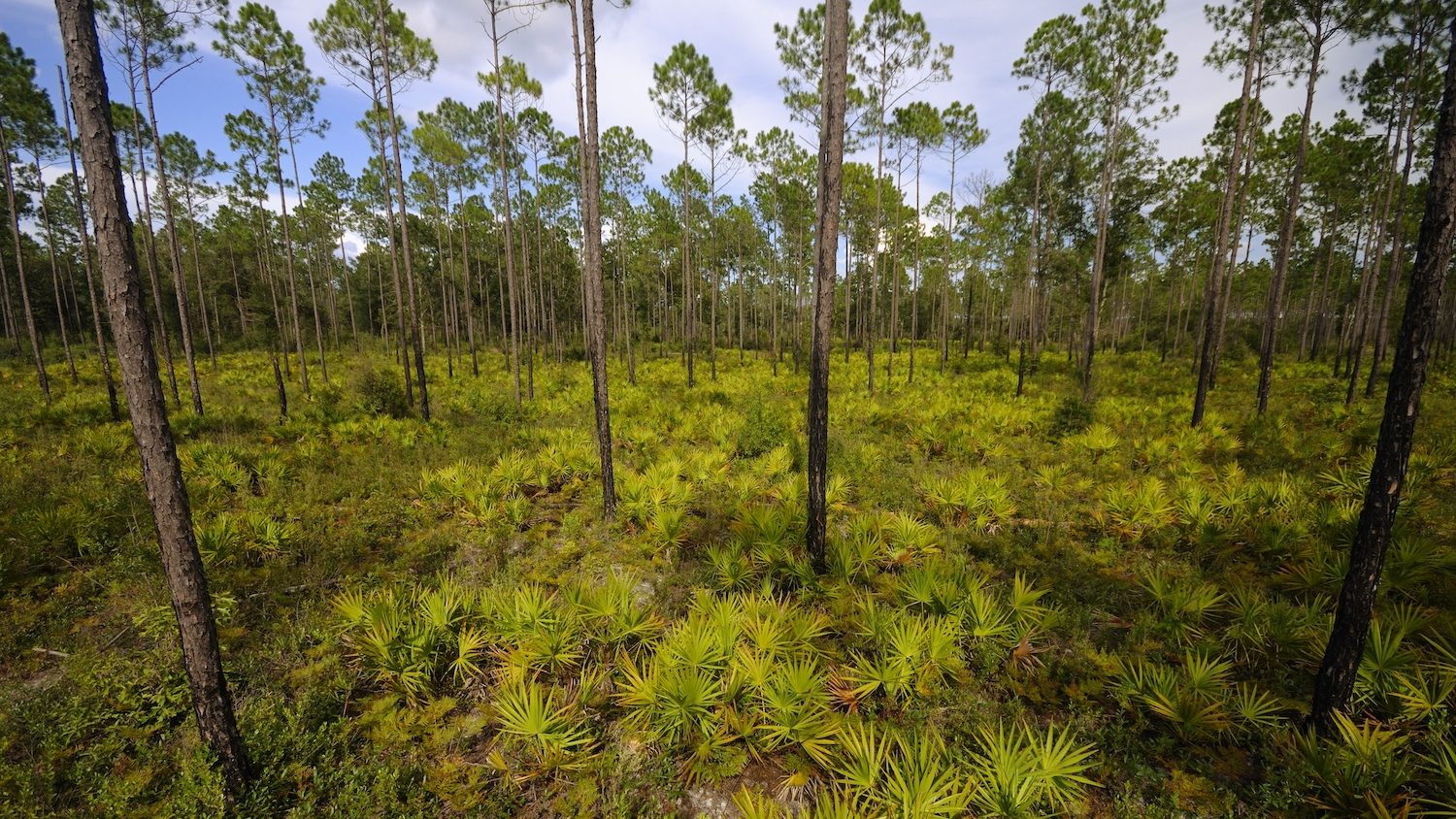
Longleaf pine forests once stretched across 90 million acres of the Atlantic coastal plain, from southern Virginia to eastern Texas. But by the mid 1900s only 3.5 million acres remained, an area smaller than the land area of Hawaii. The tall, straight longleaf pines were prized for their water-resistant timber, resulting in widespread deforestation.
Longleaf is an ecosystem designed to burn, and fires are essential for clearing the understory and allowing young pine seedlings the space to grow. Europeans excluded fire from the little forest that remained, further jeopardizing the forest’s health. As the longleaf forests declined, so too did the gopher tortoise. Today, the species is considered threatened or endangered throughout most of its range.

Most of the tortoise’s decline can be attributed to habitat loss for forestry, development, crops and pasture. Human hunting also played a role, as tortoises were a popular game food for families struggling during the Great Depression. (Southerners called them “Hoover chickens,” in a nod to President Herbert Hoover.) Car strikes are a problem, too, as habitat fragmentation forces tortoises to cross roads.
Tortoises are unable to bounce back quickly from these threats, as they’re slow to reproduce and have high juvenile mortality. Females don’t reach sexual maturity until they’re between 15 and 20 years of age, and then they’ll only produce one clutch of up to 25 egg each breeding season. Ecologists estimate that 90% of the eggs are devoured by predators, including armadillos, raccoons, foxes, skunks, and alligators. For the tortoises that manage to hatch, only 6% live to adulthood.
Thanks to conservation efforts, longleaf ecosystems have increased to 5.2 million acres across the southeast. The Nature Conservancy is helping gopher tortoises by working to restore, connect and manage these forests. Much of that work revolves around bringing fire back to the forest in the form of controlled burns.
Many of TNC’s preserves protect longleaf pine ecosystems, where you can spot gopher tortoises, red-cockaded woodpecker, and other iconic species. The following preserves are some of our favorites:
- Pascagoula River Watershed (Mississippi)
- Gulf Islands Landscape Conservation Area (Alabama)
- Betty and Crawford Rainwater Perdido River Preserve (Alabama)
- Apalachicola Bluffs and Ravines Preserve (Florida)
- Blowing Rocks Preserve (Florida)
- Disney Wilderness Preserve (Florida)
- Tiger Creek Preserve (Florida)
- Charles Harrold Preserve (Georgia)
- Chattahoochee Fall Line (Georgia)
- Moody Forest Natural Area (Georgia)
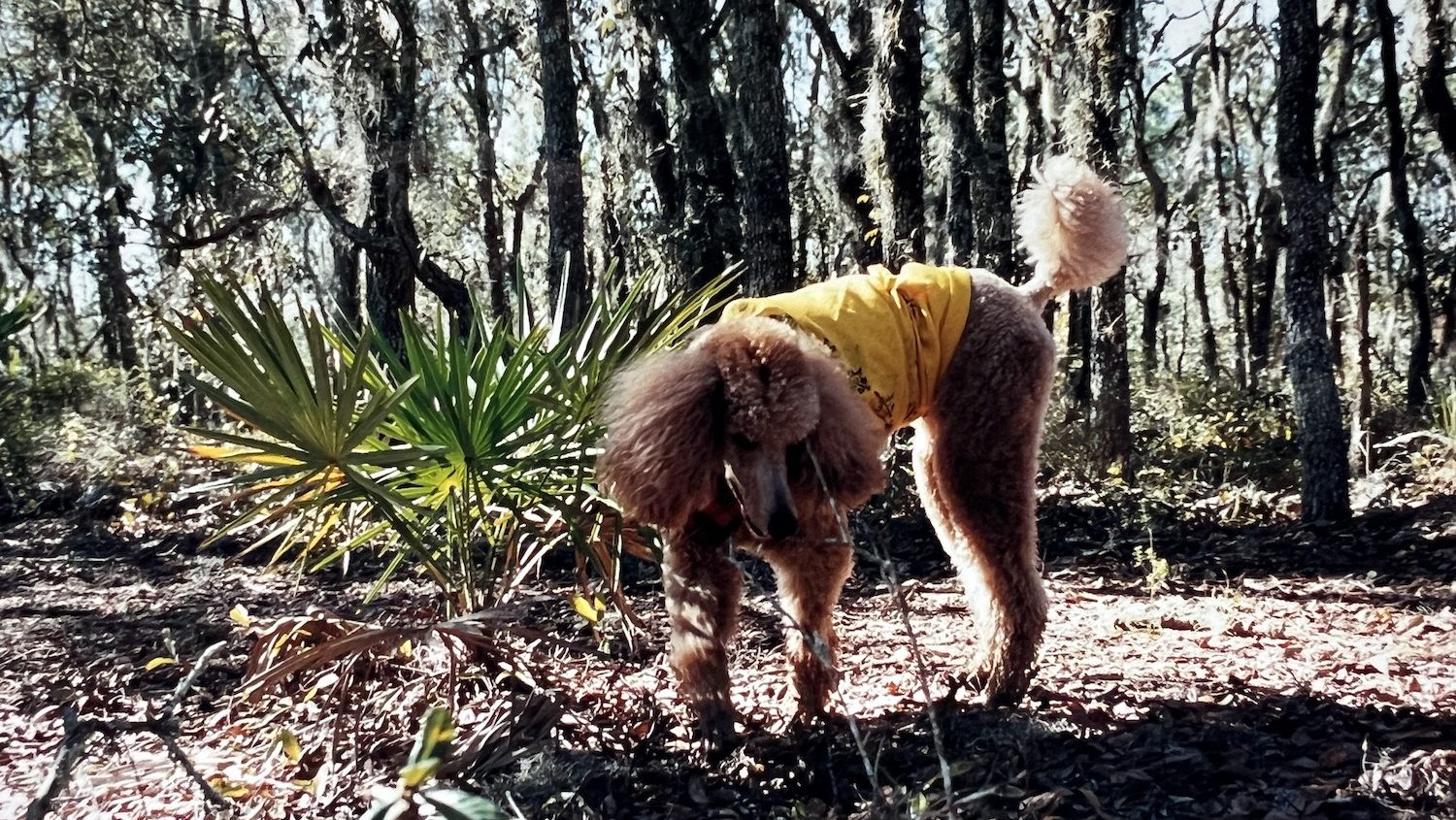
Jasper’s obsession with turtles never waned. From red-eared sliders in our backyards to sea turtle tracks at the beach, he’d pursue them with a single-minded determination that would disabuse anyone of the notion that poodles are pampered house-pets. Thankfully, his long-buried hunting instincts stayed true to their retriever origin. He never harmed a single turtle; he simply wanted to show us that he found them.
In the years that followed, I was lucky enough to see many more gopher tortoises; some sniffed out by an exuberant Jasper at the end of a leash, others on solo hikes or even trips to protected beaches on Merritt Island.
They remain one of my favorite species from my childhood home. And, with any luck, they’ll continue to trundle along through the pine flats for many years to come.
Trying to fathom 1.35 M years of inter-dependent species in Mother Nature’s playground; gives pause, to homo sapiens very short history.
Thanks for the weekend lesson of contemplation and joy.
SG
Such an informative,sweet article…thank you.