Much of the eastern and southern United States is dealing with frigid temperatures and bracing for a deluge of snow and ice creating miserable conditions for people.
It can be equally miserable for some wildlife species.
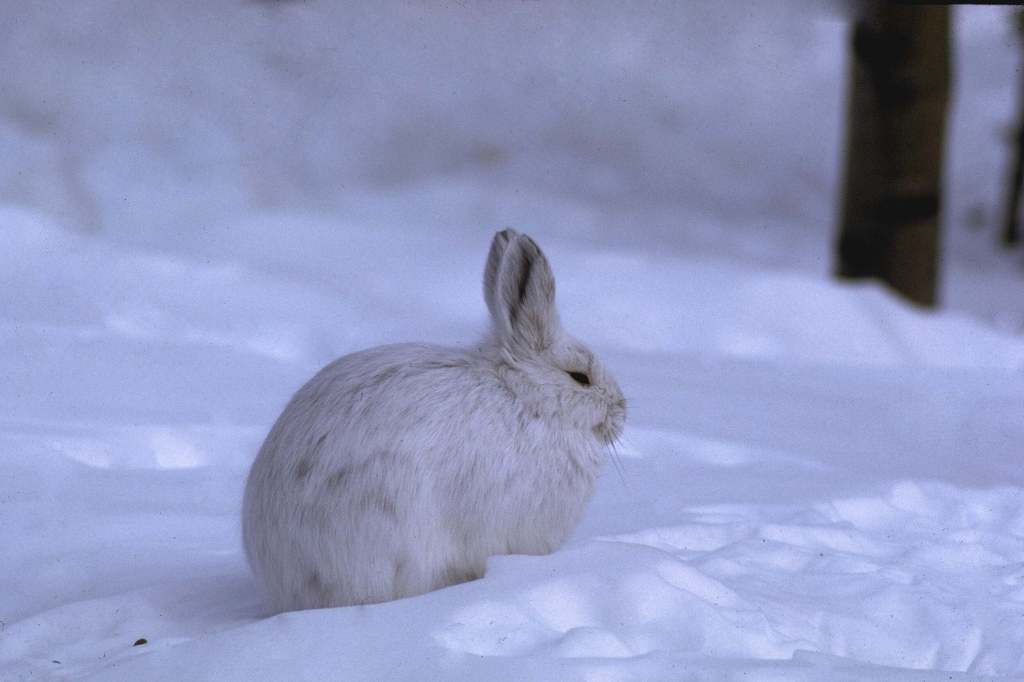
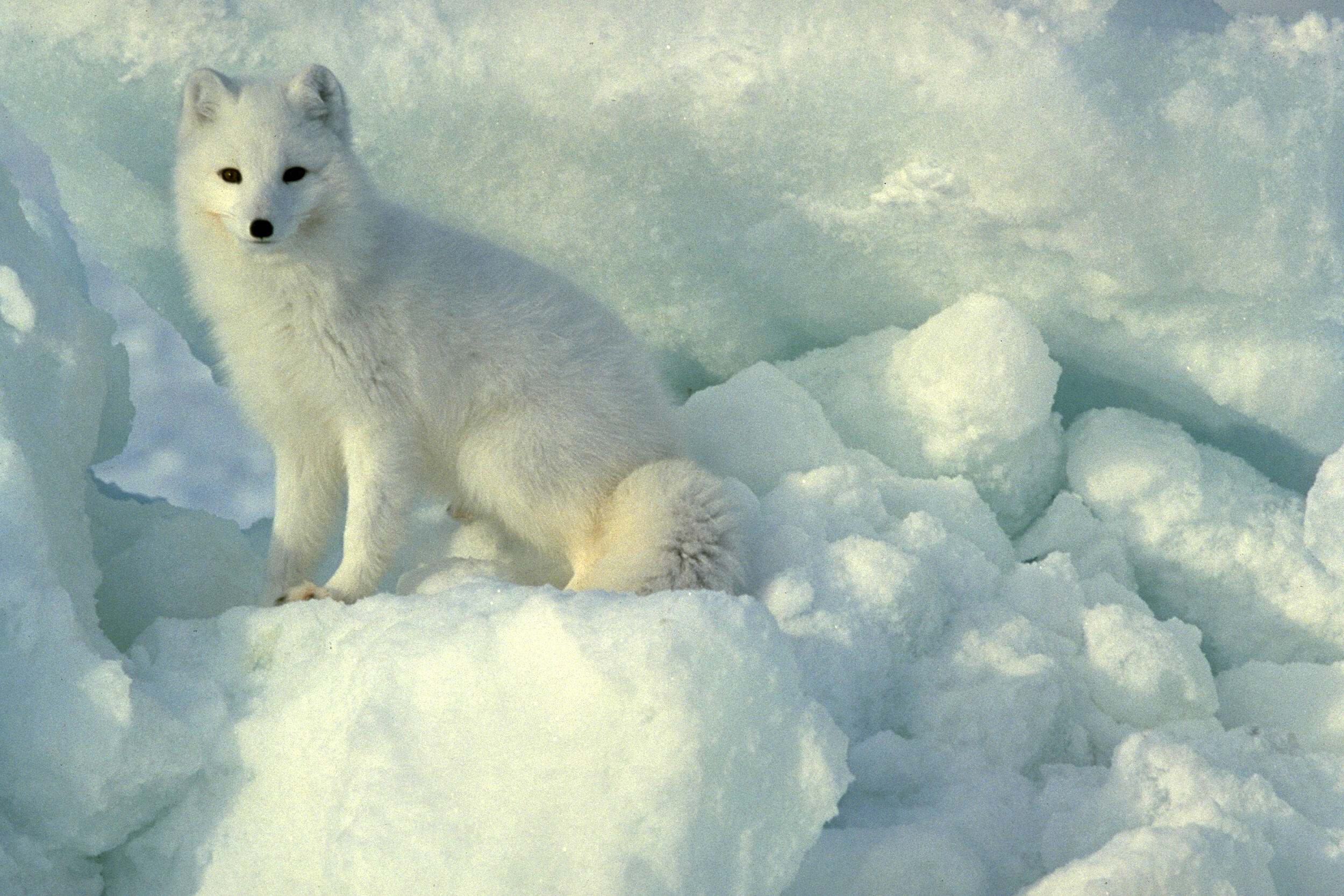
Many animals, of course, are well adapted to thrive in even the coldest of temperatures. Creatures like Arctic foxes, with frostbite-proof feet, are exquisitely adapted for Arctic environments. Snowshoe hares get their name from their big feet that (like snowshoes) help them bound around on top of the snow instead of sinking into it. Their ears are also smaller than most hares and help them retain body heat.
Other wild animals have evolved ingenious ways of conserving energy, including hibernation, torpor and other physiological changes. Some simply migrate to warmer climes. Others have thick layers of fat or lush fur that helps them stay warm and dry.
Become a Member
Make a lasting impact for nature when you join The Nature Conservancy
Birds will seek out a variety of unconventional shelters—both natural and human-made—to stay warm on bitterly cold nights. Naturalist Bernd Heinrich reports flying squirrels cramming into small tree holes, huddling together in a tight mass for warmth. (Heinrich’s book Winter World is a treasure trove of stories of how animals survive the cold).
There are species, though, that have recently expanded their range due to climate change or other factors. When a cold snap occurs, they’re ill-prepared for it.
While it’s difficult to know how this latest bout of frigid weather will impact wildlife in parts of the United States, here are some species that may not fare well.
Top 10 List
-
Carolina Wren
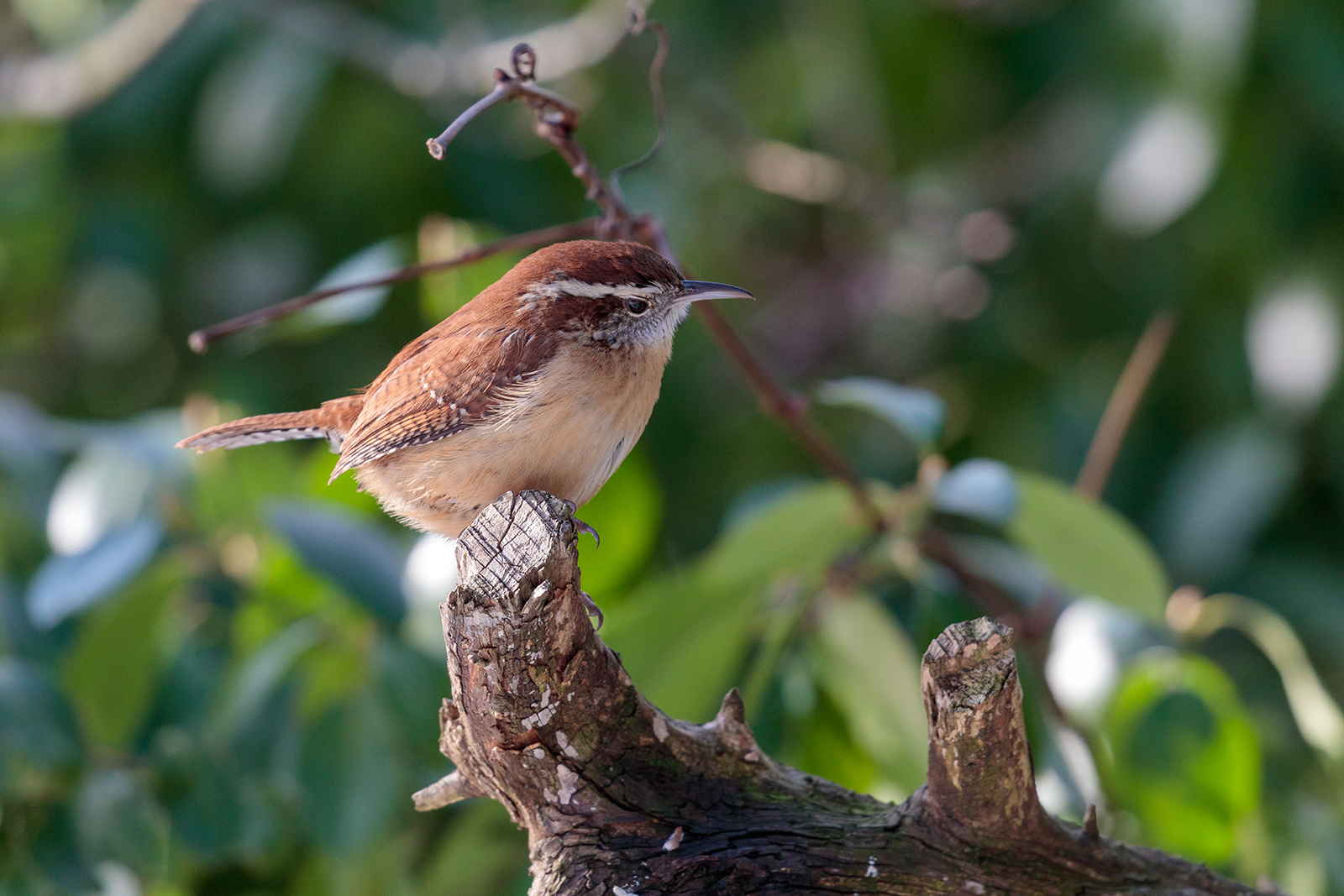
Carolina wrens expand their range northwards until cold weather causes die-offs. © Cara Byington / TNC On visits to my family in central Pennsylvania, I enjoy watching the antics of the Carolina wrens visiting their bird feeders. They’re fun birds to observe, always active and vocal.
They’re also somewhat unfamiliar to me: growing up, we’d never see them around the yard. Indeed, Carolina wrens have been expanding their range north over the past decades. They are not migrants: they live in a locale year round.
However, these birds don’t fare well during periods of very cold weather. Since they don’t migrate, they often perish.
This pattern has been recorded by the Great Backyard Bird Count, a citizen science initiative held each February where participants keep track of birds seen in backyards or nearby parks. In years with very cold weather, Carolina wren sightings diminish greatly—the birds have died off, and their range contracts.
The Carolina wren population eventually expands northwards again. It takes time. According to Great Backyard Bird Count reports, it can be ten years or more until Carolina wrens return to northern states in numbers following a cold weather die-off.
You can contribute to science: This year, the Great Backyard Bird Count runs from February 13-16, 2026.
-
Virginia Opossum
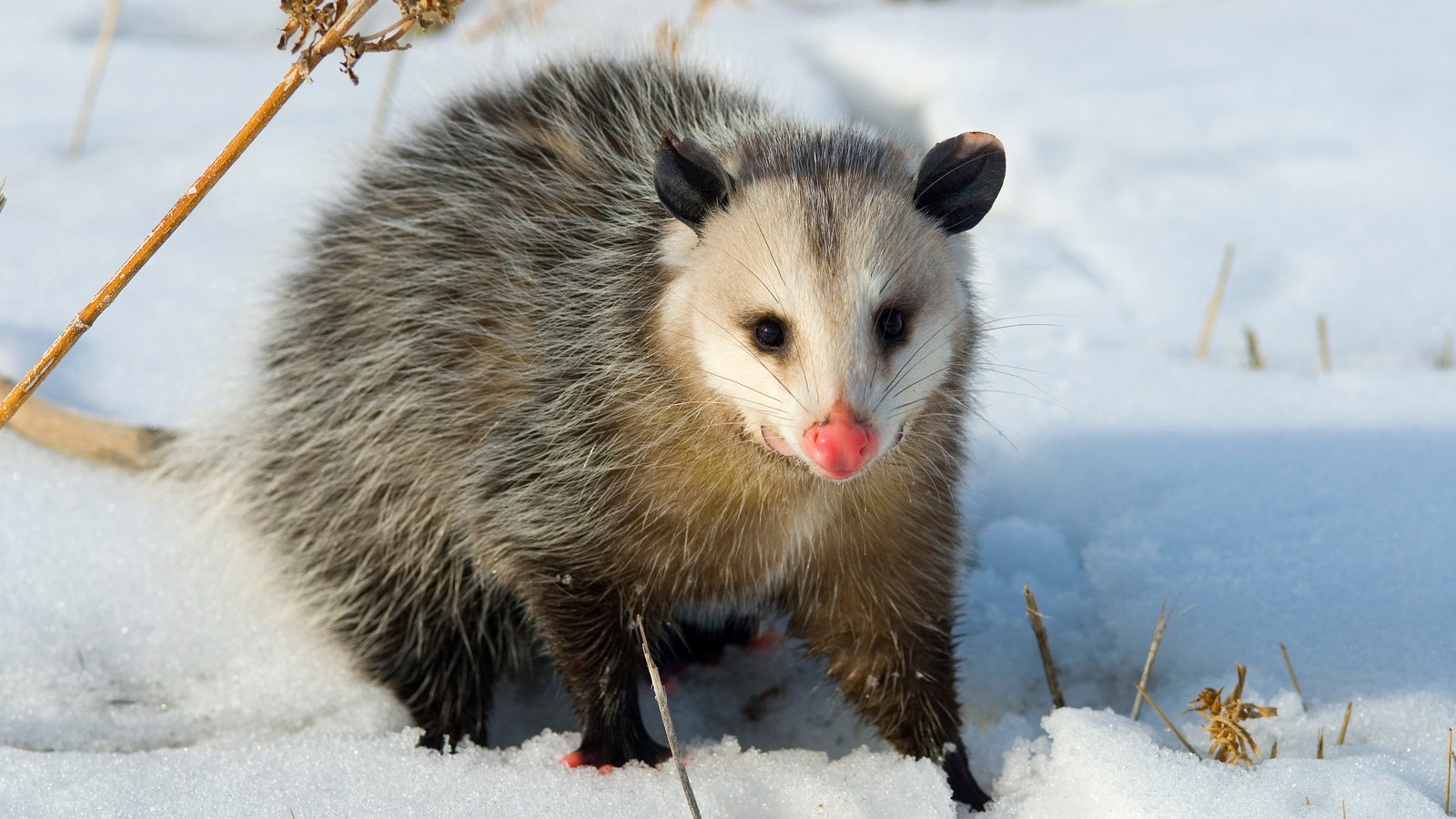
Opossums are prone to frostbite on their hairless tails. Photo: Chris Helzer/The Nature Conservancy The opossum has been expanding its range north for decades. It’s particularly well adapted to humanity, able to survive amidst farms, city parks and suburbs.
It’s much less well adapted to winter weather.
Unlike some other mid-sized mammals that thrive in the presence of humans— think raccoons, red foxes, coyotes— opossums don’t have furry, protective tails. In fact, their tails (and ears) are hairless, making them particularly susceptible to frostbite and even hypothermia.
Many opossums bear physical evidence of surviving harsh winters – damaged ears and tails. Their tails often appear stumpy or as if something had bitten them off, but these are signs that their tails suffered frostbite.
Opossums will den for a few days to escape the cold, but they don’t hibernate. They have to feed periodically. Sometimes they’ll change their nocturnal habits and feed in daylight hours during the winter, to take advantage of warmer temperatures.
That doesn’t make much difference, though, when it’s -20 degrees Fahrenheit (as it will be in part of their range next week).
Expect to see a lot of tail-challenged opossums this spring.
-
Bobwhite Quail
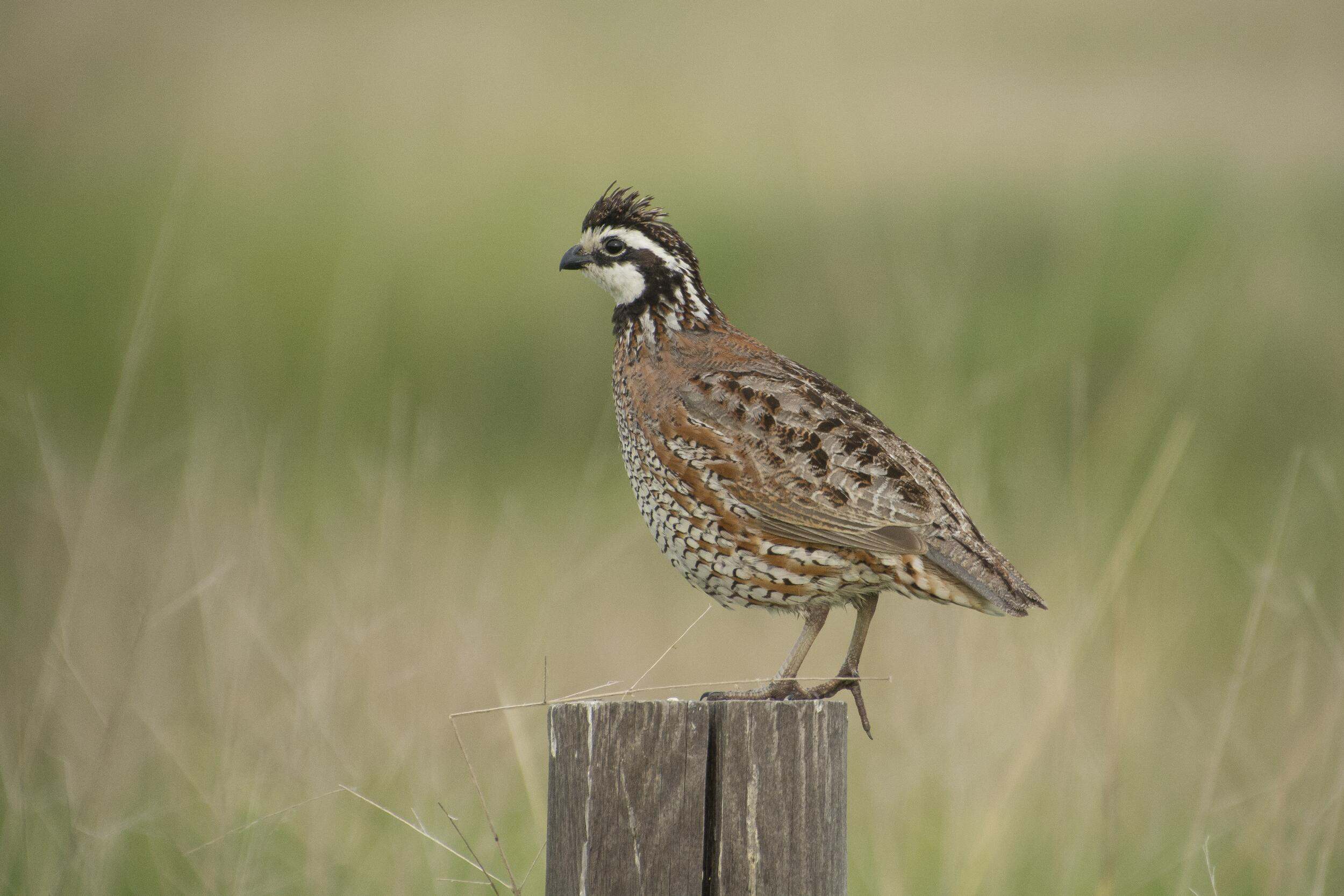
Northern bobwhite (quail) at The Nature Conservancy’s Platte River Prairies Preserve © Chris Helzer The northern bobwhite can survive harsh winters quite well—provided it has ample habitat.
This quail species was once a common farmland and grassland bird, and a celebrated game species over much of its range. Since 1966, its populations have declined by 85 percent. While the reasons for this decline remain contested, nearly all biologists agree that habitat loss plays a major factor.
Those 5 degrees can be the difference between life and death. Research has shown that a severe winter weather event can have long-lasting impacts on northern bobwhite populations. A healthy quail population could bounce back from this decline, but a population in peril—with inadequate habitat—may take years to recover, if it ever does.
Thick cover along fields provides many benefits for quail, among them protection from inclement weather. Bobwhites, like many species, need to burn more energy to stay warm in winter. Even a few degrees temperature can have a tremendous impact on survival. The conservation group Quail Forever has found that “the temperature inside a high-quality shelterbelt—ideal cover from the cold—can be 5°F warmer.”
-
Manatee
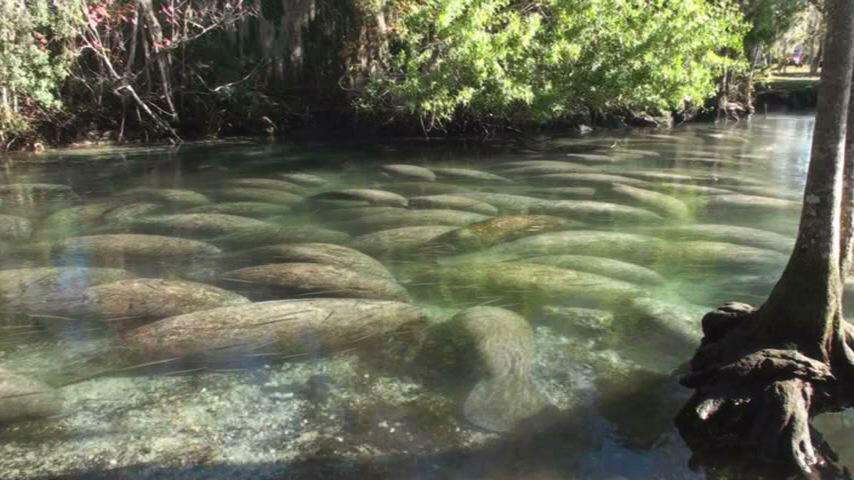
In colder weather, manatees gather en masse in Florida Springs seeking shelter in warmer waters. © Tracy Colson Perhaps hardest hit are animals like manatees that thrive in more tropical environments, but encounter chilly weather in the northern parts of their range.
Manatees require water 68 degrees or warmer. Despite looking rather plump, they have very little fat to protect them in cold water.
When they swim in cold water for long periods, they suffer from what is known as manatee cold stress syndrome —leading to starvation and death.
There are current reports of hundreds of manatees moving into warmer springs that remain a constant temperature. These winter warm-water areas are vital to the continued survival of manatees in Florida.
-
Non-Native Reptiles: Iguanas + Burmese Pythons
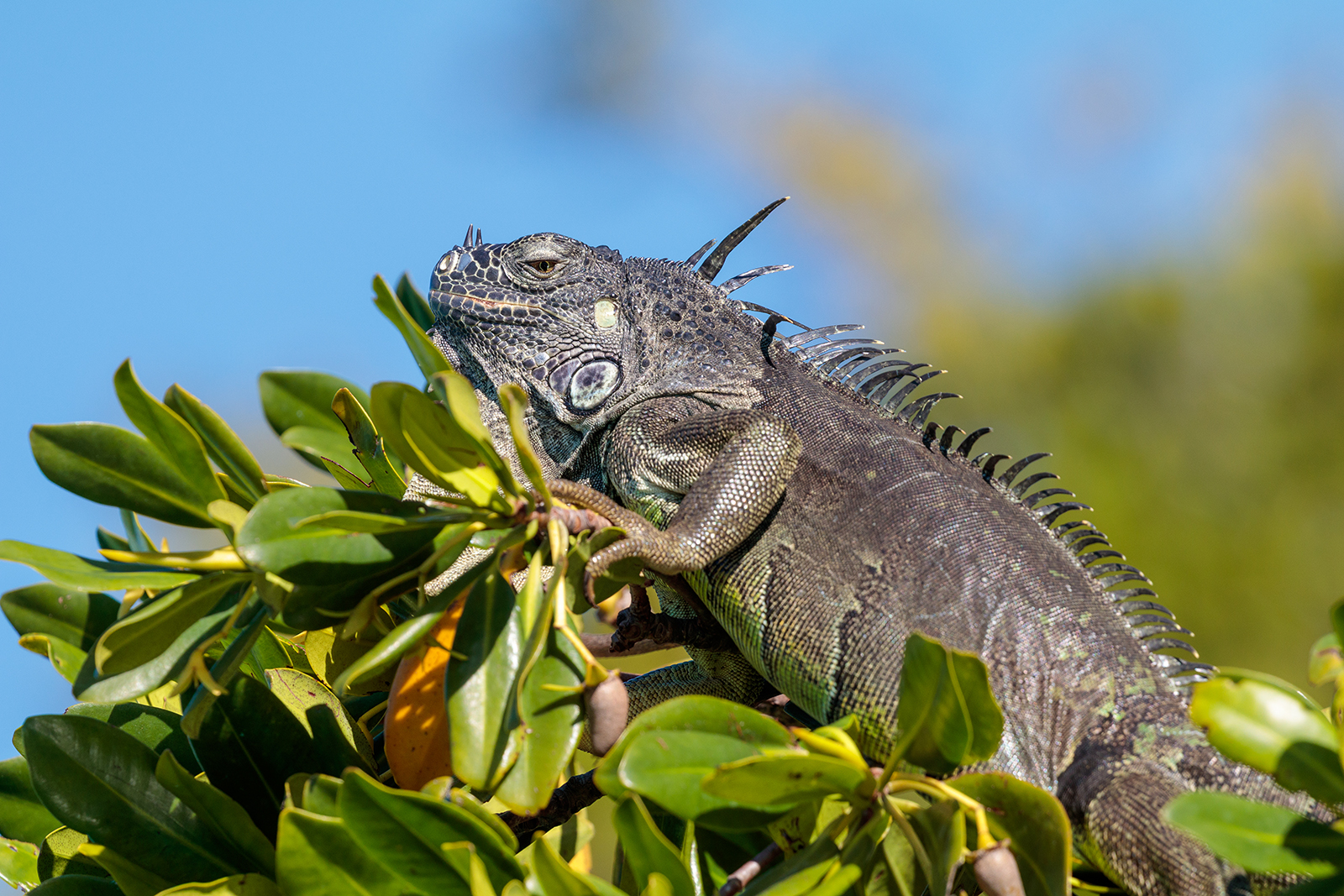
Invasive green iguana basking in the Florida sun. They are excellent climbers and if temperatures in South Florida get cold enough, they fall from trees. Pedestrians beware. © Cara Byington / TNC In Florida, species like Burmese pythons and green iguanas can become invasive, posing serious threats to native wildlife. When these species are released into a new environment, they find lots of prey but none of their native predators. Their populations can grow rapidly.
Still, they’re not equipped for cold weather. Most conservationists consider this a good thing.
In Florida, when the temperatures get cold enough, news stories and social media channels post “Falling Iguana Watch” notices. They are exactly what they sound like: reminders to people to watch for cold-stunned iguanas falling out of trees. Most of these iguanas aren’t actually dead; they enter a catatonic state when the temperature drops to 37 degrees Fahrenheit.
In a particularly brutal Florida cold snap in 2010, there were similar stories of pythons dying by the thousands, and people hoped cold might provide ways of helping to control the invasive species. Unfortunately, a study published in 2018, found that the cold snap may actually have spurred new adaptations in Florida’s Burmese python population—creating the potential for the snakes to expand beyond their current South Florida range.
Zoologist Vladimir Dinets reports in his book Dragon Songs that non-native spectacled caimans (a crocodilian species) pretty much disappeared from the state following the epic 2010 freeze. It’s interesting to note that native alligators did just fine. But Dinets reports that dozens of American crocodiles, a native species, died due to the record cold in 2010. Fortunately, their population has slowly recovered though they are still considered threatened.
-
Forest Pests
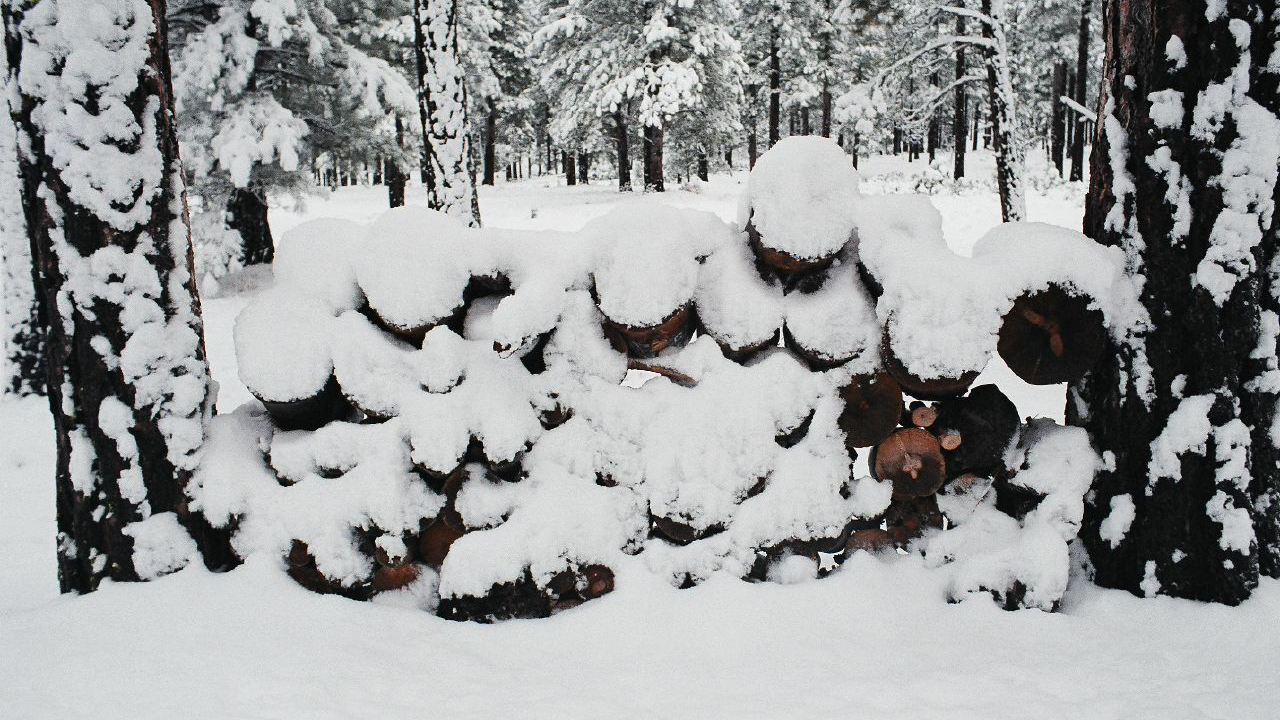
Cold weather can kill invasive forest pests, but please don’t move firewood to new locations — surviving pests can still be lurking there. Photo © RedTux / Flickr through a CC BY 2.0 license Frigid temperatures might have another positive effect: killing invasive forest pests. These non-native pests can hammer forests but cold weather offers some hope of slowing the spread.
As Research from the University of Minnesota shows, the emerald ash borer could suffer through the kill of a high percentage of emerald ash borer larvae. Since it was first confirmed in southern Michigan in 2002, the emerald ash borer has spread rapidly — now infesting more than 100,000 square miles. It devastates ash trees, and there’s no hope of eradication. But at least the cold weather might slow the spread, buying conservationists more time.
The Don’t Move Firewood blog also reports that the hemlock woolly adelgid, an insect devastating to eastern forests, is affected by cold weather. However, the temperature needs to drop below -22 degrees Fahrenheit before this pest begins dying in numbers.
Leigh Greenwood of Don’t Move Firewood notes that even the coldest weather won’t kill all forest pests, it will merely reduce their numbers. So please don’t move firewood to new locations; there may still be (living) invasive species lurking there, and you could spread the pests to new locations.
-
Ruffed Grouse
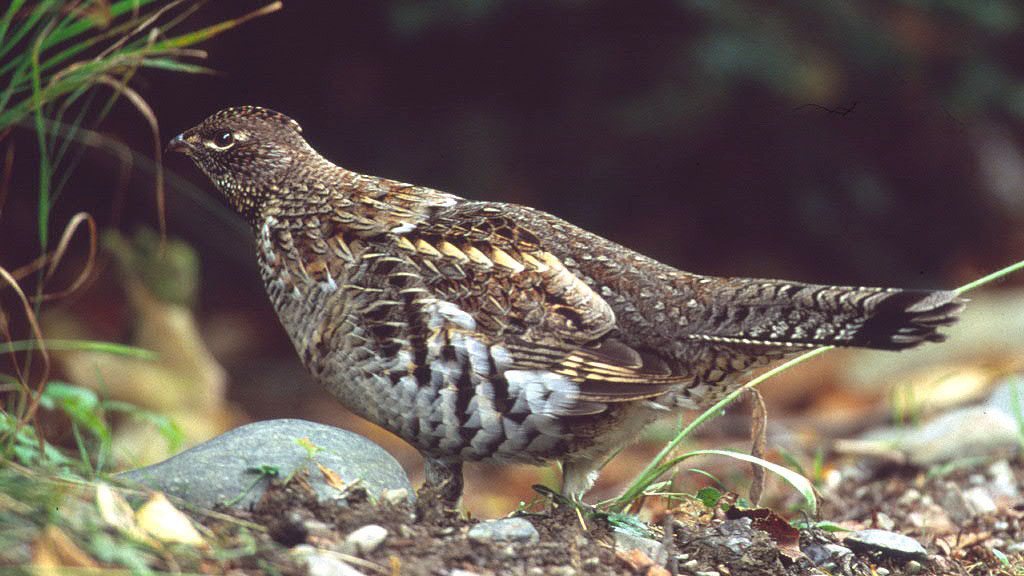
Ruffed grouse before the snow flies. © Bill Silliker Jr. / TNC Ruffed grouse thrive in winter and heavy snows and frigid temperatures will be unlikely to affect populations. But a sudden shift in temperatures might trap some grouse…under the snow.
As is the case with skiers, ruffed grouse love powder. When the snow is fluffy, this bird creates one of winter’s most unusual wildlife shelters.
Forget moving out of the snow; ruffed grouse plunge into it.
The ruffed grouse flies along and dive bombs head first into deep, fluffy snow – completely submerging itself. Its body heat then creates a sealed dome under the snow: essentially, its own igloo.
This structure allows the grouse to stay warm even in the most inclement conditions. Research shows that the snow shelter can warm to 32 degrees Fahrenheit, and rarely drops below 20 degrees — even when it’s much colder outside.
The ruffed grouse is found in many forested areas of North America, so it’s the grouse you’re most likely to see on winter wanderings.
In fact, numerous stories exist of grouse “exploding” out of the snow when a skier or snowshoer approaches— surely a dramatic sight, and one I always hope to see on my own winter outings. However, I’ve never seen a firsthand report, so it’s unclear how often this really happens.
Unfortunately, a snow shelter is not without risks for ruffed grouse. Researchers have found instances when a crust forms on the snow, trapping the grouse inside. If the crust lasts too long, the grouse is unable to escape and dies.
Here on the balmy Northwest Coast, Anna’s hummingbirds have been extending their year-round range northwards over the past several decades in Washington, British Columbia, and even southeast Alaska. Their expansion appears linked at least in part to people maintaining hummingbird feeders and planting non-native horticultural vegetation that extends flowering seasons. Seasonal cold snaps here in Bellingham, WA, result in a lot of torpid hummers, and when the occasional true deep freeze pushes down from the Fraser Valley, mortality is significant just like with Carolina wrens. Still, it never ceases to amaze me to see hummingbirds buzzing about the neighborhood on a regular frosty winter morning.
We have noticed Carolina Wrens staying all year round here in NewHampshire. We are still hearing a few through this frigid weather. Is there anything we can do to help?