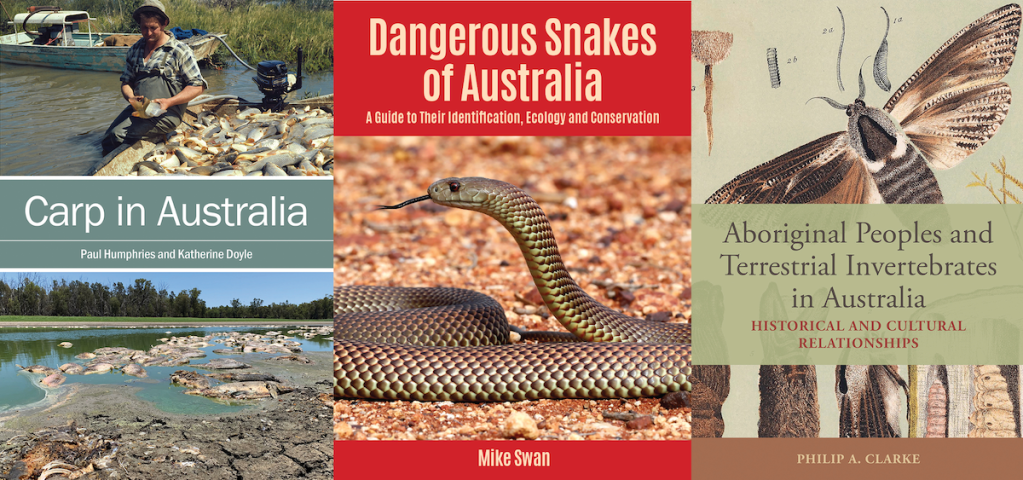
Regular readers will know that we often write about Australian wildlife. But more often than not, we’re intrigued by the more charismatic species… tree kangaroos and bowerbirds, cassowaries and ghost bats.
These three new nature books from CSIRO make the case that there’s much to appreciate about the less traditionally charismatic creatures of the Australian continent. Read on for our reviews on new titles that delve into the ecology and behavior of more than 100 venomous snakes, the intrigues of invasive carp, and a rich cultural history between Aboriginal people and invertebrates.
And stay tuned for our annual Earth Day Book Review, coming soon to Cool Green Science.
Top 10 List
-
Dangerous Snakes of Australia: A Guide to Their Identification, Ecology and Conservation
By Mike Swan | CSIRO Publishing
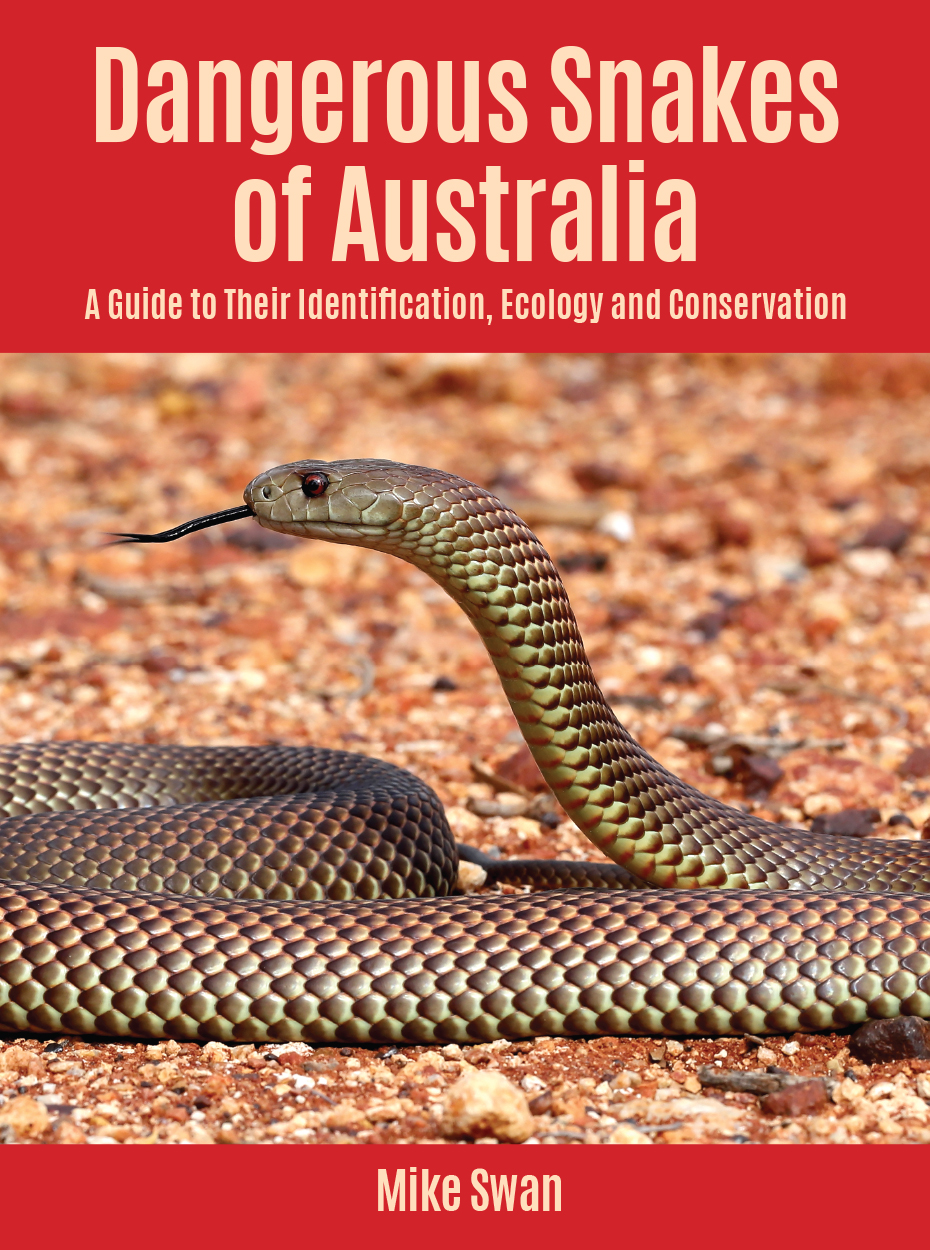
One of the oft-repeated jokes about Australia is that it’s full of animals that want to kill you. And while the joke isn’t accurate — for a multitude of reasons — Australia does have more than its fair share of venomous sakes.
Mike Sawn’s Dangerous Snakes of Australia is a comprehensive field guide to all 141 species of venomous terrestrial and marine snakes found Down Under. By focusing exclusively on venomous species, Swan is able to devote more space to the ecology and behaviour of these fascinating reptiles than a traditional, identification-focused field guide. (But don’t worry, the book is still compact enough to travel well if you’re headed into the field.)
Another thing that sets this guide apart is Swan’s inclusion of numerous photographs for the species with especially variable coloration. For example, the tiger snake entry has a whopping 10 photographs to demonstrate the species’ extraordinary variation across its range.
This is the perfect book for Australians who spend time in and around snake habitat (so, just about everyone) and overseas readers who want to learn more about our country’s incredible venomous reptiles. (JEH)
-
Aboriginal Peoples and Terrestrial Invertebrates in Australia
By Philip A. Clarke | CSIRO Publishing
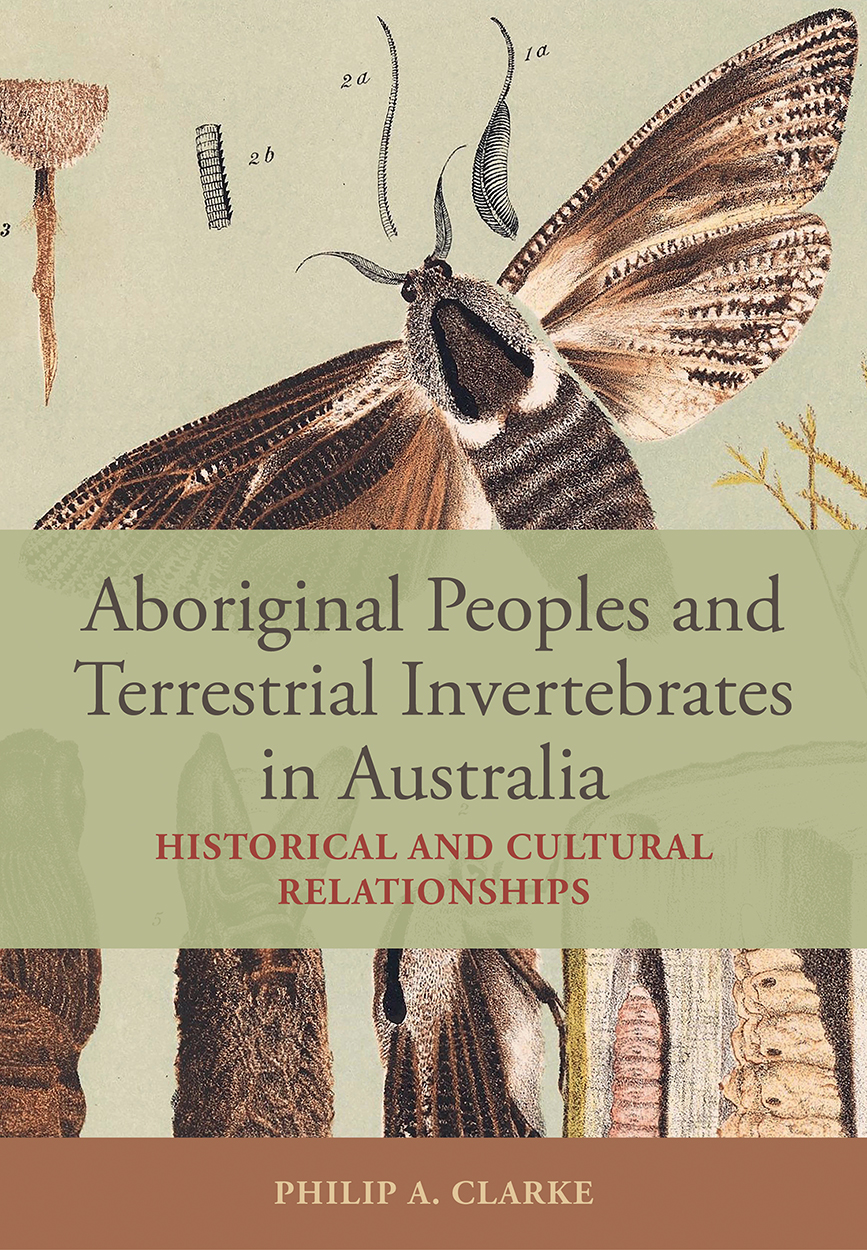
Author Philip Clarke’s new book is a detailed account of the historical and cultural relationships between Aboriginal Australians and invertebrates.
He covers topics as varied as how indigenous Australians name and classify invertebrates, their roles as creators and spirit beings, and how Aboriginal peoples use invertebrates to make medicine and artefacts. A large portion of the book is devoted to the important role that insects play as a food source, and the different foraging methods employed across the continent to make use of this source of nutrition.
This book was my first foray into ethnoentomology, and while it’s not exactly a light read, I’m impressed by the depth of Clarke’s research and the way he blends both scientific and Indigenous sources. I also appreciated the inclusion of 59 color photographs, which help bring many of the species and human-animal interactions to life.
This book will serve as an excellent desk reference for anyone interested in the relationship between people and insects, or for readers looking to better understand Aboriginal traditional knowledge. Readers interested in this topic should also check out Clarke’s companion book, Aboriginal Peoples and Birds in Australia. (JEH)
-
Carp in Australia
By Paul Humphries & Katherine Doyle | CSIRO Publishing
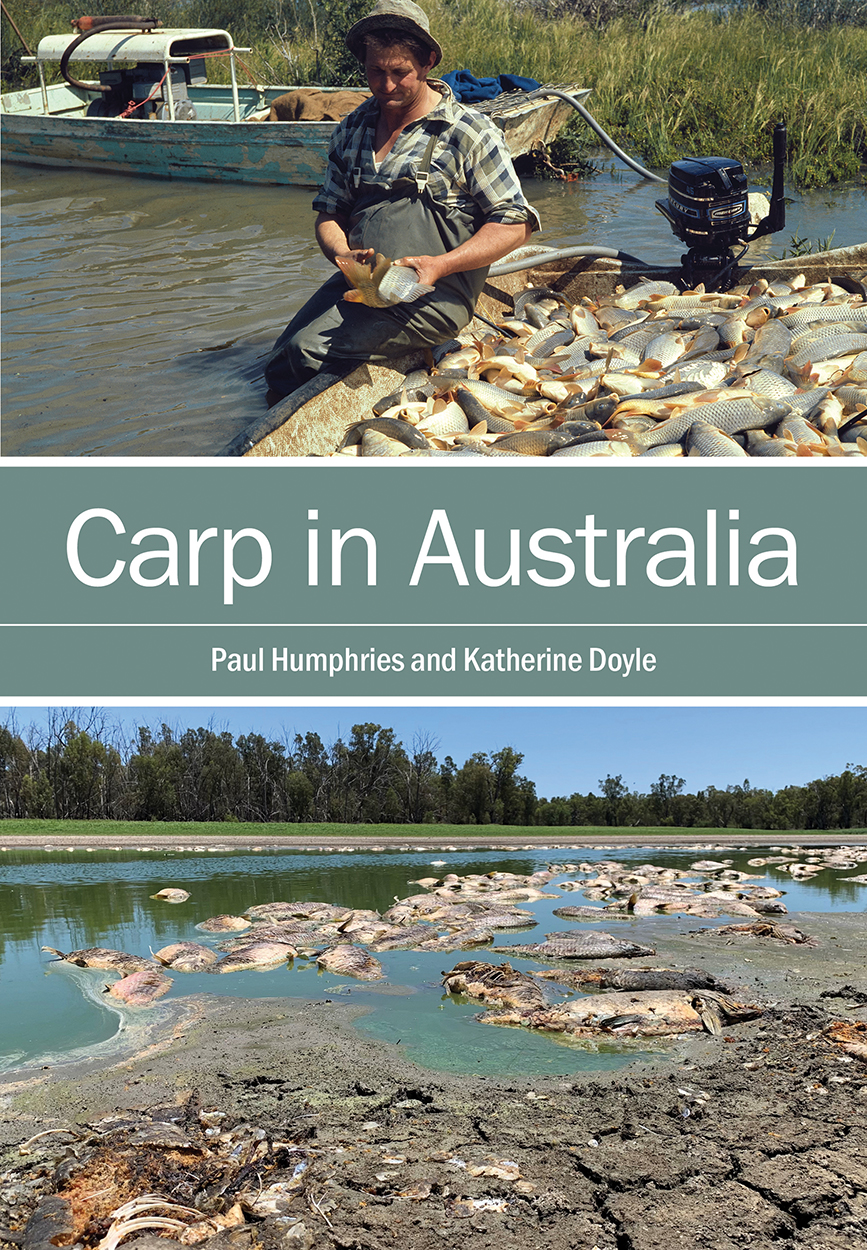
How does a fish go from revered to reviled? Consider the carp. In the UK and continental Europe, it has been celebrated for centuries. To this day, devotees spend considerable amounts of time and money to the pursuit of carp.
This led to European colonizers to introduce them to the world, with dramatic results. Carp are now considered the most widespread freshwater fish on the planet. They’re often a reviled invasive species, perhaps nowhere more so than Australia. As the authors of this interesting book note, “Apart from the cane toad, it’s hard to imagine a more hated introduced species.”
Carp in Australia offers a fascinating glimpse at how the carp was introduced and spread across the country. It delves into the ecological impacts (and considers the instances when carp are a scapegoat for poor river management) as well as control and eradication measures. It even devotes chapters to Australian who love the carp, the anglers and koi hobbyists. It’s a comprehensive book of interest to fish nerds, anglers and those interested in invasive species issues. (MM)
Any statements made in this page are not endorsements of products, services, or brands by The Nature Conservancy or our partners, nor discrimination against similar brands not mentioned.

Join the Discussion