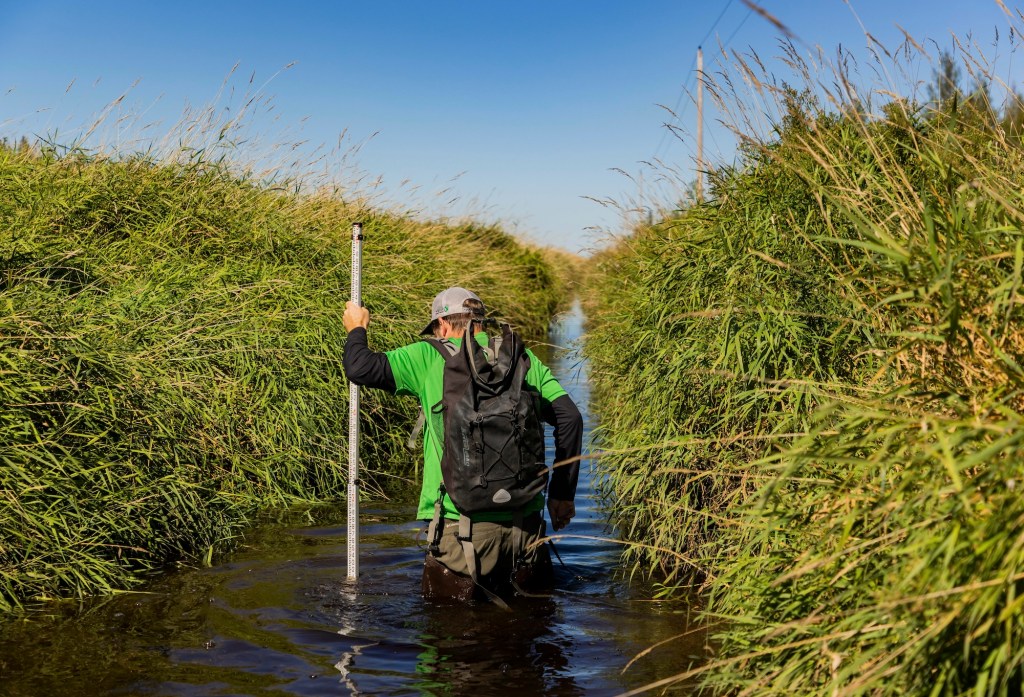
Peatlands store vast amounts of carbon worldwide—when they’re healthy that is. Degraded peatlands can actually give off some emissions of their own. To study just how much carbon dioxide and methane degraded peatlands give off, Mark Felice, a peatlands scientist for The Nature Conservancy, and his colleagues are using monitoring equipment—devices with canisters strapped to their backs not unlike some famous Hollywood ghost hunters—to measure the colorless gases in Minnesota.
It’s the first step towards potentially restoring some of Minnesota’s surprisingly vast landscape of peatlands. Much of these lands were drained by ditches meant to help 19th century farmers and ranchers. Once restored, these peatlands have the potential to become carbon sinks once again.
- When I think of peatlands, I think of bogs and swampy areas. What do peatlands look like in Minnesota?
-
The ones I think of are more open, and they have these really stunted black spruce and tamarack trees. I think they look a little bit like something from Doctor Seuss. They’re scraggly little trees with a little tuft of needles at the top. They don’t necessarily look majestic. A lot of them are maybe 10 feet tall and kind of sparse.
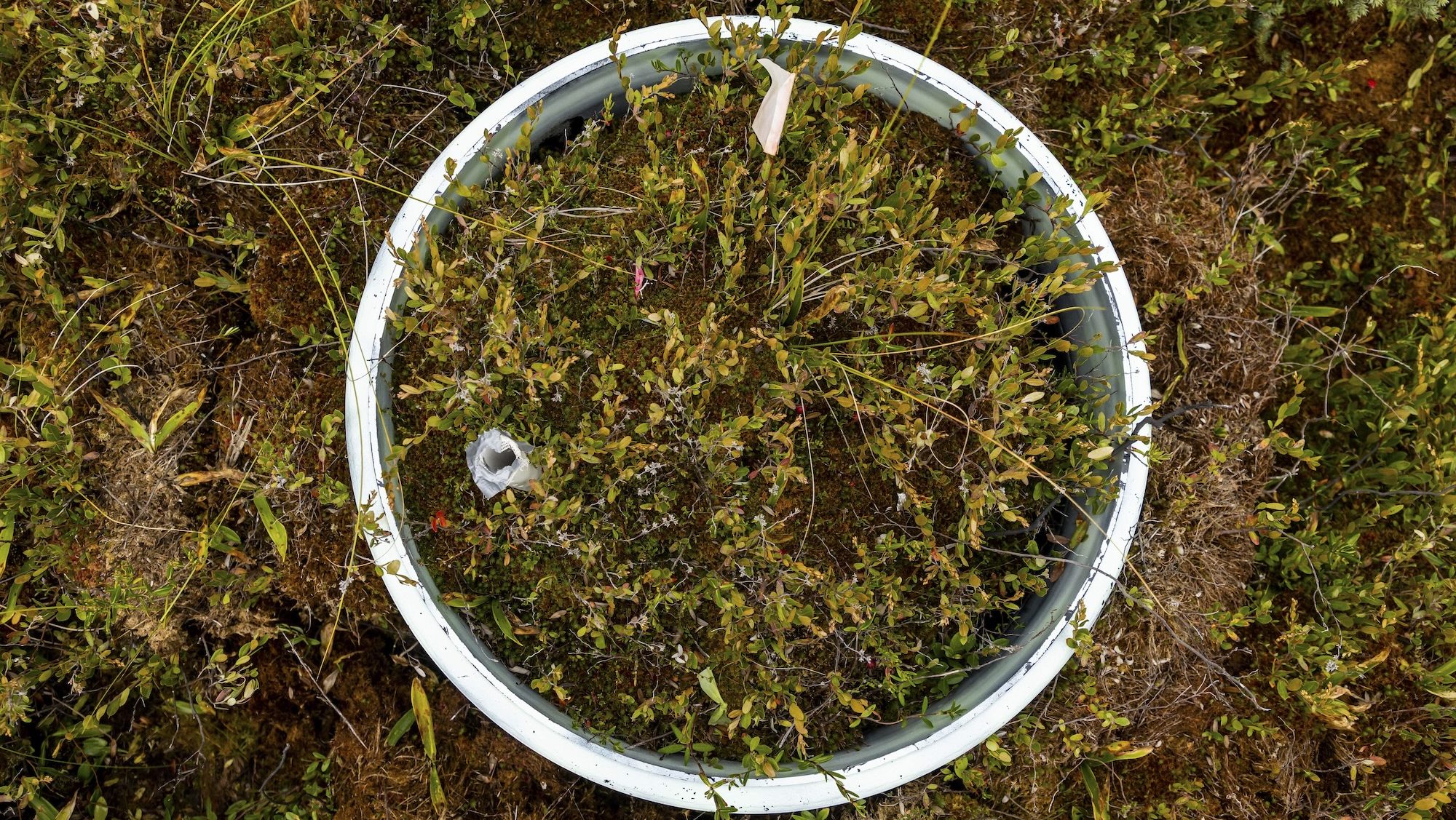
Then in between, you just have this moss-covered ground, and oftentimes it’s really undulating with these hummocks and hollows. You’ll often find some really cool plants like, pitcher plants or sundews, another carnivorous plant. Or, you might see little bog cranberries, which are pretty cool because the cranberries are big and the plant is this tiny little thing. The size of the berry is a little bit too big for the plants, it seems like.
Once you start looking closely, that’s where you start to see a lot of these really unique plants in peatlands.
- And Minnesota, I was surprised to learn, has a <em>lot</em> of peat—more than anywhere else in the contiguous United States. Why is that?
-
It’s because we have this combination of cool and wet climates that allow peatlands to form.

TNC staff conducted research at Sax-Zim Bog in northern Minnesota, aimed at measuring carbon emissions coming from the area’s peatlands. © Derek Montgomery
- How does climate affect that?
-
So, plants pull carbon dioxide from the atmosphere, right? When plants grow in normal soil, like in your backyard, leaves and the sticks fall on the ground, and microbes in the soil break that down pretty efficiently. All that goes back into the atmosphere as microbes breathe carbon dioxide back out.
But where you have wet or cold conditions, microbes slow down. They’re not able to eat those pieces of plant material as fast as it’s deposited, so some of it stays there. And then the same thing happens the next year, and it slowly builds up.
Most of the peatlands in our area started forming right after the glaciers receded, so they tend to be 6,000-to-8000 years old. That’s thousands of years of peat accumulating.
- An ancient landscape! How are they doing?
-
Well, a lot of our peatlands have been impacted by drainage ditches. About 100 years ago, folks were kind of trying to tame the wilderness, and they cut thousands of miles of drainage ditches through Minnesota’s peatlands. They were hoping to use the land for agriculture, raising crops, forestry, things like that.
In some areas, those peat soils are still under agricultural production and fully converted, but in the northern part of our state, those efforts to grow crops or graze just weren’t very successful, so a lot of those lands—and drainage ditches—were abandoned. But that legacy of drainage is still there.
- Water helps peatlands form, so I’m guessing drying out a peatland can degrade it. How does draining affect peat?
-
So, I’ve been focused primarily on research to quantify how drainage and restoration impacts how carbon moves through these systems. So, for example, how much carbon is released when a peatland is drained? And then if we restore it, how much of that carbon sequestration [returns] or how much less carbon gets lost from that system?
- <br>I find it fascinating that these peatlands took thousands of years to accumulate but only a short time to degrade. What does restoring them look like?
-
It’s going to be unique to each setting, and folks on the ground are going to come up with specific solutions. But in general, if you have a canal or a drainage ditch running through a peatland, that’s drawing water off the site.
Drying out the peatlands is what’s causing degradation and carbon loss so restoring those wet conditions is going to slow down how much carbon you’re losing. That might mean putting in a series of dams to block the water. Or if you have the material just completely filling that ditch. Then hopefully in the longer term we see a more full ecological restoration where the plant communities are similar again. And we hope that they’ll become carbon sinks again. But that long term information is hard to come by because attention spans and funding cycles are a little bit shorter than the ecology sometimes takes.
- So in theory all you need to do is re-wet the area to reduce emissions? But it’ll take a lot longer for the peatlands to start storing new carbon, to start accumulating again?
-
Yes, what we’re seeing so far [suggests] the long trajectory that restoration and rewetting can take improves things pretty quickly, but it might take many years for that peatland to look like something that was never drained in the first place. So it’s still a lot more effective to prevent the destruction or disturbance of peatlands in the first place. That’s way more bang for your buck than restoration, but restoration is still very valuable.
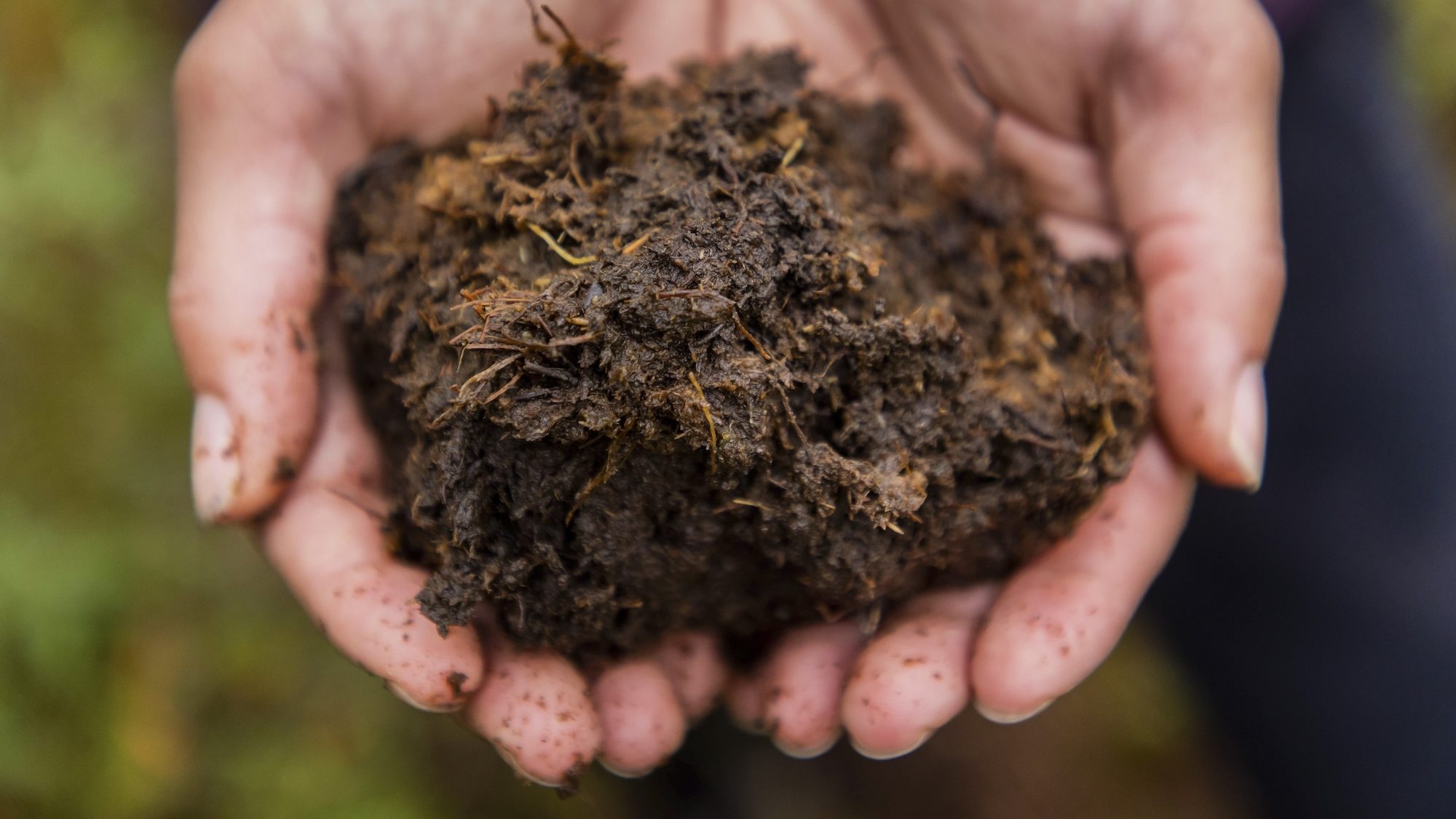
Peatlands are important habitats for rare plants and wildlife and can store vast amounts of carbon, benefiting the climate. © Derek Montgomery - There are so many people working to study or help peatlands: Christian Lenhart, a freshwater restoration ecologist for TNC, has some research monitoring sites, and the U.S. Forest Service and the University of Minnesota’s Natural Resources Research Institute have projects underway as well. What has your role been in working with peat at TNC?
-
For the last few years, I’ve been working on field research in northern Minnesota, where we’ve set up a few field sites. Our first full field season was in 2023.
We have a device that you wear on your back, and there’s a little chamber that goes along with it. It’s a portable greenhouse gas analyzer. We walk around and set it up on the soil in these peatlands and it’ll tell us how much carbon dioxide and methane are moving into or out of the soil at any given moment. We’ve been doing this greenhouse gas monitoring right around existing drainage ditches and around ones that are filled in. We also have some sites on an unaffected peatland.
- So over time you’ll be able to compare the emissions between these different types of sites?
-
Yeah, if you were to walk away from a drainage ditch, how long before you no longer see the impacts in terms of carbon emissions? And we’re connecting that to environmental variables, things like the water table, the temperature of the soil, the acidity of the soil…We’re trying to come up with models that can predict what those greenhouse gas emissions are without us actually going out and measuring them in the field.
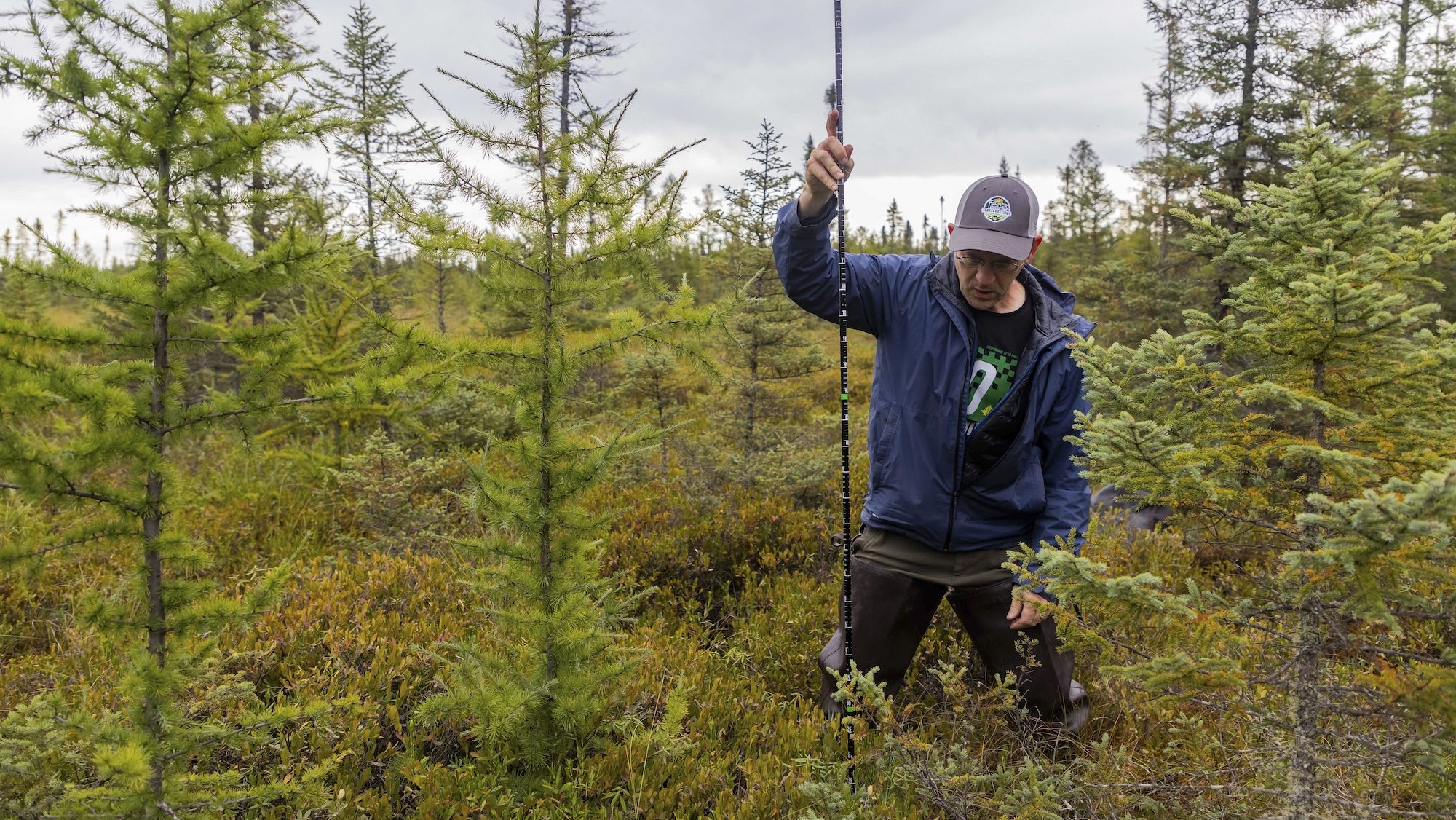
Peatlands cover only about 3% of Earth’s surface yet globally store an estimated 30% of all land carbon. © Derek Montgomery
- It sounds like this monitoring will help you predict emissions at a given site now. Will you connect that with restoration projects too and chart the change over time?
-
We’re definitely hoping to get involved in [restoration] monitoring, potentially associated with a project in Cedar Creek and a Red Lake area restoration project. And a statewide program has provided millions of dollars to Minnesota Department of Natural Resources to conduct some peatland restoration work. There’s a lot of momentum around peatlands in Minnesota and we’re hoping we can play some role.


Join the Discussion