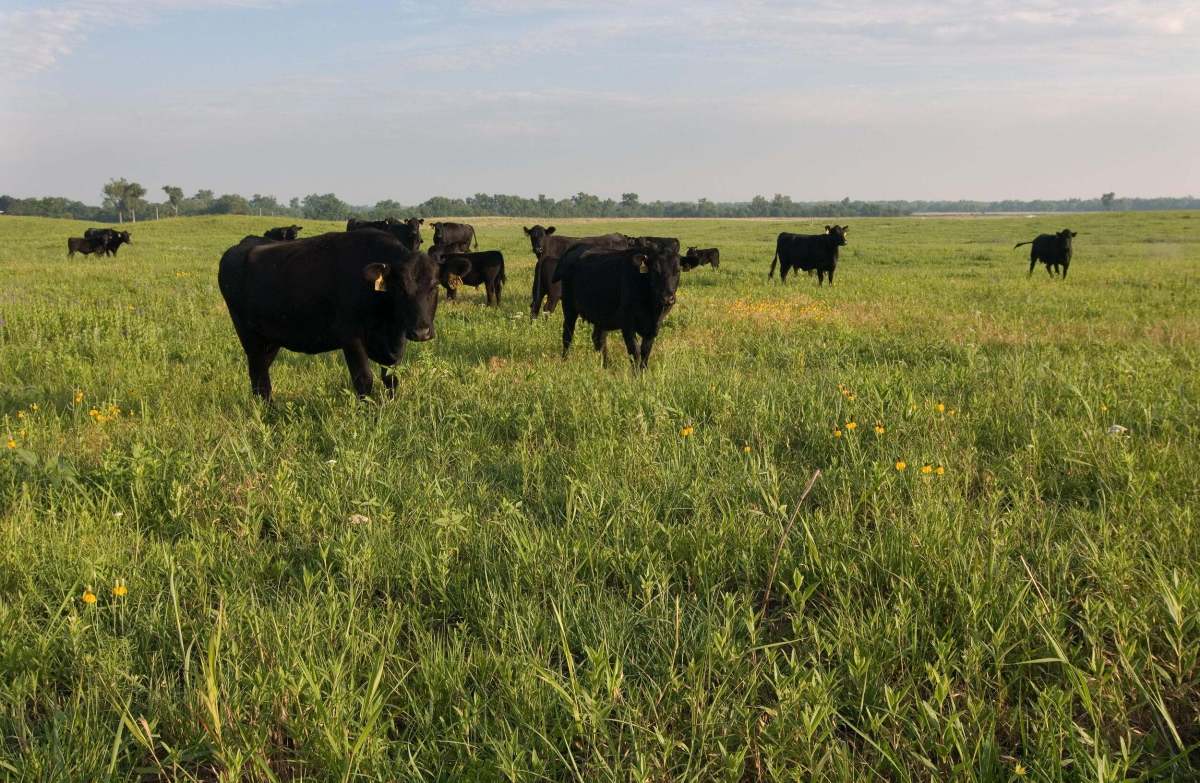
A new review of U.S. grazing land practices explores how land stewardship and ranch management practices can help fight climate change. The study identifies promising strategies—such as wetland restoration, planting legumes in pastures, and adjusting grazing intensity—that could boost soil carbon, cut greenhouse gases, and deliver co-benefits for biodiversity, water quality and soil health. But it also underscores a critical need for more research to guide long-term sustainable management.
The Gist
Grazing lands in the U.S. form the backbone of a $140 billion livestock industry and span more than one-third of the country. These landscapes provide essential benefits—supporting local communities, wildlife, and critical ecosystem services. However, decades of intensive grazing and land conversion have depleted soil carbon and altered ecosystems in some places.
The study, published in Sustainable Agriculture, reviewed 79 published studies to determine the potential climate benefits of five conservation practices promoted by the Natural Resources Conservation Service (NRCS): grazing management, brush management, prescribed burning, pasture and hay planting, and wetland restoration.
The results? Certain types of wetland restoration and pasture planting offer the most consistent climate benefits. Grazing and brush management show mixed outcomes, while prescribed burning remains uncertain. The authors note that inconsistent methods and data gaps hinder comparisons and emphasize the need for long-term, standardized research.
The Big Picture
Grazing lands are a major opportunity for climate mitigation because they store large amounts of carbon and influence emissions of CO₂, methane and nitrous oxide. Improving management on these lands could help reverse historical carbon losses, reduce greenhouse gases, and improve ecosystem services, but the paper cautions that climate outcomes can vary widely by region and ecosystem, and the specific way that practices are implemented.
- Grazing Management: Light to moderate grazing can maintain carbon sinks, but evidence is inconsistent, especially in dry areas. Heavy, continuous grazing can negatively impact soils and carbon storage.
- Brush Management: Removing woody plants may reduce wildfire risk but often causes short-term carbon losses.
- Prescribed Burning: Helps control invasive species but releases carbon and increases nitrous oxide emissions; long-term benefits remain unclear.
- Pasture and Hay Planting: Converting cropland to perennial pastures—especially with legumes—boosts soil carbon and lowers emissions, though gains can take decades.
- Wetland Restoration: Strong evidence shows restored wetlands can match intact wetlands in carbon storage and greenhouse gas balance, making this a high-potential solution.
Despite these opportunities, most studies to date have not measured greenhouse gases alongside soil carbon, and site-level variability complicates predictions. Current NRCS practices were designed for soil, water, and native species conservation, not climate goals—so their effectiveness for carbon is still largely untested. However, researchers note that practices that conserve intact ecosystems, increase biomass, and restore degraded systems are highly likely to sequester carbon (pasture planting, wetland restoration). Other practices that have co-benefits for agricultural production (grazing management, prescribed burning, brush management) could benefit from active adaptive management experimentation and robust, long-term monitoring.
The Takeaway
Grazing lands could contribute significantly to climate change mitigation strategies in the U.S., but science, policy and incentives are still catching up. Wetland restoration and pasture planting could be prioritized for incentives, while adaptive grazing management shows promise but requires site-specific approaches. Brush management and prescribed burning offer ecological benefits but uncertain climate outcomes, and therefore would benefit from additional research.
To unlock the climate power of grazing lands, researchers note, will require long-term, standardized research that tracks carbon sequestration and greenhouse gases across diverse landscapes. Investments should align management timelines with carbon processes and must include rancher participation and knowledge.
“Our report highlights practical strategies for managing grazing lands in ways that deliver climate benefits while supporting biodiversity, water quality, and soil health,” says lead author Sam Willard, postdoctoral researcher. “By pinpointing opportunities for carbon sequestration and greenhouse gas reduction, it offers land managers and conservation planners actionable insights to build resilient working landscapes. We also identify gaps in current knowledge, providing researchers with a roadmap for future studies.”