Sustainable small-scale fisheries are often seen as win-win solutions for both conservation and local communities, especially in the Indo-Pacific. New research, published in Conservation Letters, details a case study from Manus Province, Papua New Guinea, where The Nature Conservancy worked with the Titan tribal network to establish a sustainable, small-scale sea cucumber fishery.
The Gist
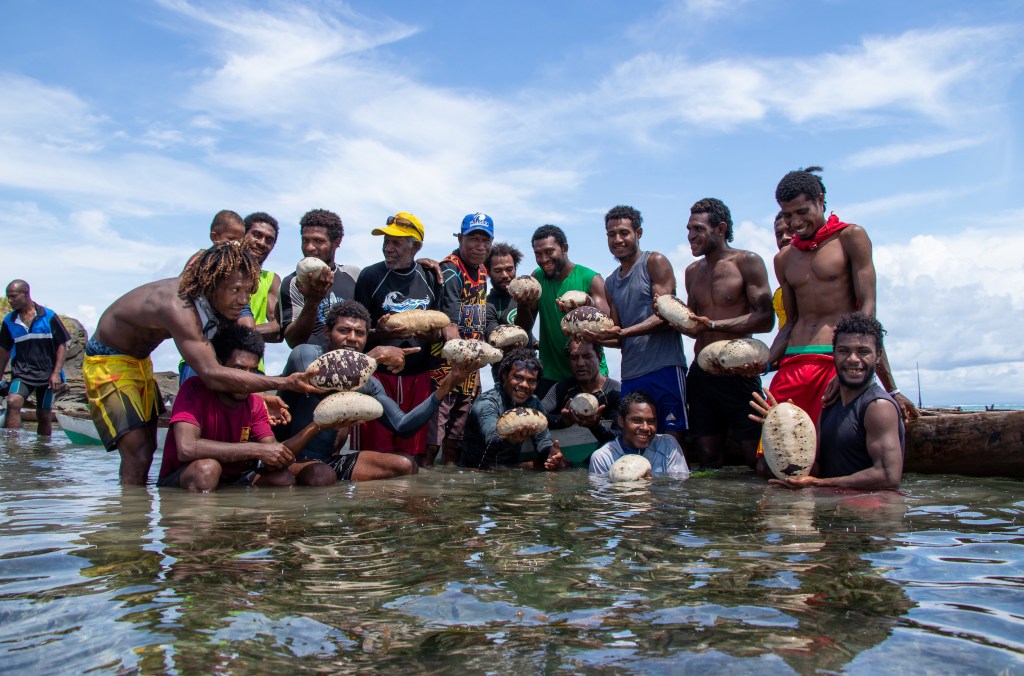
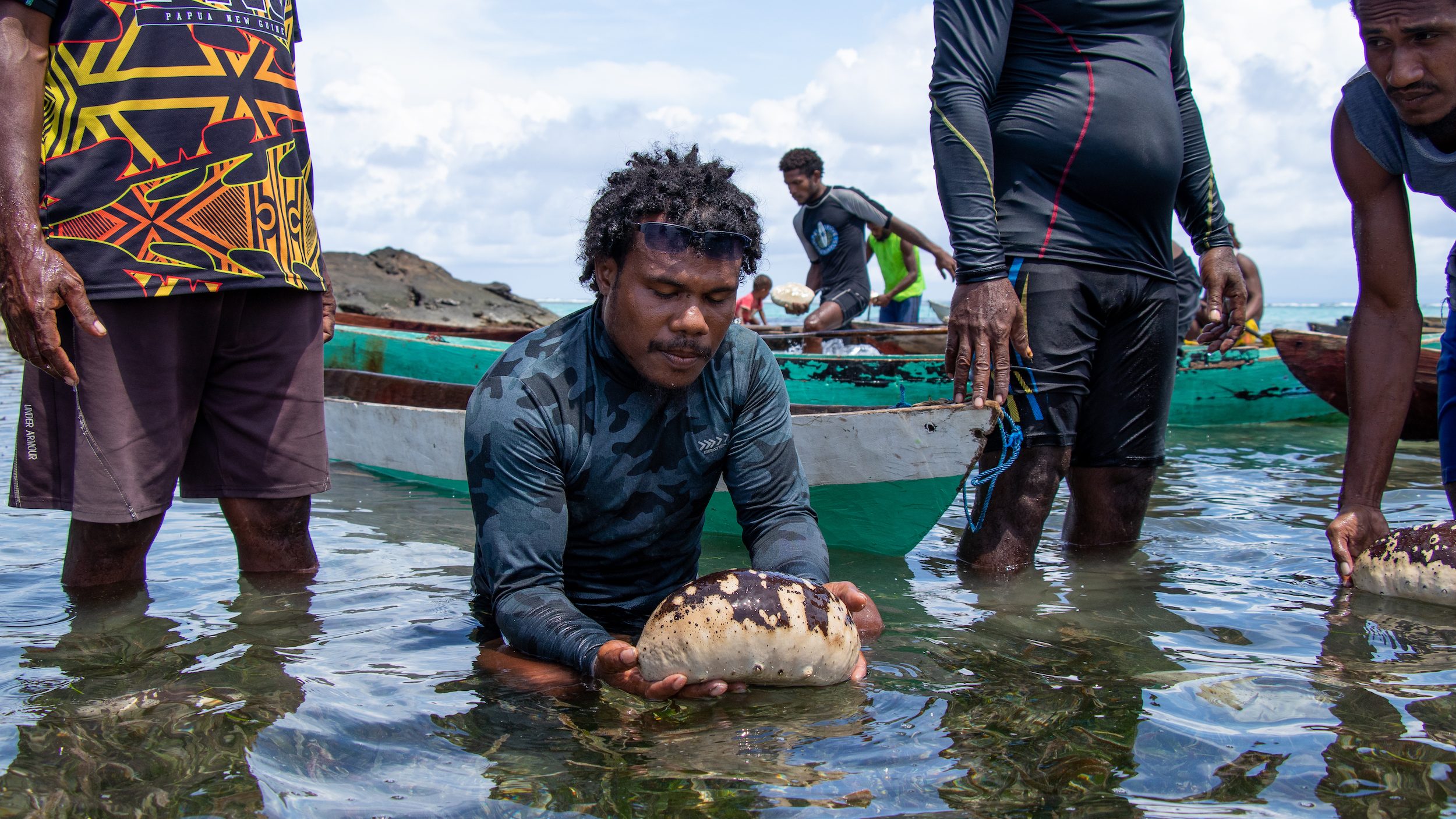
During the 2017-2018 sea cucumber fishing season, the Mwanus Endras Asi Resource Development Network (MEARDN), undertook a sustainable harvest in their waters. With the help of The Nature Conservancy, they established a co-op and exported their catch directly to Hong Kong as a certified sustainable product. This was the first time that a beche-de-mer fishery in the Pacific Islands secured a premium price for their sea cucumbers through enhanced management, ecolabelling, and shortening the market chain.
The co-op was successful during the 2017 open season, with MEARDN fishers earning 43% more for products. But in 2018the venture faltered. Other buyers and exporters of bech-de-mer in Manus undercut the co-op by offering higher prices, and profits from the first season weren’t reinvested into the business as intended. Additionally, poaching by community members increased within the tambu (no-take) areas.
The Big Picture
Sea cucumbers, known locally as bislama or bech-de-mer, are a high-value export fishery across the Pacific. In coastal New Guinea, sandfish (Holothuria scabra) and white teatfish (Holothuria fuscogilva) represent two of the most profitable fishery products and are critical source of livelihoods for local communities.
Given the limited economic opportunities in the region, sea cucumbers fisheries often operate under a ‘gold-rush’ model, with stocks subject to widespread overfishing. But research demonstrates that populations can bounce back with good local management.
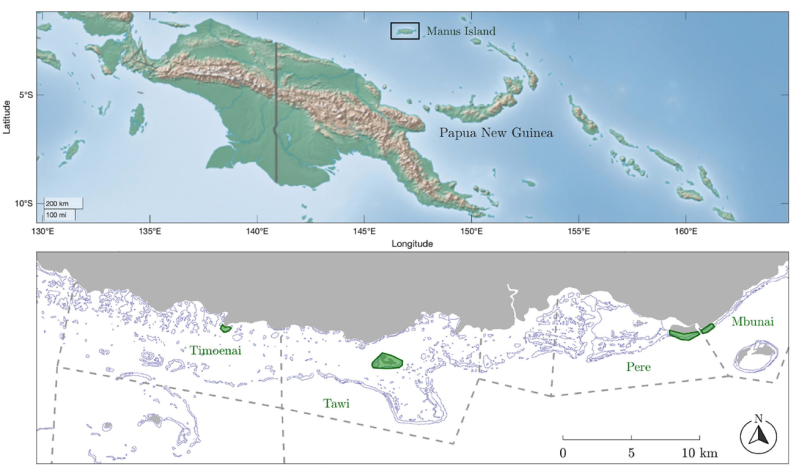
The Nature Conservancy worked with communities along the southern coast of Manus — part of the Titan tribal network — to establish a sustainable bech-de-mer fishery across more than 100 kilometers of coastline. In addition to the closed season, minimum size limits, and total allowable catch required by the national fisheries authority, MEARDN also established permanent tambu (no-take) areas to protect spawning stocks of high-value sea cucumbers.
The Takeaway
Sustainably managed small-scale fisheries have the potential to provide benefits to human well-being, livelihoods, and ecosystems. But implementation is not always straightforward.
“There’s a lot of focus on finding sustainable livelihoods to get traction for conservation, but the reality is that this type of work is quite challenging,” says Richard Hamilton, lead author on the paper and a senior conservation and science advisor at The Nature Conservancy. “It’s quite hard to find things that will work from a financial point-of-view, and it requires the long-term commitment of governments and partners to develop the capacity of local communities to the point where they can run the project themselves.”
MEADRN’s struggles are not an isolated case. Other ventures to promote sustainable small-scale fisheries — via methods inducing aquaculture, ecotourism, shifting fishing pressure from coral reefs to nearshore pelagic fisheries, and shortening market chains — often struggled beyond the initial period of external support.
“Lots of the places where we work are in good condition because they’re remote, but that often means there aren’t markets available for sustainable products,” says Hamilton. “It’s also challenging to help local communities run sustainable businesses when capacity is low and they need a lot of support.”
This case study highlights the challenges of delivering conservation and sustainable livelihoods where natural resource systems are subject to intense economic pressures, even with strong community support and the financial and logistical backing of external NGO.