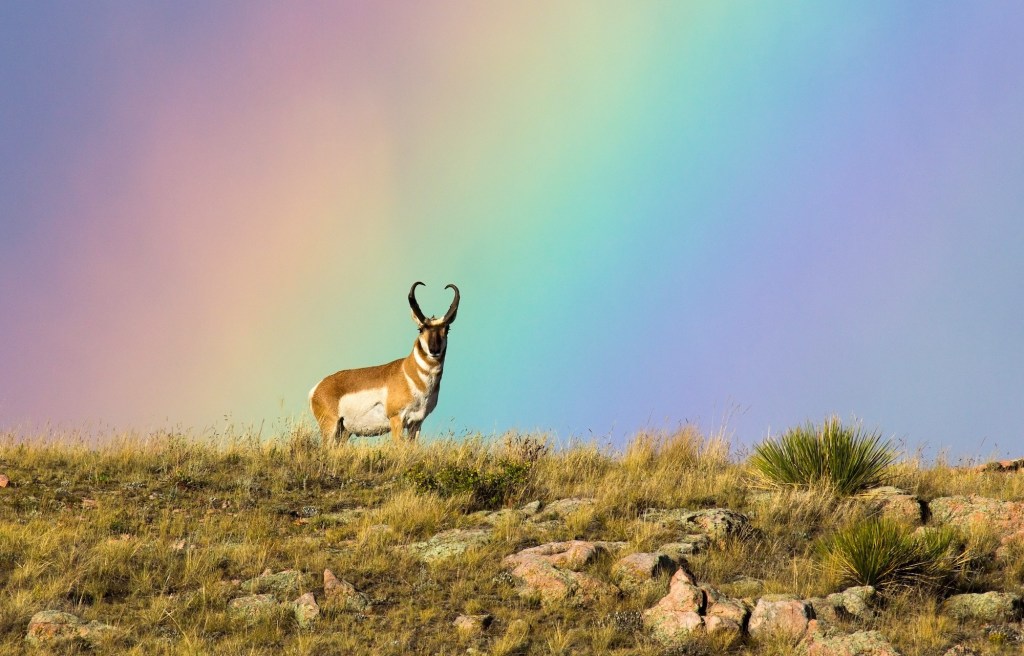
It’s a bright, sunny day in the foothills, but I’ll admit I’m not really paying attention. I’m walking at a brisk pace and my mind is focused on work and various worries. Auto-pilot mode.
And then I catch a flash of white in the distance. I stop and take a longer look through binoculars. I see sleek tan-and-white animals, moving as a large herd. Pronghorns.
I’ve seen countless pronghorns during my rambles around my Idaho home and throughout the western United States. But they’re one of those animals that always demand my full attention. Observing a herd of pronghorns makes me focus on the real, living world rather than my noisy mind.
Perhaps it’s because they recall the Pleistocene, a time when other fantastic beasts roamed this landscape.
Or perhaps it’s because the pronghorn is an animal that moves. It is, to use the biologist’s John Byers’ line, “built for speed.” It is also an animal that migrates long distances.
Here are some pronghorn facts that hopefully give you an appreciation for this unique mammal.
It’s Not an Antelope
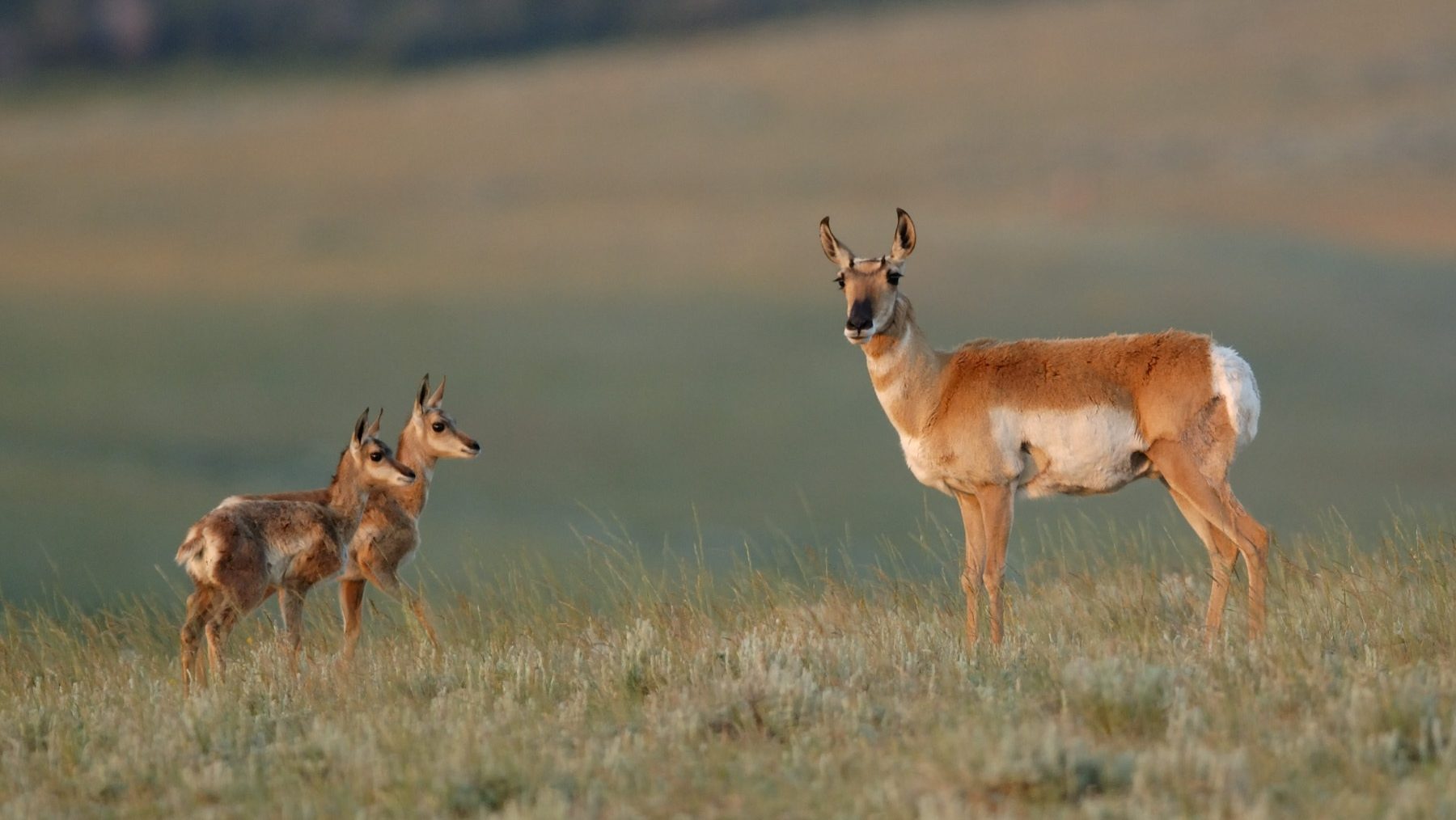
First, you’ll hear a lot of people call the pronghorn an antelope. They’re not.
The pronghorn is the sole surviving member of the mammalian family Antilocapridae. (By contrast, the Bovidae family, that includes antelopes, consists of at least 143 species). Pronghorns are more closely related to giraffes than they are antelopes.
It’s understandable why people would confuse pronghorns with antelopes. They strongly resemble the herds of gazelles and springboks that roam the open areas of Africa. And the similarities don’t end there, which we’ll explore later.
Pronghorns are found widely in the open habitats of western North America. The plains regions of Wyoming and Montana, as well as the Great Basin, are strongholds. But they can be seen in many grassland and arid areas from the Dakotas to California, from Canadian prairie to Baja.
Outrunning Cheetahs
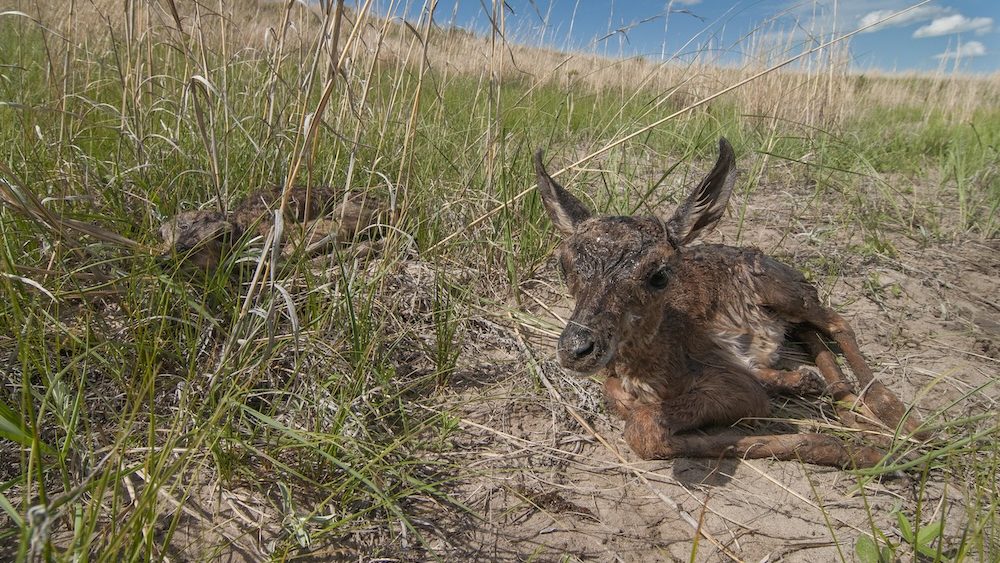
The pronghorn is the second-fastest land animal on earth, capable of short bursts reaching 55 to 60 miles per hour. This is similar to African gazelles, which use short speed bursts to escape the predators familiar to any viewer of nature documentaries: cheetahs, lions, wild dogs.
The pronghorn is adapted to evade similar predators, like cheetahs and long-legged hyenas. Wait. Cheetahs in North America? Well, not anymore. But during the Pleistocene, cheetahs thrived here, as did many other fast-running predators.
Those predators went extinct in North America around 12,000 years ago, along with the mammoths and giant ground sloths. The pronghorn remains, offering the curious naturalist a look at Pleistocene fauna. It is a fast prey animal that no longer faces fast predators.
But that evolutionary memory remains. Whenever I see a pronghorn staring across the sagebrush flats, I wonder if it’s expecting a cheetah.
Shedding Horns
Members of the deer family – whitetail, mule deer, elk and moose, to name a few – shed their antlers.
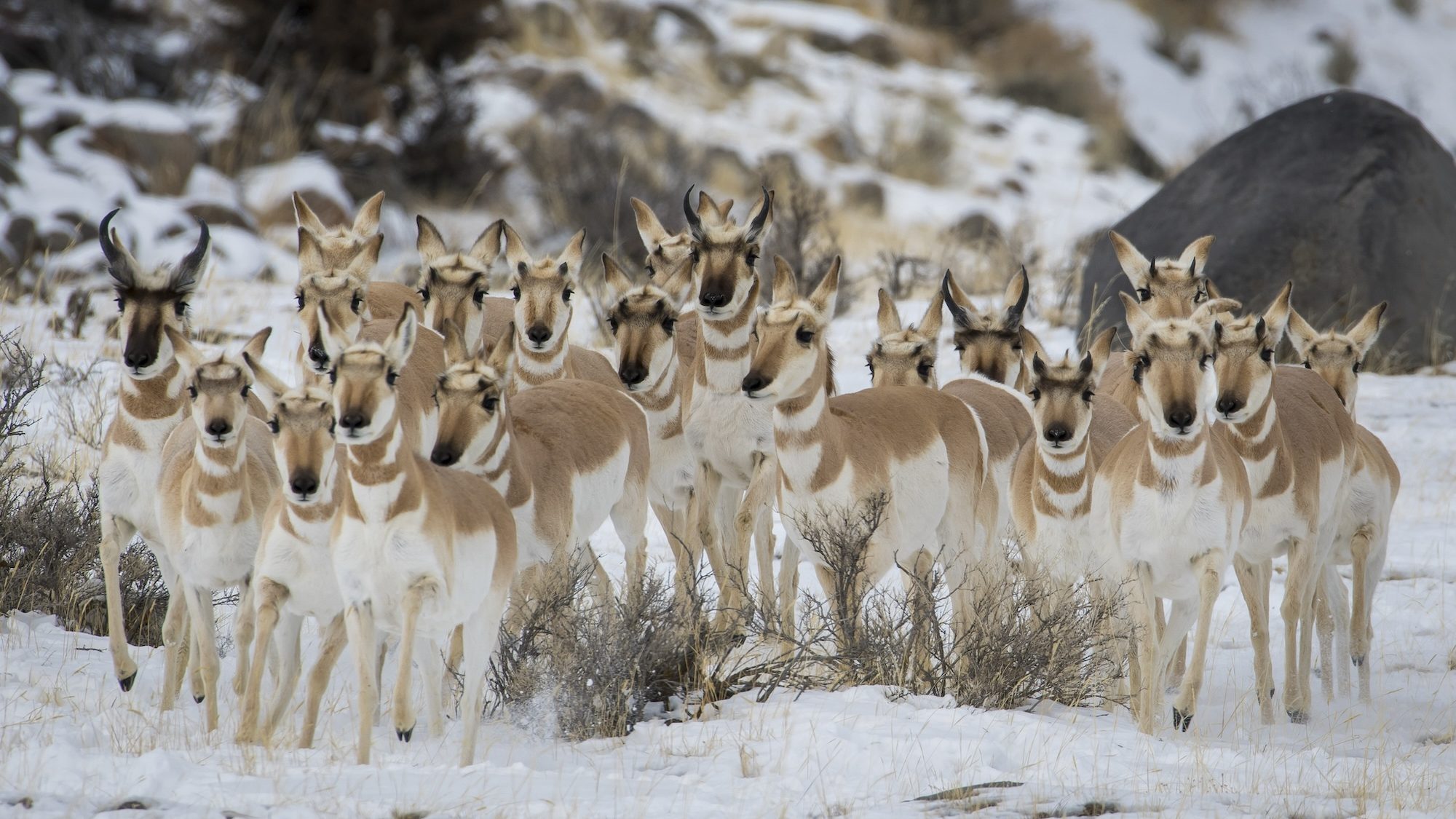
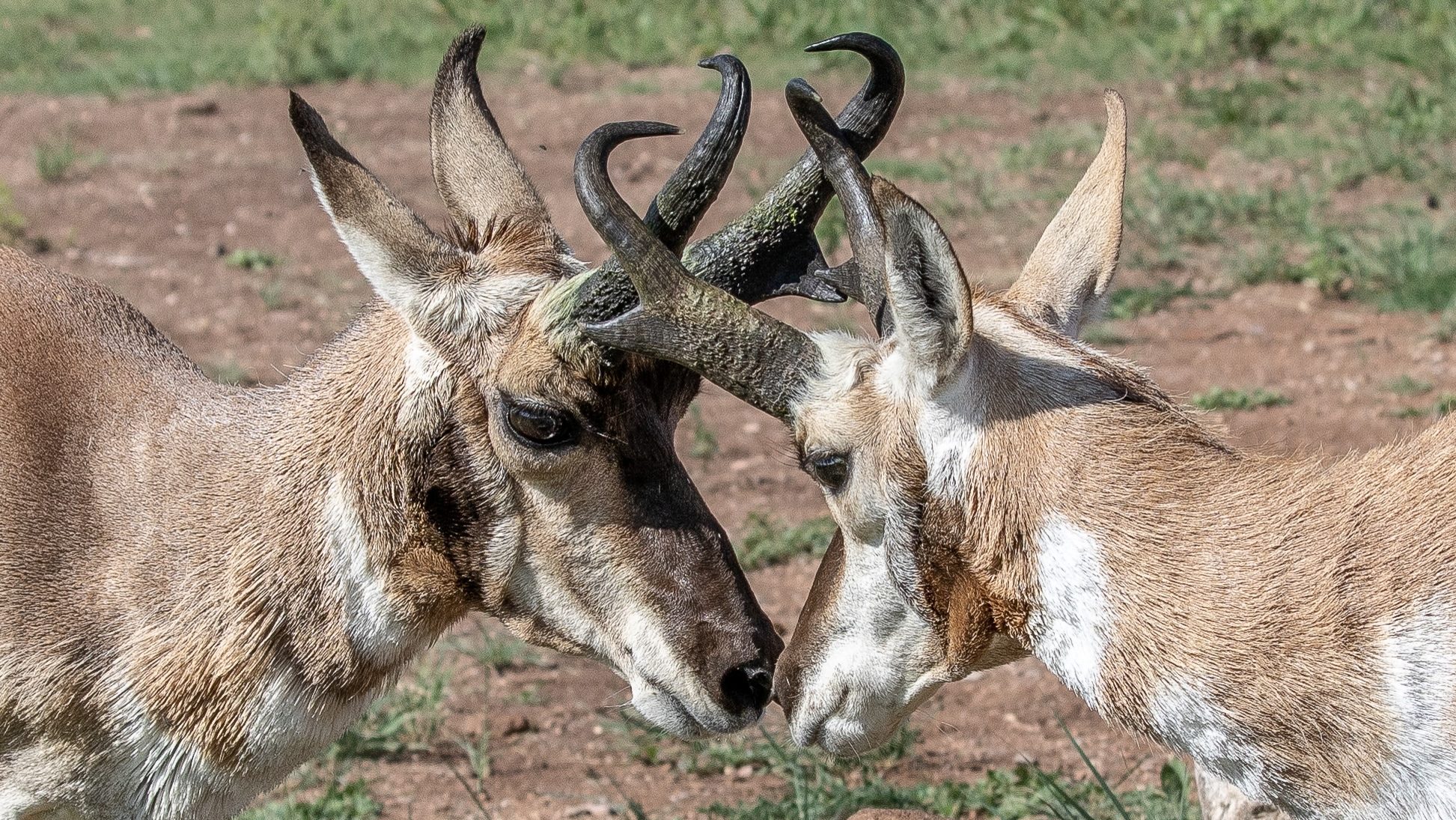
Pronghorns are the only mammals that shed their horns.
Horns are keratinous sheaths that grow over a bony core that in turn grows out of the skull. Horns are lightweight and continue growing throughout the animal’s life. They are not shed.
Antlers are bony structures that are shed annually. As such, damage to antlers doesn’t matter as much: deer just regrow them the next year. And they also don’t have the heat loss associated with them. However, growing antlers every year requires substantial energy cost and, as biologist John Byers writes, “a large mobilization of calcium, phosphorous and protein.”
Pronghorns grow and shed their horns annually. Byers believe pronghorn horns “represent an ideal compromise that minimizes the cost of transport, avoids mineralization and protein cost, and and allows for seasonal repair.”
Horn Myths
Perhaps given their unusual nature, it’s not surprising that pronghorn horns have given rise to myths. The main one is that pronghorn horns are actually just condensed hair. The pronghorn’s horn is a keratinous sheath, as is the case with other horned animals. Outdoor writer Justin Brewer offers this explanation for why the myth of “hair horns” persists: “At the base, hair will often grow into the horn (the sheath) as it hardens. This leaves the impression that the sheath is itself composed of hair.”
Pornghorns typically shed their horns in late November or December, earlier than deer and elk in the same habitats shed their antlers. Although this varies widely, mule deer and elk near my Idaho home typically begin shedding antlers in late January, and some keep their antlers well into spring.
Byers suggests that the early shedding may have an additional advantage for the social pronghorn. The rut is brutal for males. Following the rut, a pronghorn male without horns is “able to join and be fairly inconspicuous in a mixed-sex herd.” The male can then take advantage of herd life, including better protection from predators.
The Migration
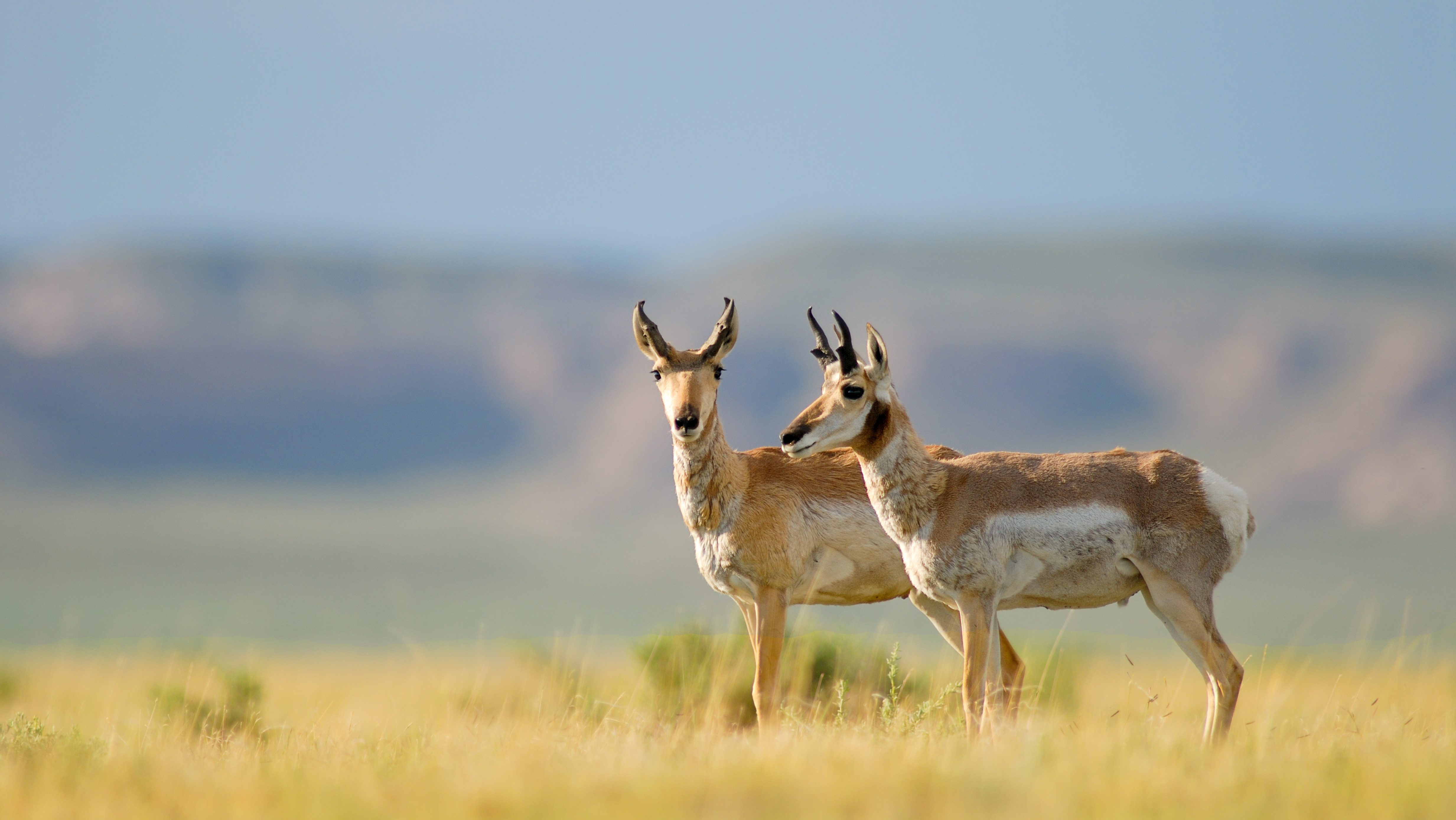
There’s a fringe subset of the ultranning crowd who believes humans can outrun pronghorns. The basic premise is this: pronghorns are sprinters while humans are the ultimate endurance athletes.
The feats accomplished by elite ultrarunners are indeed impressive. But let’s not diminish the pronghorn’s endurance capabilities. The idea that the pronghorn is “just” a sprinter is not based in fact.
Tracking Migrations
Eight innovative ways scientists are mapping migrations to make smarter conservation decisions.
Historically, the pronghorn migrated long distances, and some of those migration routes remain.
A study by the Lava Lake Institute for Science and Conservation and Wildlife Conservation Society documented a 160-mile migration in central Idaho, one of the longest mammal migrations recorded in North America.
This migration route takes pronghorns from the high elevations of the Pioneer Mountains – where wolverines still roam – through working ranches, to the hot, arid lava fields of Craters of the Moon National Monument. A journey of endurance.
Back from the Brink
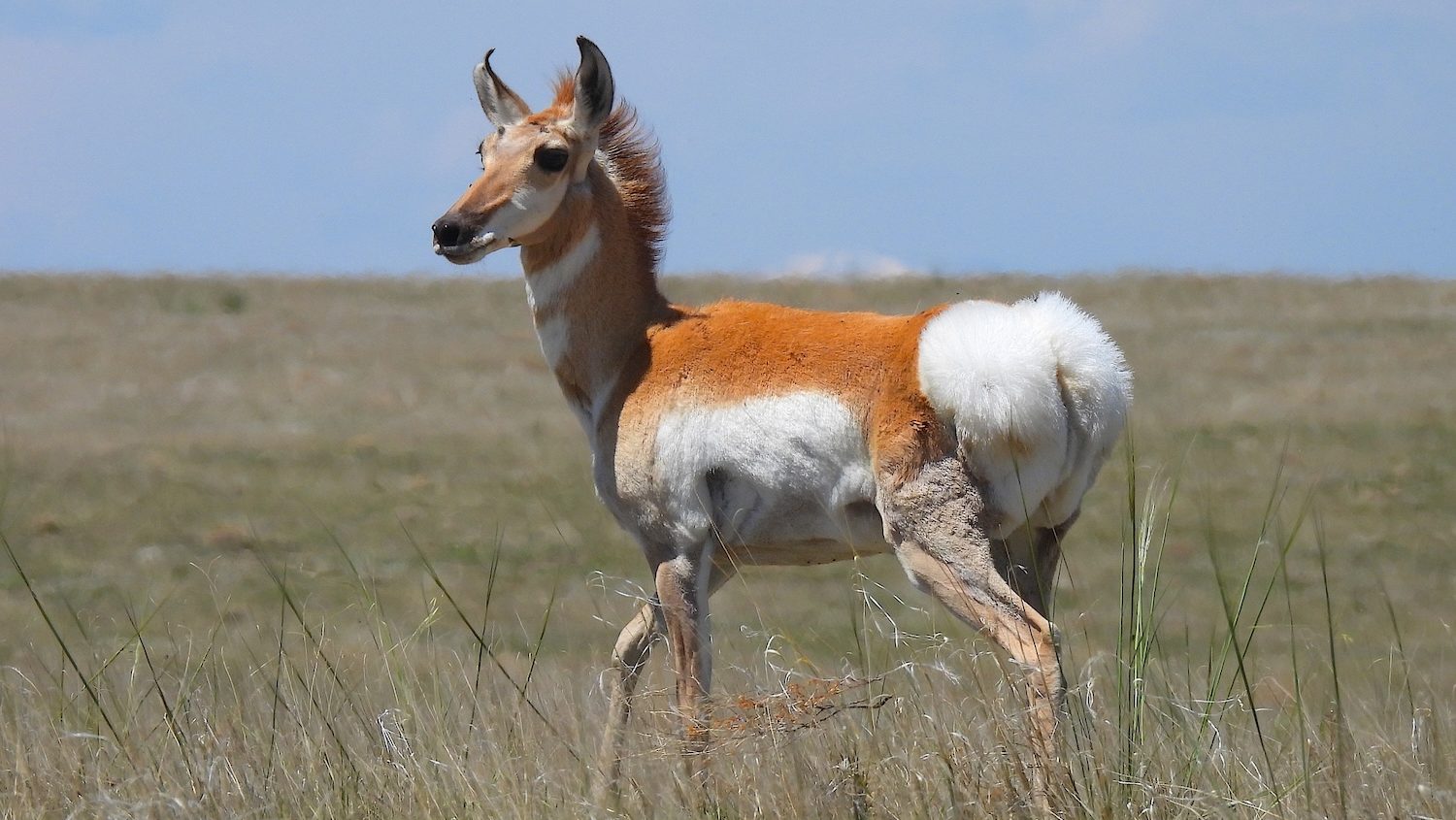
Drive across Wyoming, and you’ll likely see a lot of pronghorns. There were once a lot more. Estimates vary, but at least 30 million pronghorns once roamed the western part of the continent.
Like the bison, they were decimated by unregulated hunting in the late 1800s. By the turn of the century, only 15,000 remained.
The restoration of the pronghorn is one of the most successful wildlife recoveries. Expansive refuges were established by the Federal government, including the Sheldon National Wildlife Refuge in Nevada and Hart Mountain National Antelope Refuge in Oregon. Hunting regulation and enforcement also played a significant role.
Today, population estimates range from 500,000 to 1 million animals. Some populations, like the the subspecies of the Sonoran Desert, remain endangered. And the migratory nature of pronghorns present continuing challenges for conservation.
Protecting Migratory Routes
Large, migrating mammals around the world face many challenges in a world of fences, roads and development. Migratory species need connected habitats. They need room to roam.
The extensive public land of the western United States has allowed pronghorns to continue their ancient migration routes. Interspersed with those spaces are private ranchlands, increasingly being developed in fast-growing states like Idaho and Montana.
In central Idaho, The Nature Conservancy began working to work with partners and willing landowners to protect ranchlands for wide-ranging wildlife and sagebrush-dependent species. To date, more than 95,000 acres has been protected, and with the exception of a few road crossings, pronghorns can make that migration essentially unimpeded by development.
Working ranchland conservation easements have also protected migration routes in the Greater Yellowstone Ecosystem, an area that faces increasing development pressure.
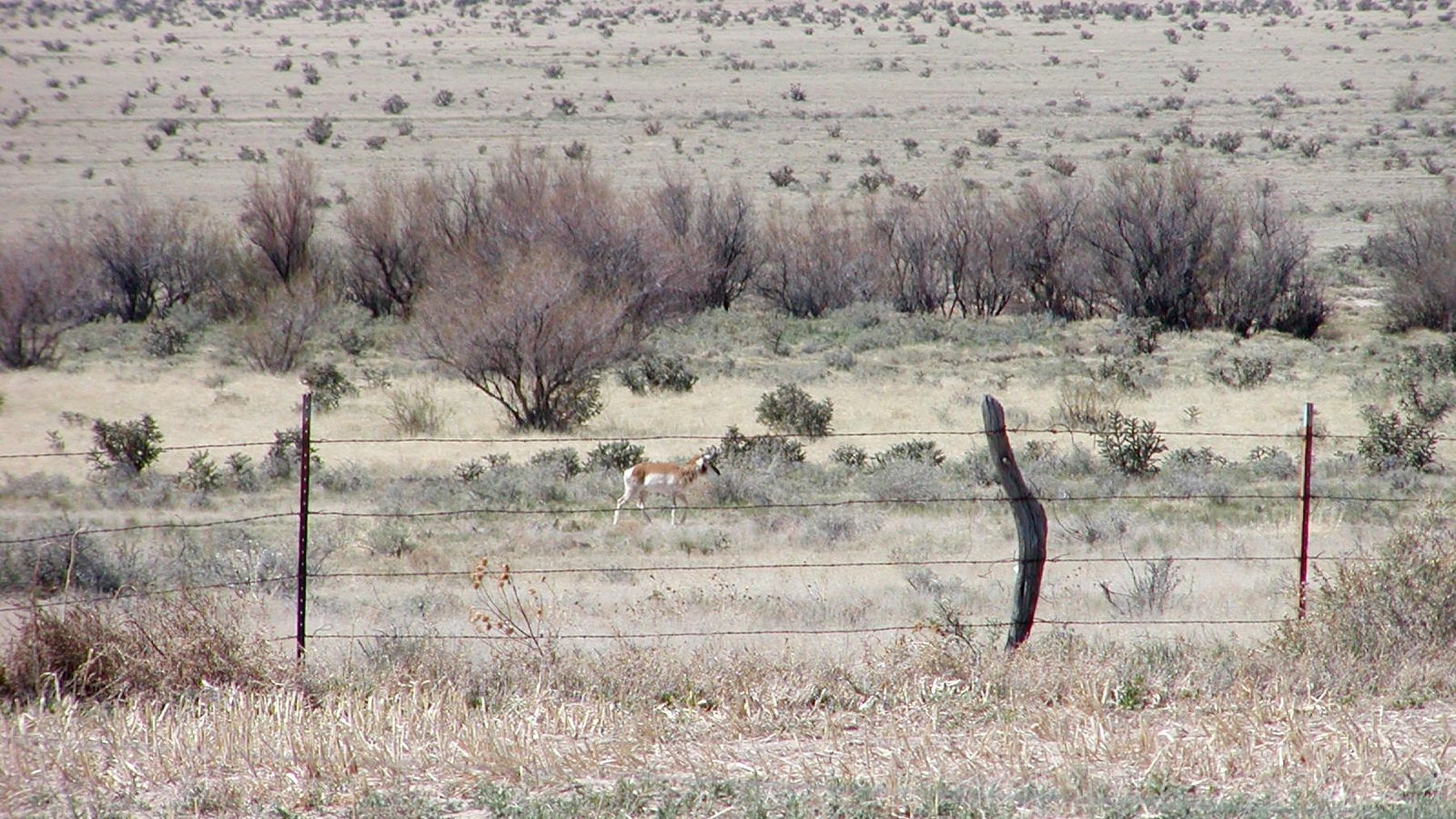
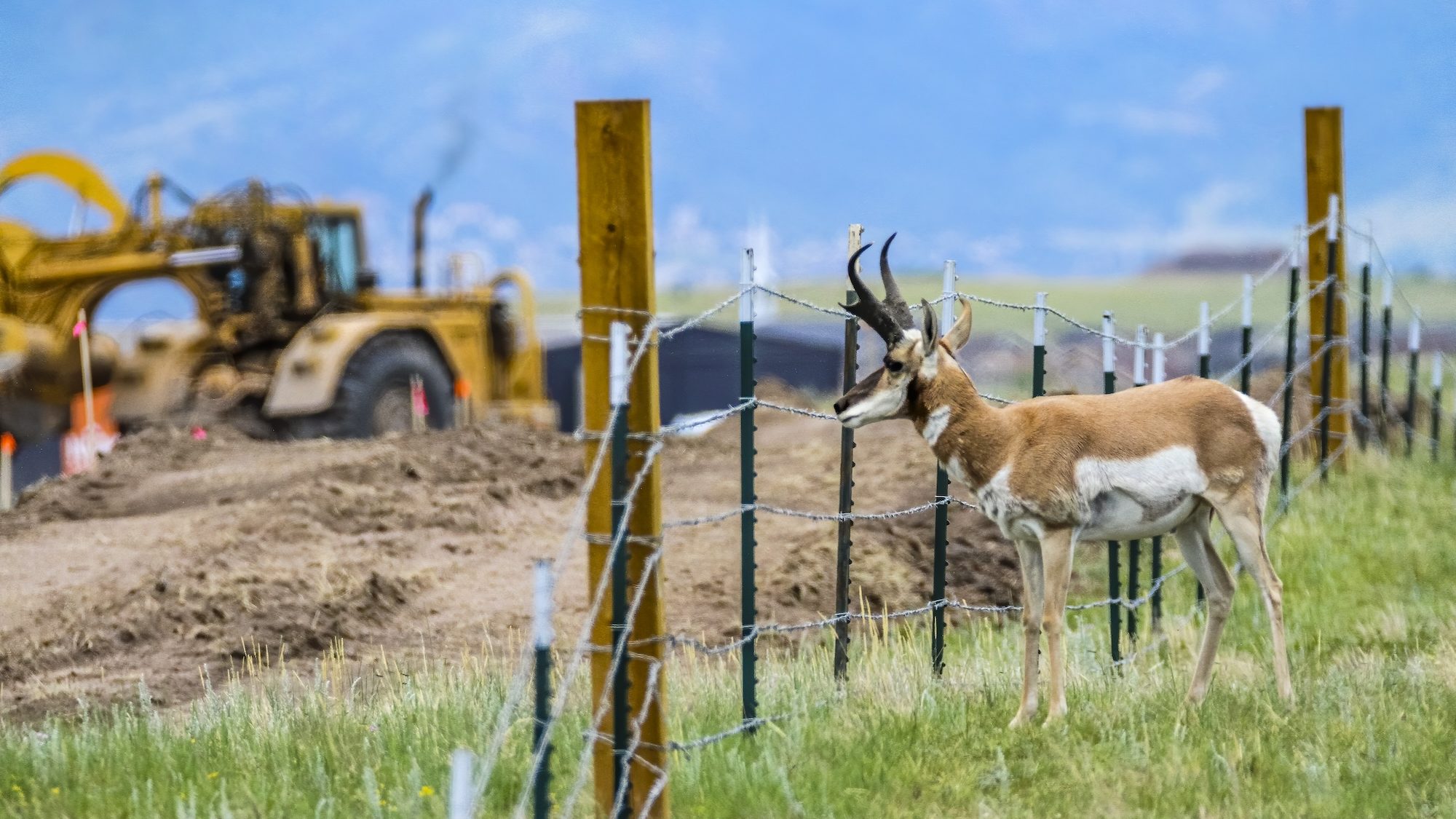
Another threat is posed by fences. Pronghorns are built for speed but not for jumping, so animals can be easily trapped by barbed wire. Wildlife-friendly fences, such as those used at the Conservancy’s Matador Ranch in Montana, are becoming more common in migration corridors.
In other parts of the western United States, pronghorn migrations can be fragmented by energy development. The location of energy development can make a big difference for pronghorns; often their migratory corridors are quite narrow. That’s the Conservancy and partners map migration routes and work to site energy in ways that minimize impacts to wildlife.
Pronghorns are survivors. They thrived in an environment of speedy predators and bounced back from the abuses of market hunting. They’re built for speed but also capable of epic migrations. With sound conservation, they can remain a part of our landscape, a one-of-a-kind Pleistocene survivor.
Great article Matt. Pronghorn also get a bad rap from some hunters about tasting bad. They are not if hunted ethically ie. not chased by a vehicle and then cared for properly. Skinned quickly and carefully and cooled down fast and not just thrown in the back of a pickup, lashed on the hood of a car etc.. Yes I used to hunt them in my gun hunting days and they are delicious. I now just hunt with a camera and encounter them as you do while out birding and wandering around.
Ken, thanks for your comment. I have hunted them a few times (tags have become difficult to draw in Idaho). I always found their game meat delicious as well. I believe an ethical hunt for them is a rewarding experience, but I too am disgusted by how some hunters treat them. Thanks as always for reading.
Matt
Great article Matt!!
For anyone interested, we documented our findings here: