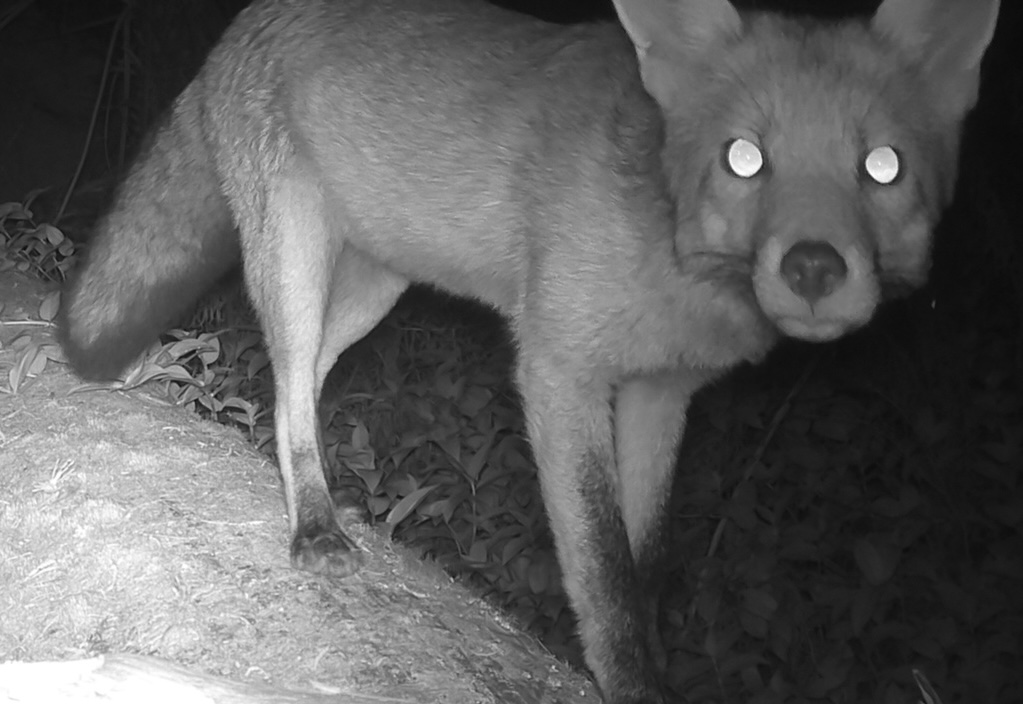
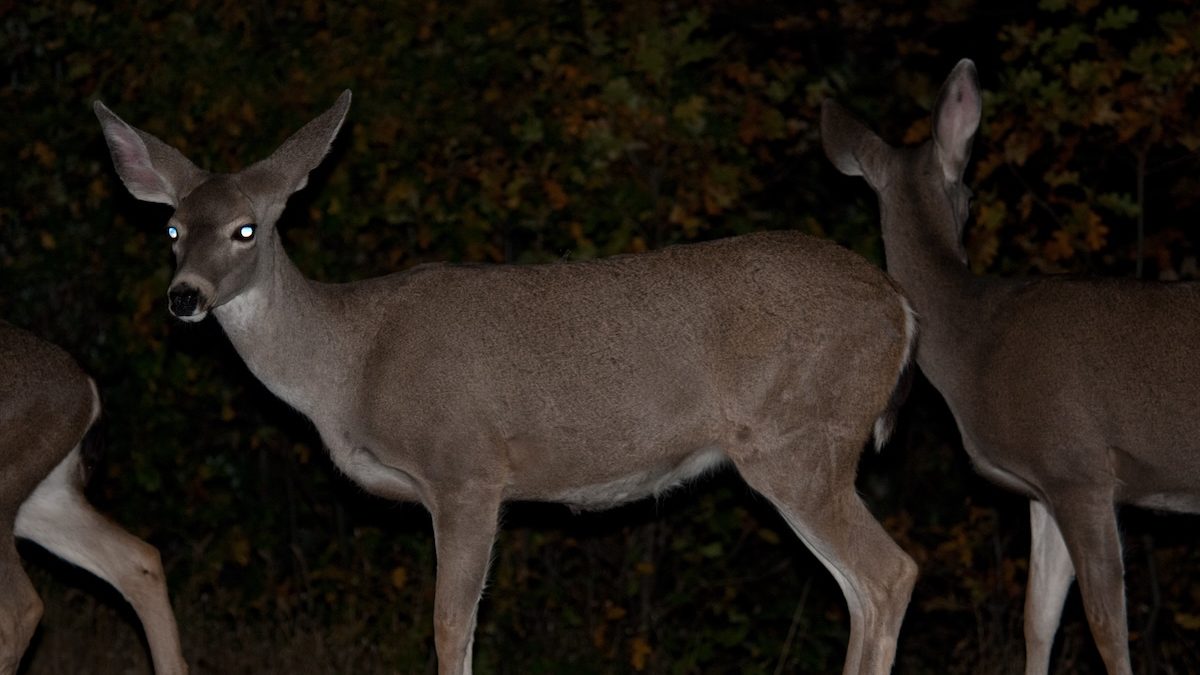
During winter, many of our animal encounters happen after dark. We may glimpse the shiny gaze of deer along the roadside or spot the brief glimmer of fox’s glimpse before it disappears back into the woods.
Why do some animals’ eyes seem to glow in the dark? That’s thanks to a reflective layer in the back of the organ called the tapetum lucidum, which in Latin means “tapestry of light,” or “bright tapestry.”
In nocturnal animals, the tapetum lucidum acts like a mirror, reflecting light back through the retina and stimulating photoreceptors a second time, a process that basically doubles visual sensitivity. This heightened ability to see in the dark is useful for hunting—or to avoid being hunted.
Many nocturnal or crepuscular (those active in the evening) mammals have a tapetum lucidum; so do alligators, spiders, frogs, and even some fish.
You’ve probably seen your dog or cat’s tapetum lucidum at work in family photos in which their eyes shine a brilliant green or yellow. Unfortunately for humans, diurnal creatures lack this powerful tissue.
The Mechanics of Night Vision
For animals, there are lots of advantages to being active after sundown. For vulnerable creatures like salamanders and frogs, finding food or a mate is safer without the sun beating down on their delicate skin.
For small critters like racoons and rodents, feeding after dark provides cover from predators and reduces competition. And for predators like big cats and owls, hunting at night makes ambushing prey much easier.
The tapetum lucidum is what makes it possible for these animals to get around safely, and here’s how it works. First, light from the moon or stars (or your flashlight) enters the retina, hitting the photoreceptors in the back of the eyes.
Then, any bits of light not captured are bounced back by the tapetum lucidum through the retina, “for a second chance of being captured,” explains Glen Jeffery, a professor of neuroscience at the University College of London’s Institute of Ophthalmology. “Now, in a dark environment, you have a much better chance of seeing things.”
Scientists are sure the tapetum lucidum enhances vision, but that’s about all they’re certain of.
“We know basically nothing about the evolution, genetics, and developmental biology of the tapetum,” explains Nathan Lents, a biology professor at John Jay College. “We also don’t have clear understanding of how much it really helps. How much more sensitive are retinas with tapeta? Those experiments are very difficult to do.”
An Evolutionary Trade-Off
According to Jeffery, all mammals probably had a tapetum lucidum at one point during their evolutionary history, including humans.
While the adaptation is a valuable survival mechanism for nocturnal and crepuscular animals, it comes at a significant cost.
“The downside of the tapetum lucidum is visual acuity,” Jeffery explains. Because the tissue is a curved mirror, light doesn’t bounce back the way it came, meaning things can get a bit fuzzy. “You’d have trouble reading the newspaper if you had a tapetum,” he says.
The tapetum lucidum also impairs color vision, “because the wavelength of reflected light is not perfectly maintained during photo reflection,” says Lents. While not an issue in dim conditions (all animals, including humans, lose color vision in the dark) it does mean animals with tapeta are likely to perceive fewer and duller colors during the day.
These drawbacks—as well as a transition to a mostly diurnal schedule—are probably why humans don’t have one anymore.
“The tapetum has appeared and disappeared countless times throughout the evolution and diversification of animals,” says Lents. “When a given animal lineage is nocturnal or crepuscular for a long time, the tapetum often evolves. But when a lineage is mostly diurnal for long periods, the tapetum disappears. This could be because of its cost, or it could be just the gradual deconstruction of tissues that are not actively maintained by natural selection.”
Alarmingly, there’s evidence that light pollution might be rapidly changing the physiology of animals who still have a tapetum lucidum.
In 2013, Jeffery was a member of the research team that discovered that in winter, the tapetum lucidum in arctic reindeer changes from gold to blue, a variation that allows the hardy ungulate to see during months of constant darkness.
Recently, however, Jeffery and his fellow researchers observed a group of reindeer whose eyes glowed green, a result, they believed, of nearby streetlights that had essentially scrambled the evolutionary adaptation.
“They had started their transition from gold to blue, but it stalled,” Jeffery explains. “Now they were at an ecological disadvantage because they can’t see as well as they should.”
With an increasing amount of light pollution encroaching on wild spaces, the finding is an important warning, according to Jeffery. When animals encounter artificial light, “it can upset a fundamental process.”
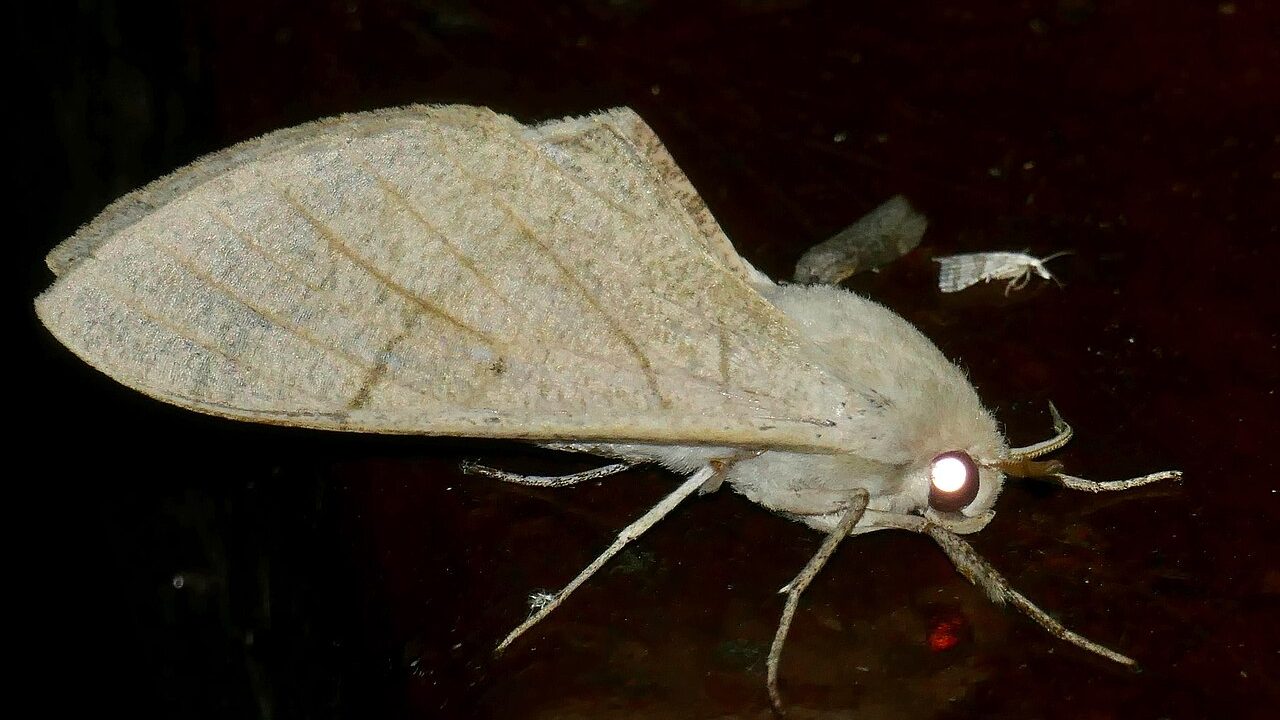
A Rainbow of Eyeshine
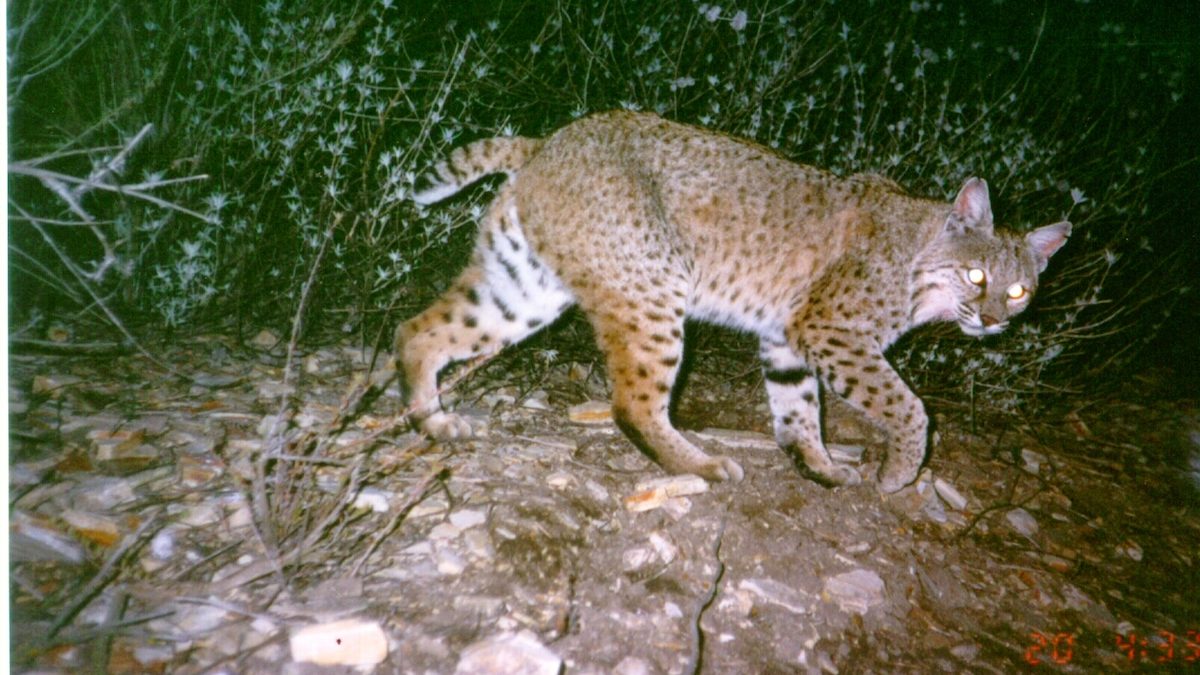
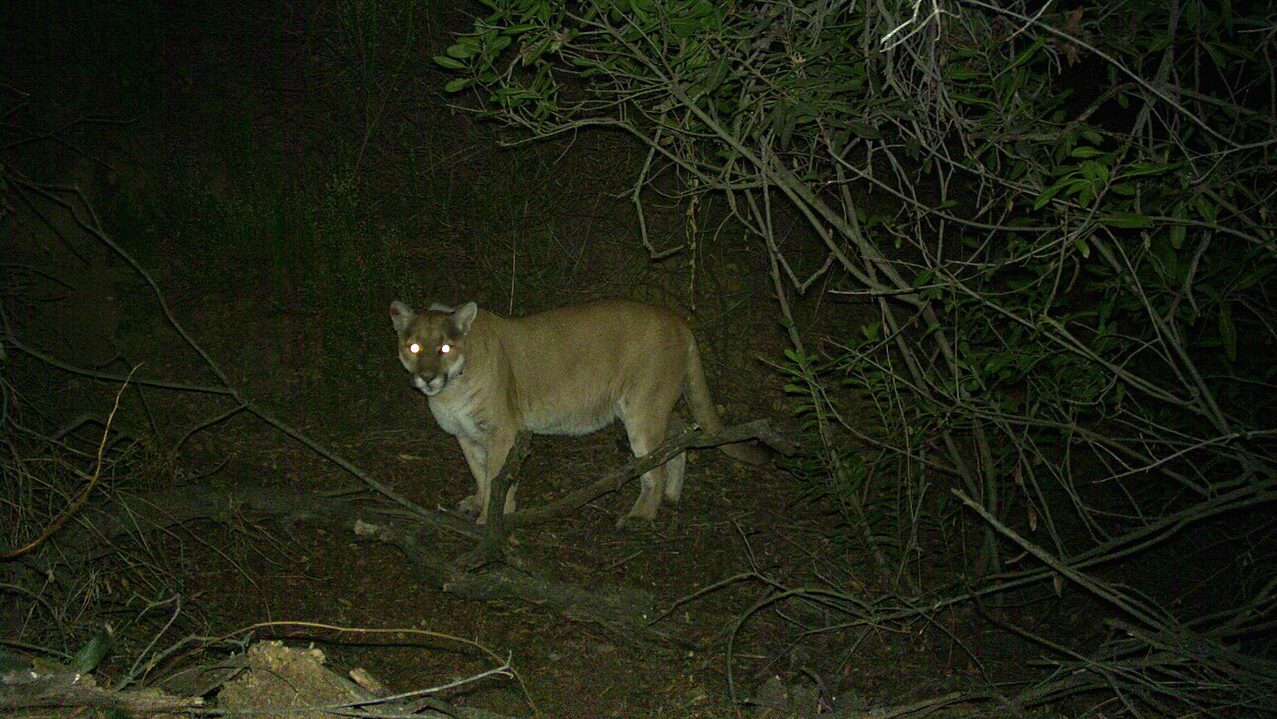
Eyeshine comes in lots of colors, shades, and intensities. Alligators boast a fiery orange glint while spiders’ eyes glow green as a traffic light. At night, cat eyes—from large predators like a cougar to the nine-pound pet that shares your home—shine a coppery yellow.
“There are a variety of tapeta in the animal world, which evolved totally independently,” says Lens. “Some are made of collagen fibers, some are made of cysteine or guanine crystals, a few are even made of lipids.”
In addition to the chemical composition of the eye, other factors like the structure of the tissue and its photo reflective properties—as well as the angle and intensity of the light—can influence the color and brightness of eye shine. While color alone won’t help you figure out what animal is looking your way this winter, it can be a useful clue when combined with other observations like height, movement, and pupil shape (predators have vertical pupils, prey animals, horizontal). Here’s a chart to help with your identification efforts, but remember, like the animals that have it, eyeshine can be elusive and mysterious.
Eyeshine Quick Reference Guide
| RED | black bear, rabbit, opossum, fox, porcupine, rodents, most owls |
| YELLOW | coyote, bobcat, raccoon, great horned owl |
| WHITE | deer, elk, squirrel, badger |
| GREEN | sheep, spider, frog |
| BLUE | horse, woodchuck, pine marten |

.jpg)
.jpg)
.jpg)
_(52765059194).jpg)
Join the Discussion