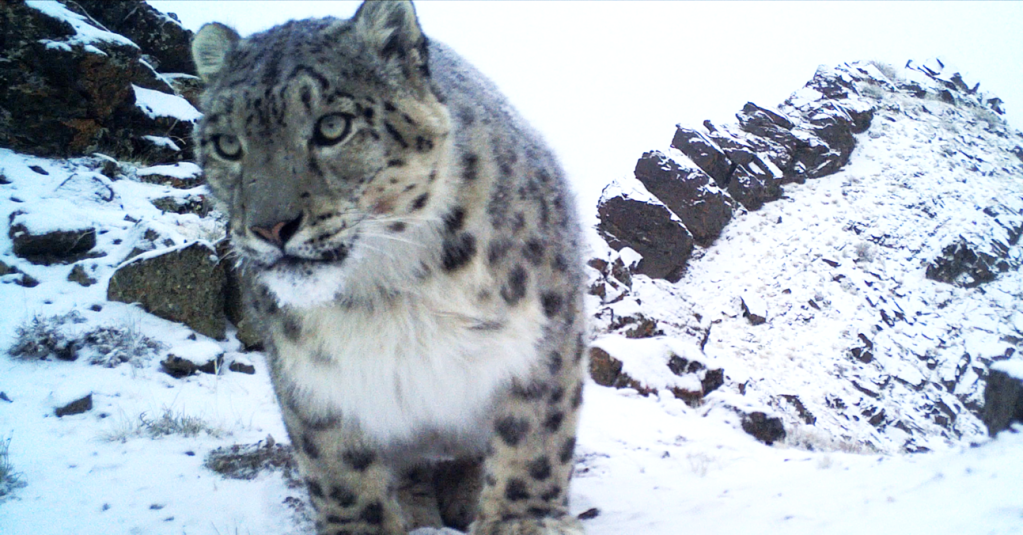
My attempt to see a snow leopard has been years in the making. Countless hours researching, tracking animal movements, and staring at camera footage. You’d think I’d know enough about where to find them by now. At least enough to spot one during my research trip to Mongolia over the summer of 2025.
Nope.
But to be honest, it comes as no surprise. We knew that would likely be the case all along. Snow leopards are affectionately called the “ghost cat,” because they’re so rare to see that you’re essentially banking your chance of spotting one on nothing more than a hope and a prayer.
This all fed into my research over the past year, as I studied ways to use Geographic Information Systems (GIS) to design mapping tools that can depict where you might find a snow leopard in western Mongolia, even if you can’t manage to spot one in person. GIS technology can tell you what’s happening on the ground and directly in their habitats, and how establishing connected movement corridors can benefit both the leopards and nomadic herding communities who live alongside them.
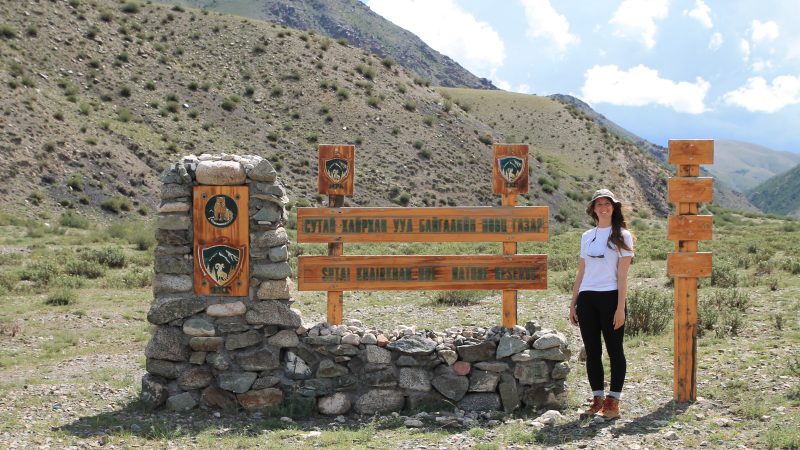
I work for The Nature Conservancy’s Connecticut chapter, but I wanted to use my new GIS skills to support nature both locally and across the globe. I’ve always been fascinated by animal behavior. And really, what’s not to love about a big cat? TNC’s Mongolia program had years of data on snow leopards in the high mountains. Despite the individuals being so elusive, it seemed like their story was ready to be seen. So I saw an opportunity to share what we’re learning to continue to expand on existing snow leopard research.
Snow leopards are a protected species, and it’s believed around 4,000 remain in the wild. Many studies so far have centered around population counts. But there’s so much we need to learn about their habitat’s depletion and fragmentation as well as how they use corridors to move through the landscape if we want to support what populations are left. In partnership with TNC Mongolia and Community-based Organizations (CBOs) in Western Mongolia, I’m using GIS modeling to answer these questions.
Research has shown us that snow leopards are habitat specialists. They’re short and quite stocky, with big paws, long back feet, and a lengthy tail, enabling them to easily maneuver across incredibly rocky and rugged terrain. Everything that we humans think is difficult isn’t a problem for them. Plus, their coat color helps make sure they are not easily seen. (One of the obvious reasons why we have such a hard time finding them!)
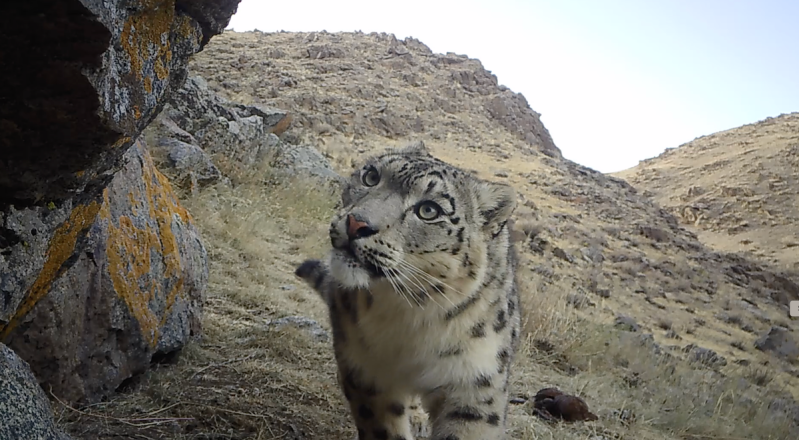
Thankfully, we have all that camera footage on our side. From 2016 to 2022, TNC and partners at the Mongolia Academy of Sciences conducted a population study of snow leopards using camera trap surveys. They’re not actual traps, and there’s no bait involved.
Field cameras are simply put in areas where snow leopards are expected to continue traveling. Camera placement is usually based on marking or scrape sites. They’re areas that already have vestiges of use. Footage confirmed that the Bumbat and Sutai mountain ranges were buzzing hubs for snow leopard populations.
Leopard Lens Webinar
Join TNC on March 18 for a webinar on how technology and community are charting a path for snow leopards.
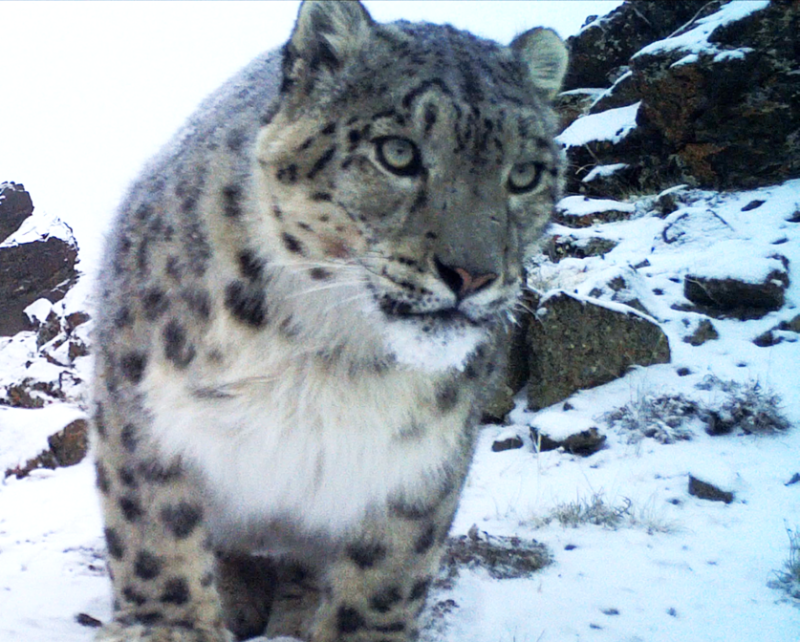
Combining this data with the GIS mapping of core habitats and local livestock movement gave us important new insights about how snow leopards navigate through and around the landscape. Snow leopards are living right up alongside the local herding community in these high mountain ranges.
This can create conflict between leopards and herders if it’s not appropriately mitigated. Local herding communities did not previously have specific details on the extent of snow leopard habitats and ranges. By identifying regions where their herding territories and snow leopard habitats overlap, herders can adjust where their livestock graze and how they’re handled in these locations.
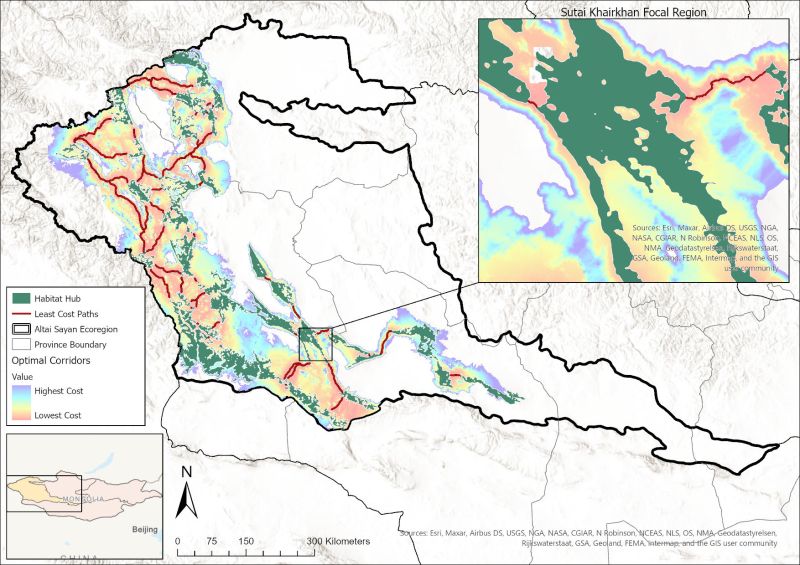
The habitat model I’m developing identifies ideal stretches of habitats that are at least 230 square kilometers or larger—big enough for at least one snow leopard. The model then ties these ideal habitats together to highlight the most likely routes a leopard would use to travel between them.
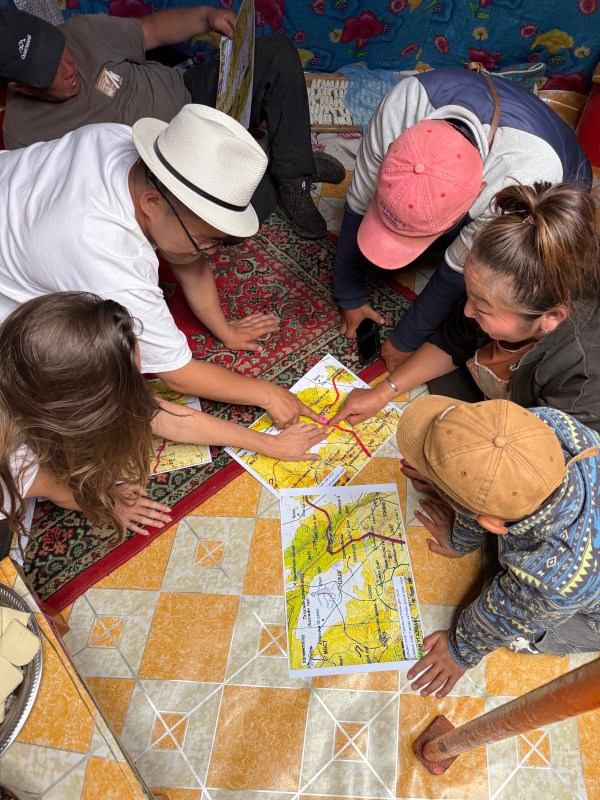
When I traveled to Mongolia, it was really exciting being able to provide that information to herding communities. My research was always fascinating from a science perspective. But when you get to see the impact it has for people, where it actually means something to their day-to-day lives, it emphasizes the reason and need for communities to be able to use this information on the ground. It illuminates a path that protects livestock and leopards alike.
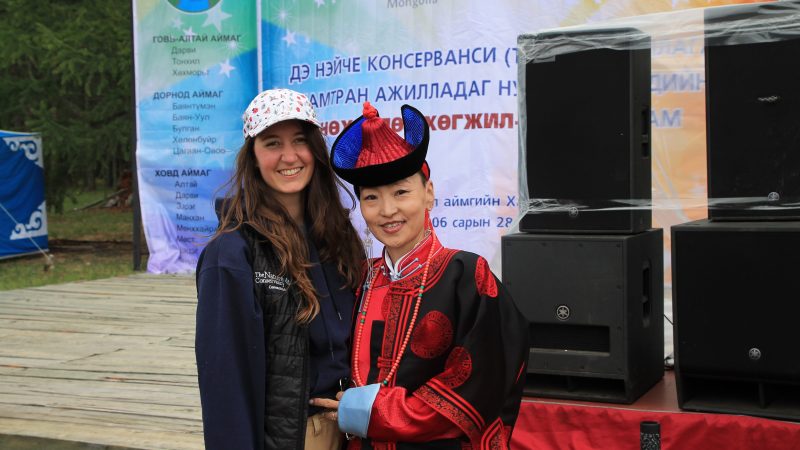
While I was in Mongolia, I also gave a presentation to 500 members of TNC’s CBO program from across the country. Some travelled for days and rode their horses to get there. We shared the modelling work I had done and had the opportunity to talk about the cultural significance of snow leopards in Mongolia.
The gathering was a chance for these herding communities across Mongolia to meet with each other and talk how they operate in the program. It was an open forum to discuss what’s working or what’s not. We played games like tug-of-war and trivia. We danced and sang. Everyone was incredibly friendly and welcoming. I was even gifted a Deel, a traditional robe.
I’m hopeful that TNC’s community-led conservation program can use this research. We need to create an expansive data repository so partners can share their work, too. A lot of cameras have snow leopard footage, but they’re spread between organizations. We need it to be compiled and accessible for it to be useful.
With continued research, we’ll be able to better understand snow leopard behavior and use that knowledge to ensure habitat connectivity. By working together, we can continue to support the proud, resilient herding community and their strong, spirited snow leopard neighbors.
To Whom It May Concern
Your story On-Line entitled “On The Trail of the Snow Leopard,From Camera Traps to Habitat Maps has been a very interesting read.As you may know Peter Matheson wrote a book called “The Snow Leopard.”
“The Wildlife Council”have been using photo traps in Eastern Russia to monitor the Amur Tiger.This endangered cat “roamed the shorelines of Bali,the jungles of Indonesia and the lowlands of China.”Their numbers are quickly being depleted due to deforestation,poaching and presence of more people according to the February 2015 front page article,Volume 45,Number 10 “Smithsonian Magazine”named “Siberian Tigers: Return of the Big Cat.”
With the new technology spearheaded by Erica Anderson and T.N.C.Mongolia and new research,there is hope for these elusive,rare animals.