Ashley Schmitz checks his traps. One—a vertical chain of green plastic funnels—is attached to a tall ponderosa pine. It stands on the edge of a grassy area in the Davis Mountains of West Texas, where cool green hillsides perch high over the Chihuahuan Desert. Inside the trap, known as a lindgren funnel, Schmitz is surprised to find something he’d been looking for elsewhere: a Euphoria casselberryi beetle.
“The moment I saw it, I said, I’ll be danged,” he tells me later as he recounts the story. “That’s a really rare scarab that’s out here.” Though native to the region, the beetle hadn’t been documented in the area for over a decade, he says. Schmitz added it to his list.
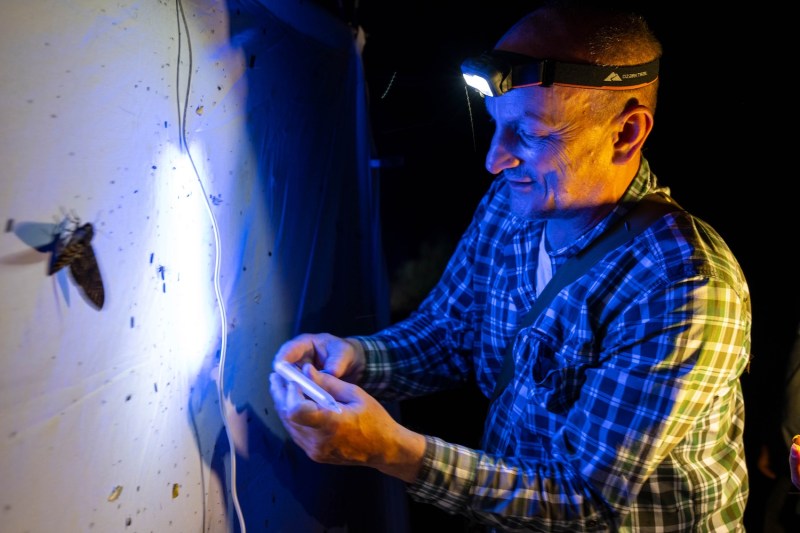
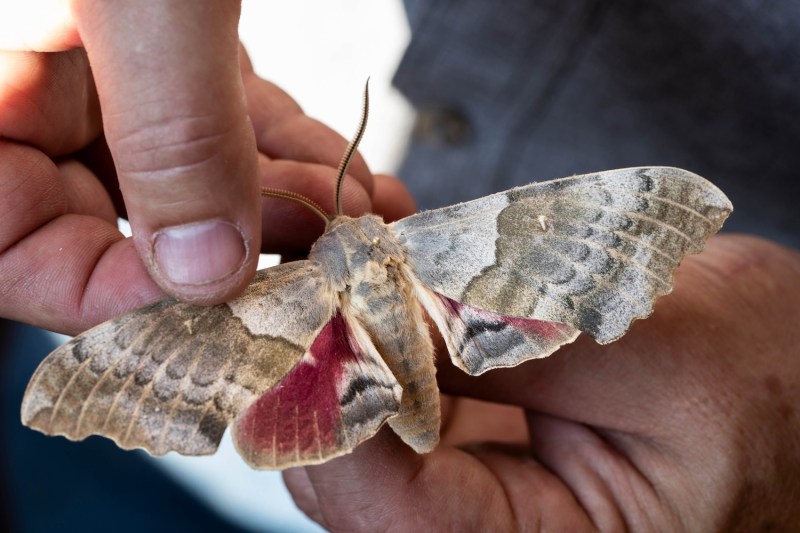
Schmitz is part of a team of researchers and hobbyists cataloguing every arthropod (a group of animals that includes insects, spiders, and crustaceans) they can find in the Davis Mountains Preserve, a 33,000-acre property owned by The Nature Conservancy. The survey began five years ago in 2021. Across numerous visits to the preserve, the team has worked round the clock and catalogued some 1,900 species, including several believed to have never been identified here before.
Each species—the Jerusalem cricket found high in the mountains, the water-penny beetle found in a waterway that only appears in wet years—helps complete an emerging picture of the preserve, a sort of collective baseline of an ever-changing landscape, says Charlotte Reemts, the science director for The Nature Conservancy in Texas. The preserve has hosted numerous researchers since the Conservancy established it on former ranchland in 1997. In a state where about 95% of land is privately owned, the property offers a rare kind of access for researchers posing questions about Texas’ ecosystems, Reemts says.
“It’s our job to put all of this [information] together in a holistic picture of how this site is doing and how we need to manage it going forward,” she says.
The preserve sits about 3 hours southeast of El Paso. Driving there from the city there’s a point where you take a left turn and drive straight for a 150 miles—ocotillo and cactus on either side of the highway. Eventually the road begins to rise and the temperature cools, the desert turns a soft green and you know you’ve reached the Davis Mountains.
I’m sitting beside Kaylee French, who manages TNC’s West Texas preserves, as she drives around the property on a four-wheeler. The engine strains as we bump along over rocks and tilt over inclines on our way to the top of a mountain ridgeline. We pass through patches of ponderosa pine forests and grassy fields as French rattles off the many research endeavors taking place here.

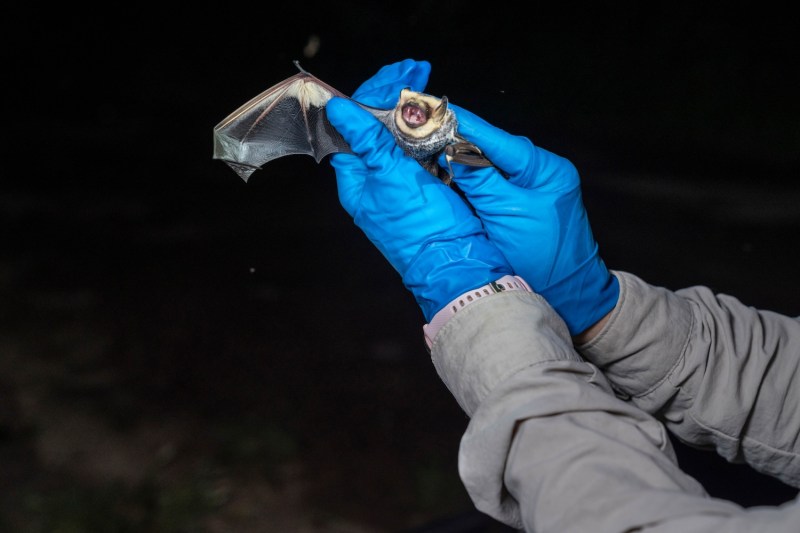
There are the entomologists of course. They built on previous plant surveys. Then there are researchers from Texas A&M University studying the area’s trees as they struggle against beetles and drought. Biologists are using acoustic recorders to listen for owls. Ornithologists are conducting bird counts. At one point a researcher radio-collared mountain lions to better understand their movement. And then there are the fireflies.
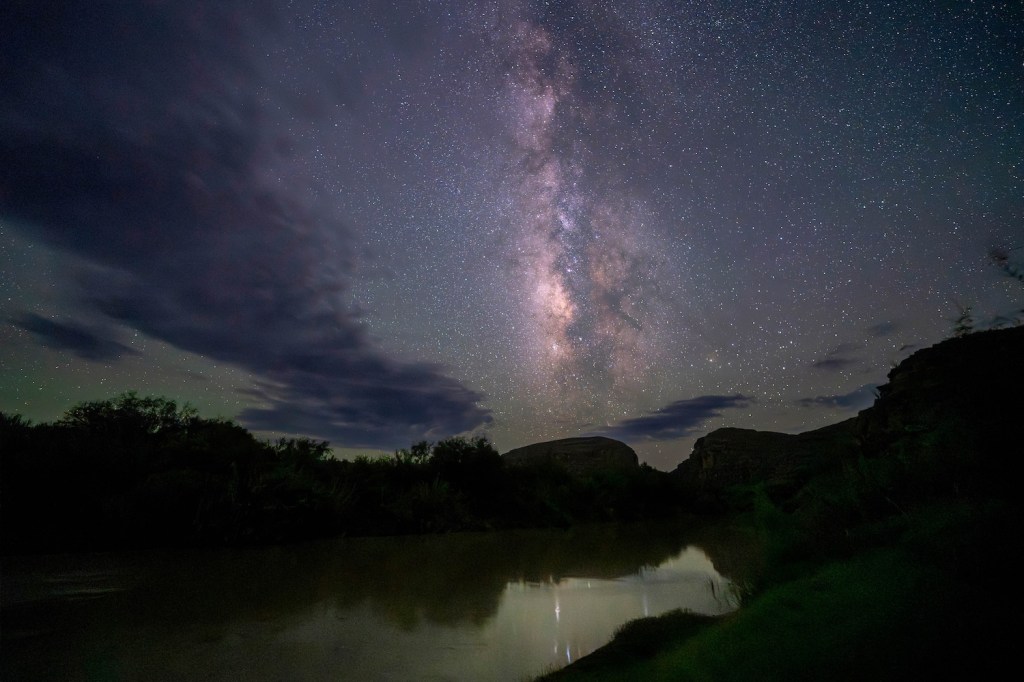
There are more than 130 species of fireflies in the region but one—the sky island firefly—is known to only exist in the Davis Mountains. Fireflies use their flash patterns to find mates. Light pollution can threaten them and one 2015 article found that the closer you get to city lights, the fewer fireflies you find. That makes the remote and very, very dark Davis Mountains a particularly great place to look for fireflies. The entire area, along with hundreds of thousands of acres south all the way across the U.S.-Mexico border, was declared an international dark sky reserve in 2022. (Find out how the area became a dark sky reserve in Nature Conservancy magazine.)
Stephen Hummel coordinates dark sky initiatives at the McDonald Observatory, a University of Texas-run campus a half-hour drive from the Conservancy’s preserve. He has surveyed for fireflies on the property and even joined a researcher using cameras to study flash patterns on the property after first finding one in an unlikely place.
“I was using one of the telescopes here for a public program, and this woman was looking through the telescope and was like, is it supposed to be flashing?” he says. “I had to crawl up into the tube and look down and sure enough, a firefly had found its way inside.”
Hummel and the observatory staff have partnered with French on dark sky initiatives, aiming to keep the night free of light pollution both for the sake of the observatory’s space research and for plants and wildlife. We’re still learning how light affects plants and animals but some relationships are beginning to emerge. There are migratory birds that navigate using the stars, for example. Arthropods too can be affected. There’s even a dung beetle known to align itself with the Milky Way to navigate to its burrow.
From the mountain ridgeline on the preserve, French and I can see the other peaks of the Davis Mountains emerging out from the clouds. The range, French tells me, is known as a “sky island.” It’s an elevated area that’s noticeably cooler and wetter than the surrounding desert, formed as the climate changed thousands of years ago. As the Chihuahuan Desert dried out, flora and fauna retreated to cooler climates either north in latitude or higher in elevation. The result is a unique collection of “climate relict” species.
These relicts make the Davis Mountains not only an interesting subject for researchers, Reemts tells me, they make it a more urgent one. There are numerous sky island habitats in New Mexico and Arizona, she says, but only three in Texas. And when monsoons rains sweep east across these spaces, they’re reaching the Texas sky islands less consistently.
“As climate change is making things hotter and drier, we’re really having to think about how do we try and protect these species that are really left over from a very different climate thousands of years ago,” Reemts says. “And, how do we try and protect them for the long-term in the climate that we have now?”
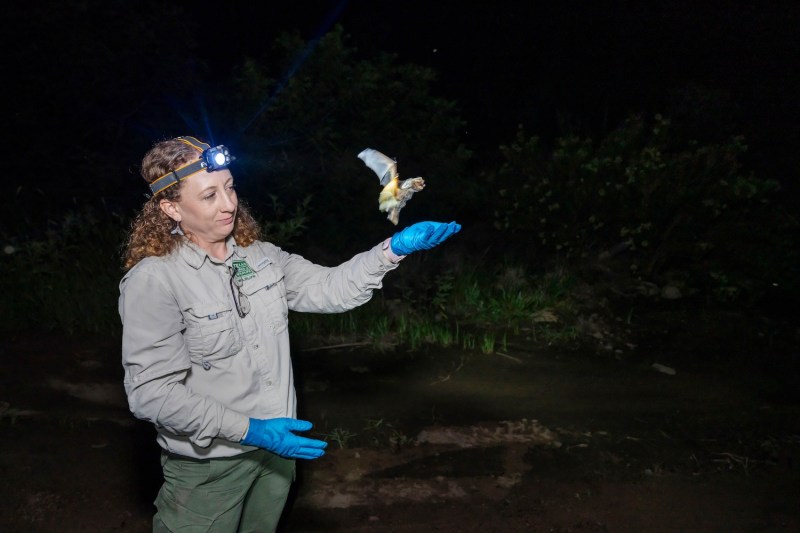
Each study, she says, helps create a baseline for conservation managers to better understand how the landscape is changing. An early 2000s study on the property’s trees, for example, proved to be immeasurably valuable for conservation managers after wildfires in 2011 and 2012 burned about three-quarters of the preserve.
For Schmitz and the arthropod survey team, the value seems to come partly in the thrill of the search. Even after five years—Euphoria casselberryi aside—Schmitz still has a few white whales he’d like to find, he says.
“We’re Ahab out there trying to find them,” he says. “Will we succeed in getting these beetles? It’s hard to say.” It won’t be for lack of trying.
Join the Discussion